
YSI 6900 ProDSS Optical Sensor
Optical sensor technology
High accuracy for industrial use
Durable ProDSS compatible design
This guide compares the top dissolved oxygen sensors 2 for aquaculture and labs, evaluating accuracy, response time, and ease of use for reliable water quality
Dissolved oxygen sensors are critical for monitoring water quality in aquaculture, environmental research, and industrial processes. Choosing the right sensor ensures accurate readings that support healthy ecosystems and efficient operations.
We evaluated ten top-rated sensors based on accuracy, response time, durability, and ease of calibration. Our analysis covers galvanic, polarographic, and optical technologies to help you find the best fit for your needs.
Each pick highlights key features and real-world performance. Prices and availability change frequently, so verify current details before purchasing to ensure you get the best value for your specific application.
4.4Editor score

This side-by-side comparison highlights the core specifications and unique selling points of each sensor to help you make an informed decision based on your specific water quality monitoring requirements.



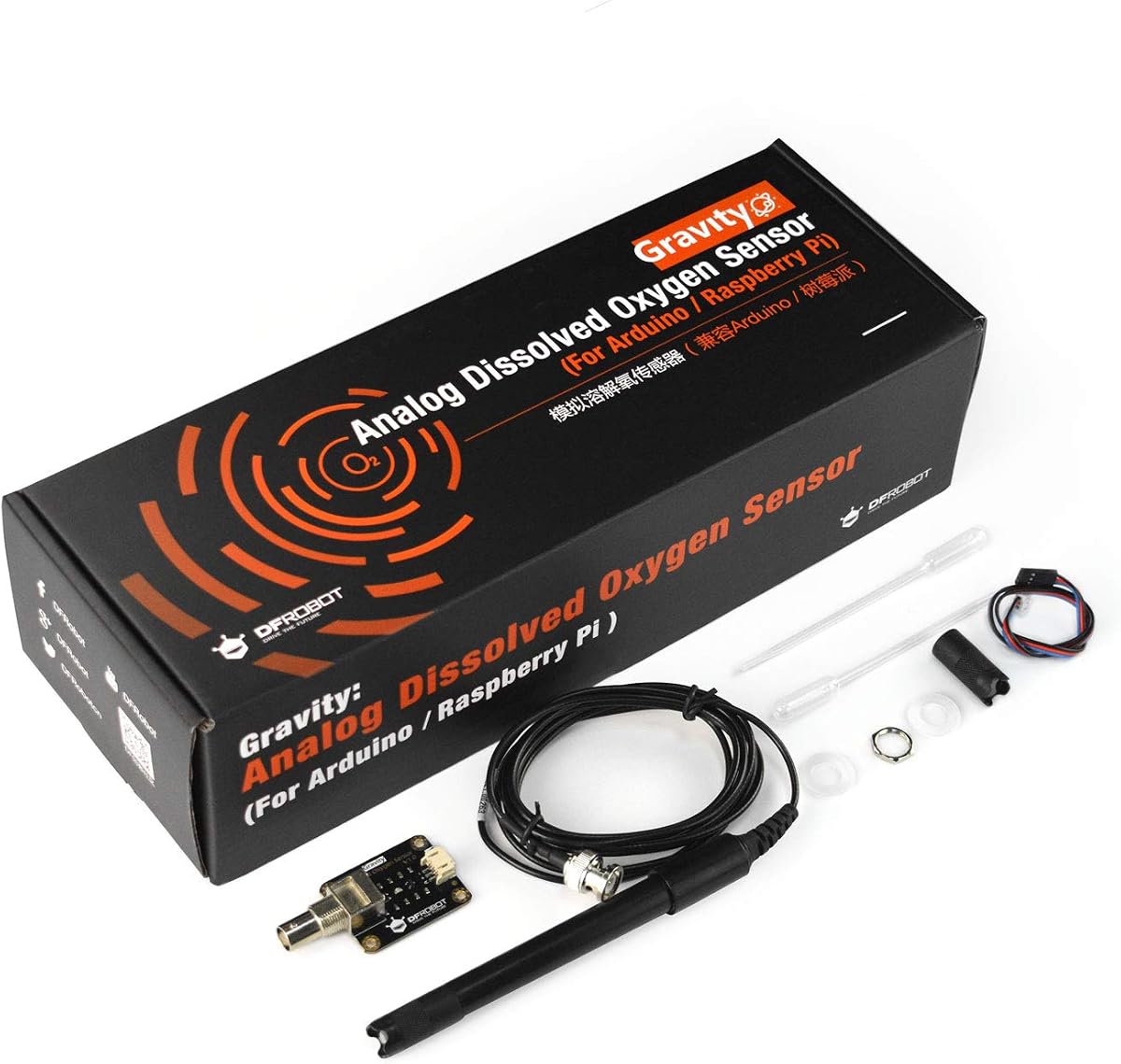
The Gravity Analog Dissolved Oxygen Sensor Kit stands out for its galvanic probe technology that delivers instant readings without polarization time. With a 4.4 rating, this sensor is designed for low-power IoT projects needing rapid deployment in aquaculture.
We may earn a commission when you buy through this link, at no additional cost to you.
Its hardware filtering ensures smooth analog voltage output, reducing software processing needs. The included open-source code supports single or two-point calibration with temperature compensation for precise measurements. This approach simplifies integration with microcontrollers like ESP32.
Users should note the filling solution is not included due to shipping rules, requiring local procurement. While an external ADC module is necessary for Raspberry Pi, the standard Gravity 3-pin interface makes wiring straightforward without complex soldering.
This kit is ideal for hobbyists and engineers building automated water monitoring systems. Its low maintenance costs and quick calibration make it a top choice for sustainable aquaculture and lab research projects.
The galvanic probe requires no pre-heating, allowing immediate readings whenever your project is powered on.
Access to open-source code and wiring diagrams accelerates development for custom IoT water quality monitors.
We may earn a commission when you buy through this link, at no additional cost to you.
The LDO Dissolved Oxygen Sensor 9020000SLU offers robust performance for industrial and laboratory applications. Its design prioritizes consistent results and durability, ensuring reliable water analysis over extended periods without frequent replacements.
We may earn a commission when you buy through this link, at no additional cost to you.
Built with high-quality materials, this sensor reduces maintenance costs and simplifies setup. The 10-meter probe cable provides flexibility for remote sensing in tanks or environmental sites. Users benefit from efficient, stable performance during critical monitoring tasks.
While specific technical specs like rating or price are not fully detailed in public summaries, the focus on reliability makes it suitable for demanding setups. The user-friendly design minimizes downtime during calibration or membrane changes.
Choose this sensor for industrial processes or environmental studies where consistency is paramount. Its versatile solution fits various applications, ensuring your data remains trustworthy for long-term decision-making in water quality management.
Constructed for long-term reliability, this sensor withstands harsh conditions in industrial water treatment environments.
User-friendly design reduces setup time and maintenance, improving overall efficiency in laboratory workflows.
We may earn a commission when you buy through this link, at no additional cost to you.
The YSI-605203 Pro Series Polarographic Sensor delivers precision for laboratory environments. With a 4.6 rating, it ensures consistent oxygen readings essential for scientific research and quality control in controlled water samples.
We may earn a commission when you buy through this link, at no additional cost to you.
Its compact dimensions and lab supply classification indicate optimized handling for benchtop instruments. Polarographic technology provides reliable data when matched with compatible meters, supporting detailed analysis in academic or clinical settings.
Users should verify meter compatibility before purchase. While the packaging is straightforward, calibration may require specific tools not included in the box. The Pro Series reputation adds trust for critical applications requiring high accuracy.
This sensor is ideal for research labs and institutions needing dependable data. Its design supports routine water testing tasks efficiently. Choose it for professional applications where measurement accuracy impacts results significantly.
Designed for lab supplies, this sensor provides precise measurements suitable for scientific experiments.
Small footprint allows easy integration into crowded lab benches or portable testing kits.
We may earn a commission when you buy through this link, at no additional cost to you.
This portable DO meter combines convenience with high-precision measurement. It features auto temperature compensation and a 99-data memory slot, making it ideal for fieldwork where tracking trends is essential for aquaculture or environmental analysis.
We may earn a commission when you buy through this link, at no additional cost to you.
The 11.48-foot cable offers flexibility in reaching deep tanks or murky areas. Stability indicators and IRDA ports allow quick data transfer to computers. The package includes Teflon membranes, electrolytes, and a sturdy carrying case for immediate testing.
Users must manage battery life carefully as it relies on AAA batteries. Manual salinity adjustments may slow down setups in saline environments. However, the hold function and clear displays streamline operation for educators or technicians.
Choose this kit for aquarium maintenance or educational field trips. Its durable design and complete accessories support immediate deployment. Prioritize it if you need reliable portable readings without complex calibration processes.
Includes batteries membranes and case for ready-to-use field assessments of water quality.
99-memory slots enable easy tracking of oxygen levels over time without external devices.
We may earn a commission when you buy through this link, at no additional cost to you.
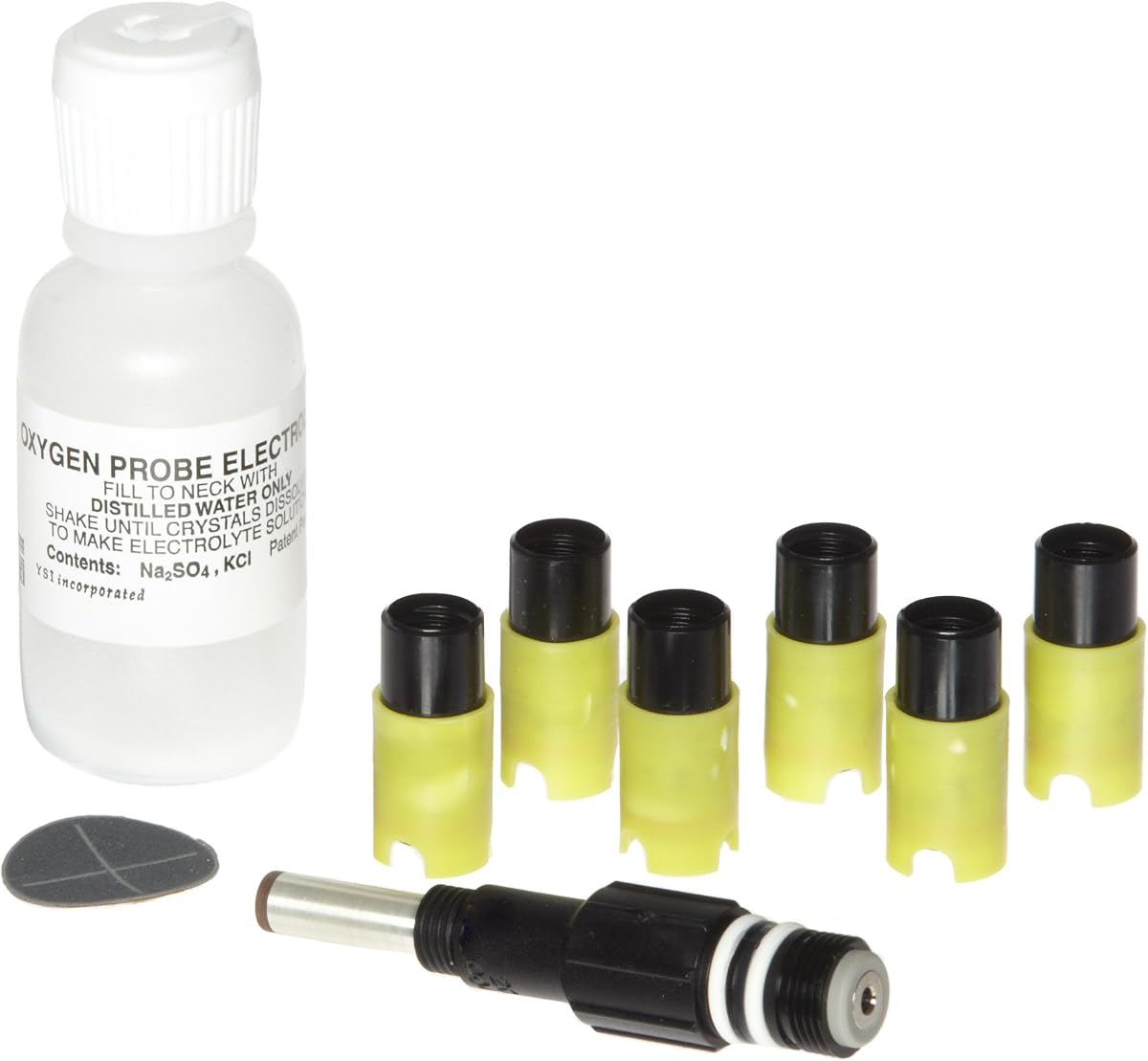
The YSI-605202 Pro Series Galvanic Sensor excels in ease of maintenance. With a 4.8 rating, it features a screw-on cap design allowing quick membrane changes without tools, reducing downtime in aquaculture or research environments.
We may earn a commission when you buy through this link, at no additional cost to you.
The package includes 6 membrane caps and a solution bottle, ensuring you have supplies for multiple calibrations. This proactive inclusion lowers long-term costs significantly. The galvanic probe delivers stable readings with minimal polarization requirements.
Users must ensure compatibility with YSI meters for optimal performance. While the replacement process is straightforward, periodic membrane changes are necessary for accuracy. The design prioritizes operational efficiency for busy facilities.
Choose this sensor for professional setups needing reliable, low-maintenance performance. Its tool-free design ensures sensors remain operational longer without technical expertise. Prioritize it for consistent water quality monitoring.
Screw-on cap membranes allow users to change parts quickly without special tools or training.
Packaging includes six caps and solution, extending usability before additional purchases are needed.
We may earn a commission when you buy through this link, at no additional cost to you.
This 2-pack DO tester connects wirelessly to smartphones, enabling real-time data transmission within 10 meters. The multilingual app supports English, French, and other languages, making it accessible for international users in aquaculture or labs.
We may earn a commission when you buy through this link, at no additional cost to you.
Engineered with a floating ABS housing, it survives accidental submersion. A 500mAh battery offers up to five days of continuous operation. Users can export data via email for tracking trends in hydroponics or aquariums.
The wireless range limits remote monitoring to nearby areas. App stability depends on device compatibility. However, the floating design ensures the device remains visible if dropped in open water environments.
Choose this tester for modern field research needing digital data handling. Its compact design and smartphone integration support quick decision-making. Prioritize it for projects requiring frequent, mobile-accessible oxygen readings.
Pairs with smartphones for real-time data transmission and easier tracking of water quality metrics.
Sealed ABS housing ensures the tester floats on surface if dropped in deep or open water.
We may earn a commission when you buy through this link, at no additional cost to you.
The YSI EcoSense DO200 Kit offers essential features for water testing. It includes automatic temperature compensation and manual salinity input, delivering accuracy with 0.01 ppm resolution. The portable design suits classroom demonstrations or field education.
We may earn a commission when you buy through this link, at no additional cost to you.
The 9V battery is included, ensuring immediate use. Membranes are screw-on for easy replacement without tools. This simplicity helps students understand oxygen testing principles without overwhelming technical details.
Manual salinity input may require extra steps in saline waters. However, the compact size and proven brand reliability make it a staple for educational labs. Its 2% accuracy meets standard testing requirements.
Choose this kit for teaching water quality concepts or small-scale monitoring. Its user-friendly design supports quick setup. Prioritize it when straightforward, reliable measurements are needed for academic or hobbyist projects.
Basic controls and included battery allow immediate use for teaching oxygen levels.
Screw-on cap design makes membrane changes simple for students learning maintenance procedures.
We may earn a commission when you buy through this link, at no additional cost to you.
This optical dissolved oxygen sensor integrates with YSI ProDSS multi-parameter systems for precise measurements. Its optical technology reduces drift and maintenance needs compared to traditional electrodes, ensuring stable readings in challenging environments.
We may earn a commission when you buy through this link, at no additional cost to you.
Designed for industrial applications, it delivers high accuracy for critical monitoring. The construction withstands harsh conditions while maintaining performance. Users benefit from consistent data for wastewater treatment or environmental compliance reporting.
Cost and system compatibility may limit adoption to larger facilities. However, the long-term stability often offsets initial investment. This sensor supports complex monitoring setups where reliability is non-negotiable.
Choose this sensor for high-stakes industrial or research environments. Its optical design ensures consistent, low-maintenance performance. Prioritize it when accuracy and stability outweigh initial setup costs.
Uses optical sensing to eliminate calibration drift and reduce membrane maintenance needs.
Designed to integrate seamlessly with YSI ProDSS platforms for multi-parameter water analysis.
We may earn a commission when you buy through this link, at no additional cost to you.
The DAN&DRE Portable Meter simplifies setup with automatic 0% and 100% calibration buttons. This design saves time and ensures reliable readings for aquaculture or household aquariums. Its modular structure allows electrode replacement without buying a new unit.
We may earn a commission when you buy through this link, at no additional cost to you.
With a response time under 15 seconds, it provides real-time data for effective monitoring. The 0.01mg/L resolution ensures precise measurements across common ranges. Its durable ABS case makes it easy to carry for field use.
Advanced features like long-term memory are limited. Build quality may not match premium brands. However, the affordability and ease of use make it a practical choice for casual users.
Choose this meter for aquariums or small-scale projects on a budget. Its simple interface supports quick checks. Prioritize it when cost and ease of calibration are top priorities for maintaining water quality.
Two-point auto calibration buttons simplify setup, saving time for routine testing tasks.
Separate electrode design allows partial replacements, extending device lifespan and reducing costs.
We may earn a commission when you buy through this link, at no additional cost to you.
This DO meter provides a complete kit with ATC and calibration powder. The built-in temperature sensor ensures consistent results across varying water temperatures from 0 to 50 degrees Celsius. Its 0-40mg/L range covers most aquarium and aquaculture needs.
We may earn a commission when you buy through this link, at no additional cost to you.
The 1.1m polarographic probe connects to a large LCD display. Includes 6 spare membrane caps and extra batteries, reducing immediate maintenance concerns. Automatic shutdown preserves battery life over extended periods of continuous use.
Basic build quality suits beginners rather than professional labs. Cable length may restrict deep-tank testing. However, the included accessories make it a ready-to-go solution for hobbyists.
Choose this meter for aquariums, koi ponds, or educational settings. Its simplicity and full package support immediate deployment. Prioritize it if you need an easy-to-use tool for routine water checks.
Includes calibration powder and spare caps for immediate setup and maintenance.
Automatic temperature compensation ensures accurate readings across different water temperatures.
We may earn a commission when you buy through this link, at no additional cost to you.
Selecting the right sensor depends on your application, budget, and technical requirements. This guide outlines critical factors to consider before making a purchase.
Galvanic sensors are quick to start and maintenance-friendly. Polarographic types need polarization but offer stability. Optical sensors reduce drift and calibration frequency for high-end industrial applications.
Match technology to your environment to balance accuracy with maintenance needs.
Faster response allows real-time monitoring. Look for sensors reaching 98% response under 120 seconds. Quick sensors are essential for dynamic systems like aquaculture tanks.
Choose response times that match your monitoring frequency.
Auto-calibration saves time and reduces human error. Two-point calibration ensures accuracy across ranges. Check for included calibration solutions or powder.
Select meters with intuitive calibration to maintain consistent readings.
Rugged housing protects internal circuits. Stainless steel or ABS materials handle harsh environments. Waterproof designs are crucial for field or floating applications.
Prioritize durability if the sensor will face rough conditions.
Wireless or wired options suit different setups. Smartphones enable mobile tracking. ProDSS or industrial interfaces support integration with central systems.
Match connectivity to your data management needs.
Ensure the range covers your expected values. Resolution affects detail; 0.01 ppm is standard for precision. Overly wide ranges may reduce accuracy at low values.
Choose specs that align with your target measurements.
Battery-operated units suit portability. Check battery life and replacement options. Low-power designs support IoT deployments where constant power is unavailable.
Ensure power solutions fit your deployment location.
Verify sensor compatibility with your existing meter. Standard interfaces simplify upgrades. Proprietary systems may limit future options.
Check compatibility before purchasing to avoid integration issues.
Always calibrate your sensor before use to ensure accuracy. Use fresh calibration solutions and follow manufacturer steps for 0% and 100% adjustments.
Rinse the probe with deionized water after each use to prevent contamination. Store the sensor in a protective cap with moist environment to maintain membrane function.
Inspect membranes regularly for tears or fouling. Replace membranes and electrolyte solution as needed to maintain performance. Proper care extends lifespan significantly.
Galvanic sensors do not require pre-polarization and respond quickly. Polarographic sensors need a brief warm-up but offer stable long-term readings. Galvanic is ideal for intermittent use, while polarographic suits continuous monitoring.
Calibrate before each use or at least weekly depending on usage frequency. Frequent use or harsh environments may require more regular calibration to maintain accuracy.
Yes, many sensors support salinity compensation. Check for salinity settings or manual inputs to adjust readings for saltwater conditions accurately.
Most probes last 12 to 24 months with proper maintenance. Regular membrane and electrolyte replacements can extend operational life significantly.
Optical sensors need calibration less frequently than electrochemical sensors but still require periodic checks. Initial calibration ensures accuracy for the optical system.
Unstable readings may result from old membranes, air bubbles, or temperature shifts. Rinse the probe and ensure proper storage to stabilize measurements.
Our top picks cover diverse needs from IoT hobbyists to industrial labs. The Gravity Kit leads for developers, while YSI ProDSS suits professional accuracy needs.
Prioritize response time and calibration ease based on your workflow. For beginners, budget meters with auto-calibration provide value without sacrificing core performance.
Always verify current availability and compatibility before buying. Regular maintenance ensures your sensor remains reliable for long-term water quality monitoring tasks.