
Canon EF 50mm f/1.8 STM Lens
4.8Editor score
Affordable prime lens option
Quiet STM autofocus motor
Great for low light shots
This guide compares the top camera lenses for product photography including zoom primes and macros to help you choose the best lens for sharp professional
Choosing the right camera lens for product photography is crucial for capturing sharp, detailed images that showcase your items effectively. A good lens ensures accurate color representation and minimal distortion which is vital for e-commerce listings and marketing materials.
We have evaluated ten top rated lenses based on image quality, aperture speed, build durability, and compatibility with various camera systems. Our comparison covers options for Canon mirrorless and DSLR users as well as smartphone photographers looking to upgrade their setup.
Each pick highlights specific strengths such as low light performance or macro capabilities so you can find the perfect match for your needs. Please note that prices and availability change frequently so always verify current listings before making a purchase decision.
4.8Editor score

4.8Editor score
4.7Editor score
Below is a side by side comparison of all ten lenses reviewed in this guide to help you quickly identify which model fits your specific photography requirements and budget constraints.


The Canon RF24-70mm F2.8 L IS USM Lens stands out as a top tier option for product photographers seeking professional results. With a robust 4.8 rating this lens delivers exceptional optical quality that ensures your products look their best in every shot.
We may earn a commission when you buy through this link, at no additional cost to you.
Its constant f2.8 aperture allows for consistent exposure across the zoom range which is vital when shooting products under varying lighting conditions. The optical image stabilization provides up to five stops of shake correction making handheld shooting reliable even in dimmer studio environments.
While the price is high the investment pays off through durability and performance. The Nano USM autofocus is swift and silent ensuring you never miss a moment during a shoot. This reliability is crucial for commercial work where time is money.
Photographers using Canon EOS R series cameras will find this lens indispensable. It combines sharpness speed and versatility in a way few other lenses do. For those ready to invest in top gear this lens is a cornerstone of a professional kit.
The lens design minimizes aberrations and distortion ensuring straight lines and accurate colors critical for product displays.
The control ring allows for quick adjustments to aperture or ISO without taking your eye off the viewfinder.
We may earn a commission when you buy through this link, at no additional cost to you.
For photographers on a tight budget the Canon EF 50mm f/1.8 STM Lens offers incredible value. Its 4.8 rating reflects widespread satisfaction among users who appreciate its balance of performance and cost making it a staple in many kits.
We may earn a commission when you buy through this link, at no additional cost to you.
The wide f1.8 aperture is perfect for isolating products from busy backgrounds and allows for shooting in lower light without increasing ISO too much. The stepping motor ensures smooth and near silent autofocus which is helpful when recording product videos.
While it lacks the robust build of more expensive lenses it delivers sharp images that are more than sufficient for web and print use. Its lightweight nature makes it easy to handle during long shooting sessions without causing fatigue.
This lens is ideal for beginners or those expanding their collection without breaking the bank. It teaches fundamental composition skills by forcing you to move with the camera. For casual product shots it is a reliable and capable choice.
The 50mm focal length provides a natural angle of view similar to the human eye reducing distortion.
The large aperture lets in more light allowing for faster shutter speeds in dimly lit spaces.
We may earn a commission when you buy through this link, at no additional cost to you.
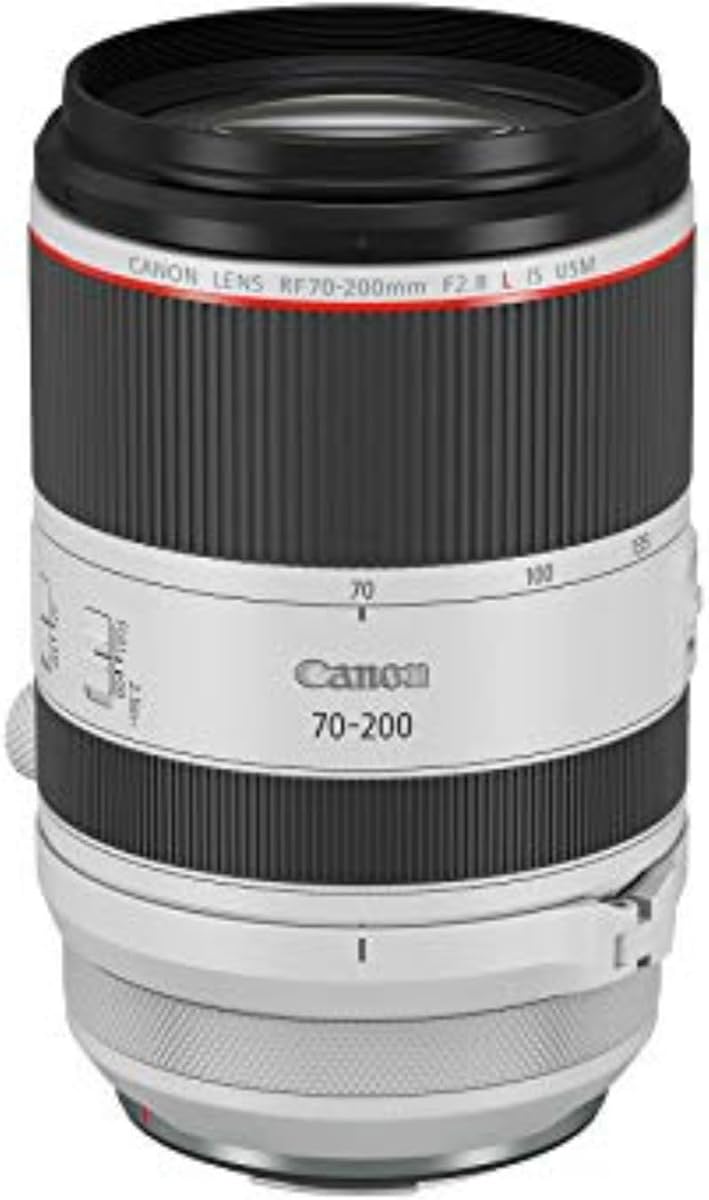
The Canon RF70-200mm F2.8 L IS USM Lens is a marvel of modern engineering designed for serious professionals. With a strong 4.7 rating it promises high image quality and reliability for those capturing detailed product photography at a distance.
We may earn a commission when you buy through this link, at no additional cost to you.
Its compact and lightweight design sets it apart from older telephoto lenses making it easier to carry and use for extended periods. The dual Nano USM autofocus system ensures high speed smooth and quiet focusing which is essential for moving products.
Optical image stabilization offers up to five stops of correction allowing for sharper handheld shots. This feature is particularly useful when shooting in environments where tripods are impractical. The bright f2.8 aperture maintains clarity throughout the zoom range.
While it is a significant investment the versatility and optical excellence it provides justify the cost. It excels at isolating small details from cluttered backgrounds. If you need a high end telephoto for professional work this lens is a top contender.
The 70 to 200mm range allows for compression effects that can make products appear more prominent.
Reduced camera shake means sharper images even at slower shutter speeds without a tripod.
We may earn a commission when you buy through this link, at no additional cost to you.
The Canon EF 75-300mm f/4-5.6 III Lens provides an affordable entry point into telephoto photography. Its 4.7 rating indicates it performs well for its price point making it a viable choice for hobbyists and beginners exploring product photography.
We may earn a commission when you buy through this link, at no additional cost to you.
With a zoom range extending to 300mm this lens allows you to capture products from a distance without disturbing the setup. The DC autofocus motor is functional though slower than higher end models. It remains effective for static product shoots.
The lens is lightweight and easy to transport which is beneficial for on location shoots. However the variable aperture means light intake decreases as you zoom in requiring adjustments to ISO or shutter speed. This is a trade-off for the lower cost.
For those who do not want to spend heavily on a telephoto lens this model offers decent image quality. It is suitable for general use where extreme sharpness is not the primary requirement. It serves as a practical tool for expanding your focal options.
The extended zoom range allows you to frame subjects tightly without moving the camera.
Its light weight makes it comfortable to hold for longer periods during casual photography sessions.
We may earn a commission when you buy through this link, at no additional cost to you.
The EF 85mm f1.8 Portrait Lens MF offers a unique manual focus experience for photographers seeking artistic control. With a 4.1 rating it appeals to those who enjoy the process of manually adjusting parameters to achieve specific creative outcomes.
We may earn a commission when you buy through this link, at no additional cost to you.
Its manual focus design allows for precise adjustments that can be difficult with autofocus especially for small products. The hybrid aspherical lens technology helps reduce aberrations ensuring clear image quality. The smooth focus ring facilitates accurate focusing.
The lens includes six rounded aperture blades which create a charming bokeh effect. This is useful for blurring backgrounds and drawing attention to the product. However using it requires switching the camera to full manual mode to avoid errors.
While the learning curve is steeper than automatic lenses the creative freedom is rewarding. It is an excellent option for still life work where time permits careful composition. For photographers willing to slow down this lens provides unique artistic possibilities.
Manual focusing allows you to choose exactly which part of the product remains sharp.
The aperture design creates pleasing background blur that enhances product isolation.
We may earn a commission when you buy through this link, at no additional cost to you.
The Canon RF50mm F1.8 STM Lens is a compact and lightweight option designed specifically for EOS R series mirrorless cameras. Its 4.7 rating highlights its effectiveness for general photography tasks including product shots requiring a natural perspective.
We may earn a commission when you buy through this link, at no additional cost to you.
The large f1.8 aperture is great for low-light photography and creative background blur. The stepping motor provides smooth and quiet continuous autofocus which is beneficial when recording product videos. Optimized lens placement helps minimize ghosting and flare.
A control ring is included for direct setting changes allowing quick adjustments without navigating menus. This feature enhances efficiency during shoots. The lens is also small enough to fit easily in a camera bag making it ideal for travel.
For users with RF cameras this lens offers excellent performance at a reasonable price. It produces outstanding color balance due to its coatings. It is a practical choice for everyday use where portability and speed are prioritized over extreme telephoto range.
The control ring lets you change settings instantly without taking hands off the camera.
Its small size makes it convenient for carrying around without adding bulk to your gear.
We may earn a commission when you buy through this link, at no additional cost to you.
The Sigma 135mm F1.8 DG HSM ART lens offers a unique focal length that stands out among standard primes. It is handcrafted with individual evaluation ensuring high standards of optical performance. Users praise its sharpness and creative capabilities.
We may earn a commission when you buy through this link, at no additional cost to you.
The large 1.8 aperture provides exceptional light gathering capabilities and a stunning compression effect. This lens is ideal for event photography and portraits where depth of field control is crucial. The dust and splash proof mount enhances durability in various conditions.
The new large Hyper Sonic motor delivers ample torque for fast focusing. It ensures stable performance even at lower speeds. This makes it reliable for static subjects that require quick capture. The build quality is professional grade.
While it is not a budget lens its optical quality justifies the investment for serious photographers. It offers a distinct look compared to standard primes. For those wanting unique angles and high clarity this lens is a strong specialized choice.
The lens is tested individually for quality ensuring consistent sharpness in every shot.
The 135mm focal length compresses space which can make products appear closer and more detailed.
We may earn a commission when you buy through this link, at no additional cost to you.
The Xenvo Pro Lens Kit transforms smartphones into capable tools for photography. Its 4.1 rating suggests satisfaction among users seeking an affordable alternative to traditional cameras. It includes macro and wide angle options to expand shooting possibilities.
We may earn a commission when you buy through this link, at no additional cost to you.
The wide angle lens captures 45 percent more picture without dark corners. Crafted from aircraft-grade aluminum it is durable. The macro lens magnifies nearby subjects allowing for detailed close-up shots. The included LED light helps illuminate subjects evenly.
This kit is perfect for social media content creators or small businesses starting out. It allows for high-quality images without the cost of a DSLR setup. The travel case keeps everything organized and protected during transport.
While it may not match dedicated cameras it is effective for quick shots. The clip is secure making it easy to snap photos quickly. For those relying on mobile devices this kit offers practical improvements to standard smartphone capabilities.
The macro lens lets you capture small textures and details that are invisible to the naked eye.
The rechargeable LED light provides continuous illumination for better exposure in dark spots.
We may earn a commission when you buy through this link, at no additional cost to you.
The Canon EOS Rebel T7 DSLR Camera Double Zoom Lens Kit is an excellent entry point for new photographers. It includes two lenses providing versatile focal lengths from 18mm to 300mm. This makes it a comprehensive solution for product photography beginners.
We may earn a commission when you buy through this link, at no additional cost to you.
With a 24.1 Megapixel CMOS sensor it captures detailed images suitable for web and print. Dual Pixel CMOS AF improves focusing speed especially during video. The built-in Wi-Fi allows for easy transfer of images to devices for quick sharing.
The 9-point AF system is reliable for stationary subjects. It includes AI Servo AF for tracking. The optical viewfinder offers high viewing coverage. This setup is designed to be easy to use for beginners learning the basics of photography.
While not as advanced as higher-end models it offers excellent value for the price. The inclusion of two lenses means you can start shooting immediately. For those wanting to learn DSLR photography this kit provides all necessary tools to begin.
With lenses included you can start shooting right away without needing to purchase additional accessories.
Wi-Fi connectivity makes it simple to move photos to your computer for editing and posting.
We may earn a commission when you buy through this link, at no additional cost to you.
The Canon EF 200mm f/2.8L II USM is a classic telephoto prime known for its optical excellence. With a rating of 4.6 it delivers sharp images and professional results. This lens is ideal for isolating small details in product photography.
We may earn a commission when you buy through this link, at no additional cost to you.
Its construction features nine elements in seven groups to minimize aberrations. The fixed focal length ensures consistent performance. It is relatively lightweight compared to zooms which helps with handling. The USM motor provides fast and precise autofocus.
While it is not zoomable this simplicity ensures robust build quality. The f2.8 aperture allows for good light gathering and background blur. This makes it suitable for detailed work where a fixed framing is preferred. It is durable and reliable.
Photographers who value sharpness and speed will appreciate this lens. It is a solid choice for those who do not need zoom flexibility. For professional setups where every pixel counts this lens provides the clarity and consistency required.
The fixed focal length design eliminates variables ensuring the same optical performance every time.
Constructed as an L-series lens it is built to withstand daily professional use and harsh conditions.
We may earn a commission when you buy through this link, at no additional cost to you.
Selecting the right lens involves understanding your specific needs camera compatibility and budget. This guide outlines key factors to consider before making your decision.
Focal length determines how wide or zoomed in your image will be. Prime lenses like 50mm offer natural perspectives while zoom lenses provide flexibility to frame products without moving.
Consider whether you need a fixed or zoom focal length based on your shooting space and workflow requirements.
Aperture affects how much light the lens captures and the depth of field. Wider apertures like f1.8 allow better low light performance and create more background blur for isolated products.
Choose an aperture that balances light needs with your desired level of background separation.
Ensure the lens mount matches your camera body. Canon uses RF for mirrorless and EF for DSLRs. Using incompatible lenses requires adapters that may reduce performance.
Check your camera model specifications before purchasing to ensure a perfect fit.
Optical stabilization helps reduce camera shake for sharper handheld images. This is vital if you shoot without a tripod or in low light conditions.
Prioritize lenses with IS if you plan to do a lot of handheld shooting.
Professional lenses are often built with durable materials and weather sealing. This ensures longevity and reliability in different environments.
Look for lenses with solid construction if you need long-term durability.
Modern lenses use various motors like USM or STM for faster and quieter focusing. This is important for video work or when capturing moving products.
Select a lens with a fast autofocus system to improve efficiency.
Budget varies widely between entry-level and professional lenses. Determine how much you can spend and balance it with necessary features.
Consider buying renewed lenses to save money without sacrificing quality.
Look for extra features like control rings or specialized coatings that enhance usability. These can streamline your workflow during shoots.
Evaluate if these features justify the extra cost for your specific needs.
Always clean your lens with a microfiber cloth before shooting to remove dust and smudges. Keep the lens cap on when not in use to prevent accidental damage.
Use a tripod whenever possible to ensure maximum sharpness and stability during long exposures. This helps maintain consistent framing for multiple product shots.
Store your lens in a dry cool place to avoid moisture damage. Using a protective case ensures your investment remains in good condition over time.
A 50mm or 85mm prime lens is ideal for product photography as it provides a natural perspective with minimal distortion. However zoom lenses like 24-70mm offer versatility if you need to adjust framing frequently.
A macro lens is essential if you need to capture extreme close-up details of small items. However standard lenses often suffice for general product shots. Consider your specific product size and detail requirements.
Image stabilization is less critical if you use a tripod which is common for product shoots. However it is very useful for handheld shooting in dynamic environments. It helps prevent camera shake and blur.
Yes but you may need an adapter to connect EF lenses to RF cameras. While functional it is best to use native RF lenses for optimal performance and autofocus speed.
An aperture around f8 or f11 provides sufficient depth of field for product photography. This ensures the entire product remains sharp while minimizing distortions.
Manual focus offers precise control for static subjects. It can be beneficial if you want to ensure exact focus points. However autofocus is faster for dynamic setups.
Entry-level lenses start around 100 to 200 dollars while professional options can exceed 2000 dollars. Set a budget based on your specific needs and how often you shoot.
Yes external attachment kits like the Xenvo Pro offer macro and wide angle options for smartphones. These are affordable alternatives for casual or social media product photos.
We have reviewed ten top lenses including options like the Canon RF24-70mm for versatility and the Canon EF 50mm for budget-friendly quality. Each product offers unique benefits depending on your skill level and equipment.
Prioritize focal length and aperture speed when making your choice. These factors determine image quality and how well you can isolate products from backgrounds.
Prices and availability change frequently so always check current listings before buying. Investing in the right lens ensures you capture high-quality images that showcase your products effectively.