
CENMATE Aluminum 4 Bay Hard Drive Enclosure
4.3Editor score
Supports 2.5 and 3.5 inch drives
USB 3.0 interface with up to 5Gbps
Built-in cooling fan for thermal management
Direct Attached Storage offers a fast and reliable way to expand your local storage without the complexity of a networked system. These devices connect directly to your computer via USB or Thunderbolt, providing immediate access to large files. Choosing the right enclosure involves considering speed, capacity, and build quality to match your specific workflow requirements.
We evaluated ten leading Direct Attached Storage options based on their transfer speeds, compatibility, and overall build quality. Our analysis focuses on how well each device handles large files, its ease of use, and its thermal management capabilities. This comparison helps you identify the model that best fits your data storage and backup needs.
Each selection in this guide highlights unique strengths, from hybrid NVMe support to robust hardware RAID capabilities. You will find detailed reviews of every model along with key specifications and user considerations. Please note that product availability and pricing can change frequently, so verify current details before making a purchase decision.
4.3Editor score

4.2Editor score

3.5Editor score
As an Amazon Associate we earn from qualifying purchases.
This side-by-side comparison outlines the key specifications and features of the top ten Direct Attached Storage solutions available on the market today.


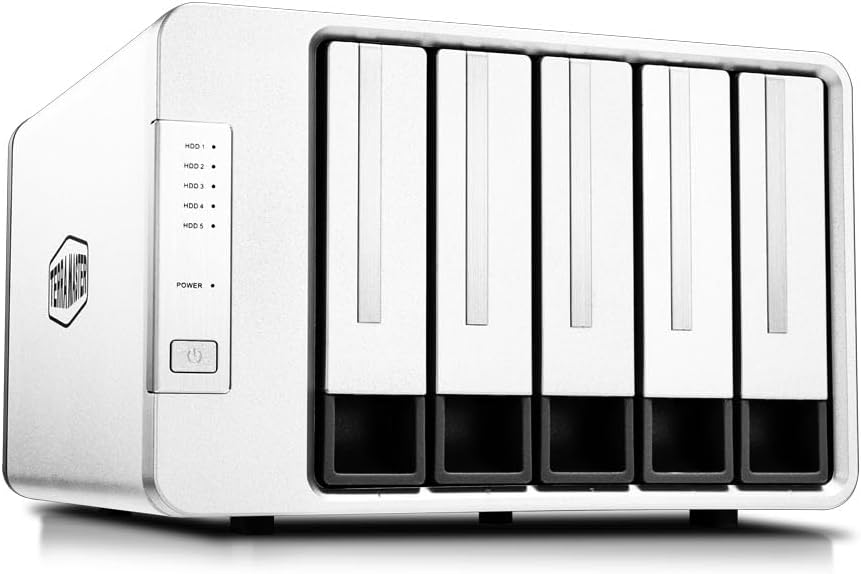


The TERRAMASTER D4-320 stands out as a top performer in the Direct Attached Storage category due to its high-speed USB 3.2 Gen2 connectivity. It delivers read speeds up to 510 MB/s with a single SSD and up to 1,016 MB/s with four hard drives. This makes it ideal for users who need rapid data access without the overhead of a network system.
We may earn a commission when you buy through this link, at no additional cost to you.
Its design emphasizes user convenience with a tool-free hard drive tray system and a unique Push-lock feature that secures drives automatically. The enclosure supports hot swapping, allowing you to replace drives without powering down. This flexibility is crucial for workflows that require frequent drive changes or quick data access.
While it lacks built-in hardware RAID, which some power users might prefer, its simplicity ensures plug-and-play compatibility across Windows, Mac, and Linux. The intelligent temperature-controlled fan and sound-absorbing panels keep noise levels low, making it suitable for quiet office environments or home use without distraction.
Anyone needing a fast and reliable way to expand local storage should consider this model. It balances speed, ease of use, and build quality effectively. For those prioritizing quick file transfers and straightforward management, this enclosure offers excellent value and performance.
The USB 3.2 Gen2 protocol ensures that large files move quickly between your computer and storage, significantly reducing wait times during transfers.
Tool-free trays and Push-lock mechanisms simplify the process of adding or removing drives, saving time and effort during setup.
We may earn a commission when you buy through this link, at no additional cost to you.
The QNAP TR-004 is a powerful Direct Attached Storage device designed specifically to integrate with QNAP NAS systems. It offers hardware RAID support for RAID 0, 1, 5, and JBOD configurations, providing redundancy and performance options without requiring complex software setup. This makes it a strong choice for users already invested in the QNAP ecosystem.
We may earn a commission when you buy through this link, at no additional cost to you.
With its USB Type-C connection, it ensures high-speed data transfer and broad compatibility with modern computers. The device allows you to expand the capacity of your existing NAS or use it as external storage for backups. This dual functionality enhances its versatility for various storage needs.
However, it is important to note that it cannot be used with all QNAP models or as a standalone NAS. You must ensure your system is compatible before purchase. Additionally, while it supports individual disks, it lacks some advanced features found in full NAS units, which might limit flexibility for some users.
This model is best suited for QNAP users looking to extend their storage capabilities seamlessly. It provides reliable hardware RAID protection and straightforward connectivity. If you need a dedicated expansion unit that works harmoniously with your existing setup, this enclosure delivers solid performance.
The TR-004 is designed to work smoothly with QNAP NAS units, allowing you to add storage capacity without disrupting your current workflow.
Hardware RAID support ensures your data is protected against drive failure, offering peace of mind during critical operations.
We may earn a commission when you buy through this link, at no additional cost to you.
The TERRAMASTER D8 Hybrid introduces a unique approach to Direct Attached Storage by supporting both HDDs and NVMe SSDs simultaneously. It allows you to store frequently accessed data on fast NVMe drives while keeping larger archives on high-capacity HDDs. This hybrid setup optimizes both speed and cost, making it ideal for users with diverse storage requirements.
We may earn a commission when you buy through this link, at no additional cost to you.
Its USB 3.2 Gen2 interface supports transfer speeds up to 10Gbps, ensuring that data moves quickly regardless of the drive type. The enclosure supports up to 152TB of total capacity, offering ample space for large files like 4K videos or extensive media libraries. This massive capacity reduces the need for multiple devices.
While the hybrid design offers significant benefits, it requires careful planning to maximize efficiency. You must manually decide which data goes on which drive type, which can be complex for some users. Additionally, the price is higher than standard enclosures, reflecting the advanced features and increased drive slots.
This model is perfect for professionals who need both high speed and large capacity in one unit. It balances performance and storage needs effectively. If you manage large datasets and need a consolidated solution, this hybrid enclosure provides a versatile and powerful option.
You can strategically place hot data on SSDs for quick access and cold data on HDDs for cost-effective storage.
With up to 152TB total capacity, this device grows with your storage needs, preventing the need for additional hardware soon.
We may earn a commission when you buy through this link, at no additional cost to you.
The CENMATE Aluminum 4 Bay offers a practical and affordable solution for those looking to expand their local storage without breaking the bank. It supports up to 80TB of total capacity using 3.5-inch or 2.5-inch drives, making it a versatile option for various storage needs. Its aluminum alloy construction ensures durability and effective heat dissipation.
We may earn a commission when you buy through this link, at no additional cost to you.
It features USB 3.0 connectivity with speeds up to 5Gbps, which is sufficient for general file transfers and backups. The tool-free design allows you to install or remove drives easily, simplifying the setup process. A built-in cooling fan helps maintain optimal operating temperatures, protecting your drives from overheating.
While the cooling fan adds some noise during operation, it is a necessary feature to ensure drive longevity. Users who are sensitive to noise should place the unit in a location where this is less intrusive. Additionally, it does not support the faster USB 3.2 Gen2 speeds found in higher-end models.
For users seeking a cost-effective and reliable storage solution, this model delivers strong value. It provides the essential features needed for a robust external storage system. If budget is a priority and you need simple yet functional storage, this enclosure is an excellent choice.
This enclosure offers the ability to add substantial storage capacity without the high cost associated with premium models.
The aluminum housing not only looks professional but also helps dissipate heat efficiently during heavy use.
We may earn a commission when you buy through this link, at no additional cost to you.
The SABRENT 5-Bay USB-C enclosure stands out for its dedicated ASMedia ASM1351 controller for each bay, ensuring stable and independent connections for every drive. This design minimizes the risk of data corruption and maximizes reliability during heavy transfers. It is perfect for users who need consistent access to multiple drives simultaneously.
We may earn a commission when you buy through this link, at no additional cost to you.
With USB 3.1 Gen 2 connectivity, it offers transfer speeds up to 10Gbps, making it one of the fastest options available. The ability to daisy-chain a second dock or connect peripherals adds to its versatility. Its internal auto-switching power supply eliminates the need for an external brick, keeping your workspace cleaner.
While the lack of RAID functionality might be a downside for some, the independent access ensures that if one drive fails, the others remain unaffected. This reliability is crucial for professional workflows where downtime is not an option. The tray-less hot-swap design further simplifies drive management.
This model is best suited for professionals who need reliable and fast access to multiple drives. It offers robust build quality and advanced features that justify the cost. If you prioritize stability and speed over redundancy, this enclosure is a top-tier choice for your setup.
Having a dedicated controller for each drive ensures that data transfer remains stable even when multiple drives are in use.
The ability to daisy-chain devices allows you to expand your workspace further without needing additional ports.
We may earn a commission when you buy through this link, at no additional cost to you.
The TERRAMASTER D8 Hybrid 2 refines the hybrid storage concept with proprietary TPM technology that optimizes power efficiency and data response. It offers a unique power mode switch allowing you to toggle between Power Save and Active modes. This feature is particularly useful for workflows that need a balance between energy saving and high-speed performance.
We may earn a commission when you buy through this link, at no additional cost to you.
It supports both 4 HDDs and 4 NVMe SSDs, allowing for up to 152TB of total storage. The USB 3.2 Gen2 interface provides read speeds up to 1020 MB/s with a single M.2 SSD, ensuring quick access to critical data. This makes it ideal for video editors and other professionals handling large files.
Although it does not have built-in RAID, it supports third-party software RAID if needed, offering flexibility in how you manage your storage. The power-on recovery feature ensures the device reboots after abnormal power loss, which adds reliability to your setup. However, managing different drive types requires some planning.
This model is perfect for users who need high performance and energy efficiency. It provides a seamless experience for hybrid storage setups. If you manage a mix of hot and cold data and need precise control over power consumption, this enclosure offers excellent capabilities.
The TPM technology allows you to adjust power settings based on your current needs, reducing energy consumption when idle.
By supporting third-party RAID software, you can tailor the drive configuration to your specific workflow requirements.
We may earn a commission when you buy through this link, at no additional cost to you.
The TERRAMASTER D5-310 is designed for users who want hardware RAID without complex software. Its dedicated RAID knob allows you to easily switch between RAID modes like 5, 0, 1, and 10. This physical control makes setting up redundancy straightforward, ensuring your data remains safe even if a drive fails.
We may earn a commission when you buy through this link, at no additional cost to you.
It supports up to 120TB of storage capacity and includes features like hot spare disks which automatically replace failed drives. This functionality is crucial for maintaining uptime and data security. Additionally, it comes with TPC Backupper software for scheduled backups, adding another layer of protection to your workflow.
While the transfer speed is limited to 5Gbps, which is slower than newer USB 3.2 Gen2 options, the reliability and RAID features make it a strong contender. It also works seamlessly with macOS without requiring extra drivers, which is a significant advantage for Apple users. This model is best for those prioritizing data safety.
For professionals needing a reliable storage solution with built-in redundancy, this enclosure delivers peace of mind. Its design simplifies the management of RAID arrays. If you need a simple yet effective way to protect your data physically, this device is an excellent option.
The physical knob allows you to change RAID modes quickly without navigating complex software menus or settings.
Hot spare disk support ensures that your data remains protected and accessible even if a drive fails unexpectedly.
We may earn a commission when you buy through this link, at no additional cost to you.
The WAVLINK 4-Bay enclosure distinguishes itself with a 4K HDMI output, allowing it to function as a docking station with video capabilities. This feature is particularly useful for media workflows where you need to view content directly or connect to larger displays. It offers a unique combination of storage and display utility.
We may earn a commission when you buy through this link, at no additional cost to you.
With USB 3.2 Type-C connectivity, it supports transfer speeds up to 10Gbps, ensuring fast data access. The aluminum shell not only looks sleek but also aids in heat dissipation, complemented by dual cooling fans. Each bay has an independent power switch, allowing you to manage drives without affecting the whole unit.
While the video output is a standout feature, it requires a host device that supports video output over USB-C, which may limit compatibility. Additionally, the storage capacity is slightly lower than some competitors. However, for users who need a consolidated solution for storage and display, this adds significant value.
This model is ideal for creative professionals who need both storage and connectivity options. It provides a sleek and functional design for your workspace. If you value versatility and modern connectivity features, this enclosure offers a compelling package for your setup.
The HDMI port allows you to connect to monitors directly, reducing cable clutter and simplifying your workspace setup.
Dual fans and aluminum construction ensure that your drives stay cool even during extended periods of heavy use.
We may earn a commission when you buy through this link, at no additional cost to you.
The ORICO 5 Bay Hard Drive Enclosure offers a simple and effective solution for expanding your storage. Its magnetic cover design allows for quick access to drives without screws or tools. This design choice saves time and effort during setup and maintenance, making it user-friendly for anyone looking to expand their drive capacity.
We may earn a commission when you buy through this link, at no additional cost to you.
It supports up to 110TB of total storage using 3.5-inch drives, providing ample space for media and backups. The USB 3.1 Type-C interface supports speeds up to 5Gbps, ensuring that data transfers are reasonably fast. A built-in fan with honeycomb holes helps dissipate heat efficiently during operation.
While it lacks advanced features like RAID or high-speed 10Gbps interfaces, it offers solid safety protections against overvoltage and overheating. However, users on Linux should note that it may only recognize one drive at a time. This limitation makes it better suited for Windows or Mac environments.
For users seeking a straightforward and capacious storage solution, this model is a great fit. Its ease of use and high capacity make it a reliable choice. If you need a basic yet functional enclosure to manage large volumes of data, this device serves that purpose well.
The magnetic cover design allows you to access drives quickly without needing screws or tools, saving valuable time.
Multiple protection designs ensure your data remains secure from common electrical issues and overheating risks.
We may earn a commission when you buy through this link, at no additional cost to you.
The QNAP TR-002 offers a compact solution for expanding storage with hardware RAID support. It connects via USB Type-C, ensuring high-speed data transfer and compatibility with modern computers. This model is ideal for users who need a small form factor without sacrificing essential features like redundancy.
We may earn a commission when you buy through this link, at no additional cost to you.
It supports RAID 0, 1, and JBOD configurations, providing options for performance or data protection. The lockable drive bays add a layer of security, preventing accidental drive removal. While it functions as a standalone external drive, its real value comes when paired with a QNAP NAS system for capacity expansion.
However, if you do not own a QNAP NAS, its full potential may not be utilized. It lacks the advanced capabilities of larger units and is limited to two drives. This makes it less suitable for users needing massive storage capacity. It is best suited for specific expansion scenarios.
For those looking for a simple and secure way to add a couple of drives, this is a reliable choice. Its compact size and RAID support make it useful for backups. If you need a small storage unit for specific needs, this device provides solid performance.
The two-bay design is perfect for users who need extra space without taking up much room on their desk.
Lockable bays ensure that your drives remain securely in place, reducing the risk of accidental disconnection.
We may earn a commission when you buy through this link, at no additional cost to you.
Selecting the right Direct Attached Storage device requires careful consideration of several factors to ensure it meets your specific data needs.
The interface type determines how fast your data can move between your computer and the storage device. Look for USB 3.2 Gen2 or Thunderbolt for speeds up to 10Gbps if you work with large files. Older USB 3.0 interfaces are slower but may suffice for general backups.
Prioritize interfaces that match your computer's available ports to ensure you get the advertised transfer speeds without bottlenecks.
Consider how many drives you need to connect simultaneously. Enclosures come with two to five bays or more, affecting total storage capacity. Ensure the unit supports the size of drives you plan to use, typically up to 20TB per drive.
Choose a bay count that aligns with your current and future storage needs to avoid purchasing another enclosure soon.
Some enclosures offer hardware RAID which allows you to mirror or stripe data across drives for redundancy or performance. If data safety is critical, look for models supporting RAID 1 or 5. Others operate in JBOD mode where each drive is independent.
Decide if you need redundancy; if you have external backups, independent drives may be simpler and more flexible for your workflow.
Multiple drives generate heat so effective cooling is vital to prevent data loss. Enclosures with aluminum housings and intelligent fans manage temperature better. Check if the fan noise is acceptable for your workspace environment.
Look for solid construction materials and active cooling systems to ensure your drives run safely during long transfers.
Ensure the enclosure works with your operating system without needing complex drivers. Most modern units support Windows and Mac out of the box. Some models have specific requirements for NAS systems or Linux configurations.
Verify compatibility before buying to avoid frustration with unrecognized drives or limited functionality on your system.
Tool-free designs and hot-swappable bays simplify drive installation and removal. Some units include software for backups or power management. These features can save time and add convenience to your daily workflow.
Prioritize models with user-friendly features that match your technical skill level to maximize efficiency and ease of use.
Direct Attached Storage prices vary based on features like speed, RAID support, and build quality. Set a budget that reflects your needs without overpaying for features you will not use. Sometimes higher-end models offer better long-term value.
Balance cost against essential features to find an enclosure that fits your financial plan while meeting performance requirements.
A good warranty provides peace of mind against hardware failures. Check the length of coverage and what it includes. Reliable customer support can also make a difference when troubleshooting issues.
Choose brands with strong reputations for support to ensure you can resolve any problems quickly if they arise.
When setting up your Direct Attached Storage, connect it to your computer using the included cable before powering it on. Ensure your operating system recognizes the drive and format it if necessary. For optimal performance, use a high-speed USB port directly on your computer rather than a hub.
Regularly monitor the temperature of your enclosure to prevent overheating. If the unit has fans, ensure vents are not blocked by dust or objects. Keep the area around the device clean to allow proper airflow. This simple habit extends the lifespan of your hard drives.
Back up your data regularly to another location to protect against drive failure. Do not rely solely on the Direct Attached Storage as your only copy of important files. Use the device for active work and maintain external backups for critical data to ensure recovery if issues occur.
DAS connects directly to a single computer via USB, while NAS connects to a network allowing multiple users to access files. DAS is simpler and faster for individual use whereas NAS offers more sharing capabilities.
Most modern DAS devices are plug-and-play and do not need extra software. Some brands include backup tools that enhance functionality but are not required for basic storage use on standard operating systems.
You should use SATA SSDs or HDDs that match the enclosure specifications. Check the maximum drive size supported to ensure compatibility. Some enclosures support both 2.5 and 3.5 inch drives for flexibility.
Try connecting to a different USB port or restarting your computer. Check Disk Management to see if the drive is visible. Ensure the power supply is connected properly and the drive is properly seated.
RAID is optional and depends on your need for data redundancy. If you back up your data elsewhere, independent drives offer more flexibility. RAID is useful for critical data where downtime cannot be tolerated.
Enclosures with multiple drives can get warm during heavy transfers. Good ventilation and cooling fans help manage heat. If the unit feels too hot to touch, check airflow and consider placing it in a cooler area.
This guide has highlighted the top Direct Attached Storage solutions available for expanding your local storage efficiently. Each model offers unique strengths from high-speed data transfer to hardware RAID support. Selecting the right device depends on your specific needs for capacity speed and budget.
Prioritize features that align with your workflow such as transfer speed or ease of use. Consider whether you need redundancy or just simple storage expansion. The best device is one that integrates seamlessly into your existing setup.
Remember to verify current pricing and availability before making a purchase. Product details and stock can change rapidly. By choosing carefully you can ensure reliable and fast storage for your essential data needs.