
Entina Tina2C
4.4Editor score
Affordable entry point for schools.
AI creative modules enhance STEM learning.
Compact size fits desks easily.
Discover the top 3D printer for educational use models compared for speed, safety, and ease of use in classrooms and home learning environments this October.
Selecting the right 3D printer for educational use requires balancing speed, safety, and ease of use. Modern devices offer auto-leveling and quiet operation, making them perfect for students and teachers seeking hands-on STEM learning experiences without technical frustration.
We compared ten leading models based on build volume, filament compatibility, and user interface simplicity. Our analysis prioritizes reliability, educational features like AI design tools, and safety certifications to ensure these printers meet the demands of diverse learning environments effectively.
Each pick highlights unique strengths such as multi-color capability or compact design. Prices and availability fluctuate frequently, so verify current details before purchasing. This guide helps you choose a reliable 3D printer for educational use tailored to your specific budget and learning goals today.
4.4Editor score

4.7Editor score

4.5Editor score
This side-by-side comparison evaluates ten top-rated 3D printers tailored for educational settings. We analyze key specifications including build volume, speed, safety features, and ease of use to help you identify the perfect device for your classroom or home learning setup.




The Bambu Lab A1 is a standout 3D printer for educational use, rated highly for its user-friendly design. It delivers high precision and speed without demanding technical expertise, making it ideal for students and teachers starting their STEM journey.
We may earn a commission when you buy through this link, at no additional cost to you.
Its full-auto calibration ensures perfect first layers every time, eliminating common frustration points for beginners. The active flow rate compensation maintains detail even at high speeds, while the quiet operation allows it to fit seamlessly into learning environments.
While the AMS lite for multi-color printing is an extra purchase, the base model remains robust. The trade-off is a slightly higher initial investment compared to budget models, but the reliability and time savings justify the cost for schools.
Schools needing a dependable workhorse should choose this model. It balances performance and ease of use better than competitors, ensuring students focus on design rather than printer maintenance. This is the top recommendation for modern educational settings.
Full-auto calibration handles Z-offset and bed leveling automatically. This means students can start printing projects immediately without learning complex mechanical adjustments.
Active motor noise canceling keeps the printer whisper-quiet. This creates a distraction-free environment during lessons or independent study sessions.
We may earn a commission when you buy through this link, at no additional cost to you.
The Entina Tina2C is an accessible 3D printer for educational use designed specifically for younger students. It offers a fully assembled starter experience that gets kids printing within minutes, removing the technical barriers often associated with 3D printing technology.
We may earn a commission when you buy through this link, at no additional cost to you.
Its integrated app provides over 3,000 models and creative DIY modules, turning the printer into a comprehensive learning tool. WiFi control allows teachers to manage prints remotely, while auto leveling ensures consistent results without manual tinkering.
The build volume is small, limiting larger projects, but this keeps costs low and makes it perfect for individual desks. The trade-off is a need for more frequent filament changes on bigger models, but it remains excellent for introductory classes.
Budget-conscious schools should pick this printer for general education. It is safe, quiet, and packed with educational resources. It effectively sparks curiosity in 3D printing and engineering basics without breaking the school budget.
Fully assembled and pre-calibrated to start in just eight minutes. Children can focus on creativity immediately rather than struggling with assembly tools.
Access to 3,000+ models and 20+ creative modules. This vast library ensures students always have new challenges and projects to explore.
We may earn a commission when you buy through this link, at no additional cost to you.
The Snapmaker U1 represents the pinnacle of 3D printer for educational use for advanced makers and high school labs. With four independent toolheads and a five-second tool changer, it enables complex multi-material and multi-color projects that inspire deeper engineering exploration.
We may earn a commission when you buy through this link, at no additional cost to you.
Its CoreXY motion system delivers high speed and precision, while the robust design supports engineering-grade filaments. The included software simplifies slicing, but the system allows for advanced customization as students grow into their skills.
The cost is significant, requiring a dedicated budget for high-level programs. However, for advanced high schools or maker spaces, the multi-material capability unlocks unique project possibilities that standard single-extruder printers cannot match effectively.
Advanced programs should choose this printer for capstone projects. It mimics industrial workflows and encourages sophisticated design thinking. It is a powerful tool for students ready to move beyond basic plastic prototyping into complex functional parts.
Four independent toolheads allow switching between rigid and flexible materials in one print. This enables realistic prototypes with different material properties.
Automatic tool changer reduces change time to five seconds. This minimizes downtime and waste during complex multi-material educational projects.
We may earn a commission when you buy through this link, at no additional cost to you.
The FLASHFORGE Adventurer 5M offers high-speed performance as a 3D printer for educational use, ideal for rapid prototyping in busy classrooms. Its fully auto leveling system and 600mm/s speed allow teachers to maximize class time rather than waiting for prints to finish.
We may earn a commission when you buy through this link, at no additional cost to you.
The 3-second nozzle change feature simplifies maintenance, ensuring students can adapt to different project needs quickly. Real-time app monitoring lets educators track progress remotely, adding convenience for large groups managing multiple devices simultaneously.
Being an open-frame printer limits the use of certain materials requiring heat containment. While this keeps costs down, it may be less versatile than enclosed models for advanced materials, but it remains sufficient for standard PLA learning projects.
Classes focused on rapid iteration will appreciate this model. Its speed and monitoring features make it a workhorse for design engineering projects. It is a solid choice where speed is prioritized over advanced material support.
CoreXY structure enables 600mm/s travel speed. This ensures students get multiple design iterations in a single class period efficiently.
Flash Studio app allows real-time progress tracking. Teachers can manage multiple printers from one device during active sessions.
We may earn a commission when you buy through this link, at no additional cost to you.
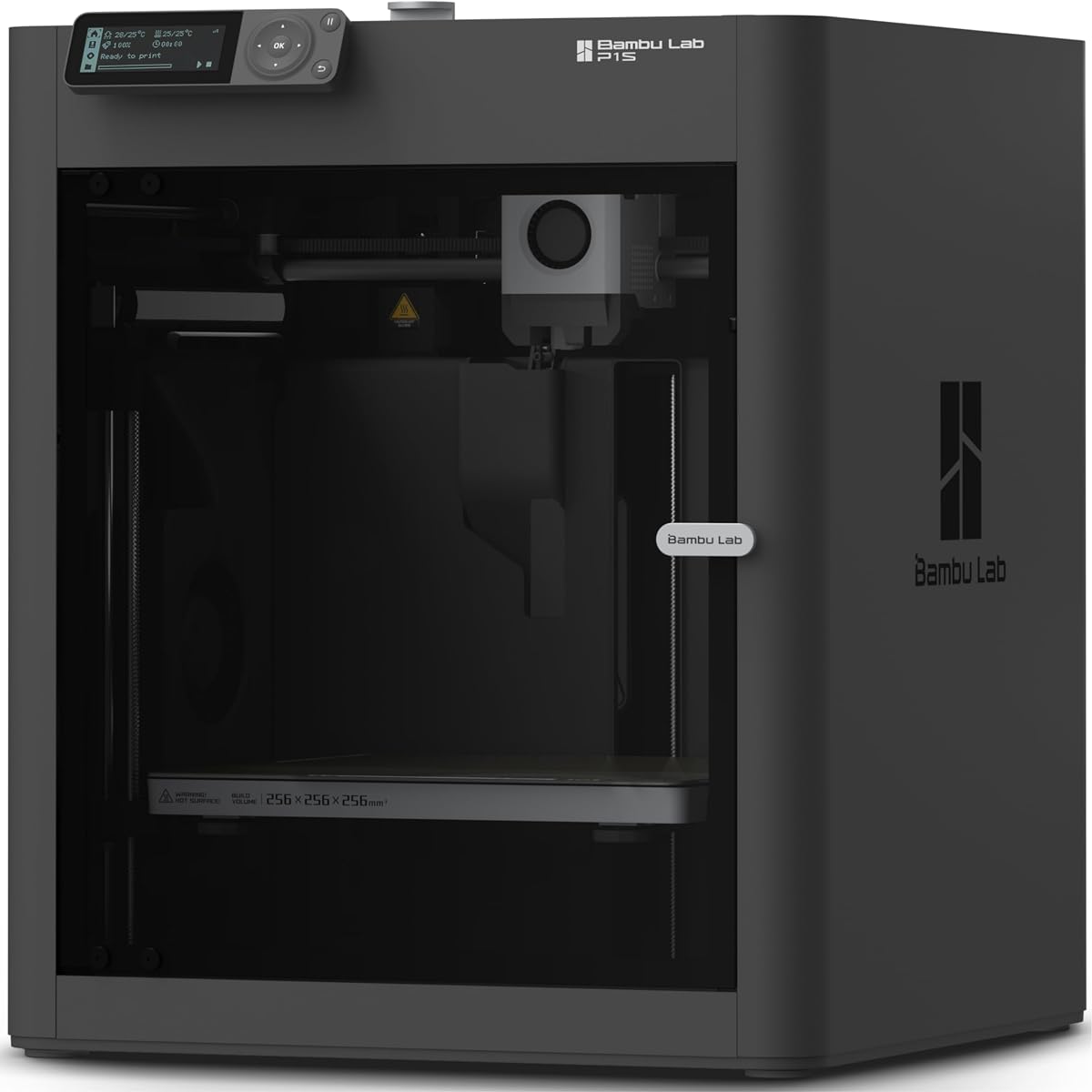
The Bambu Lab P1S is a powerful 3D printer for educational use featuring an enclosed design. This makes it safer for classrooms by protecting hands from moving parts and reducing odors while allowing the use of engineering-grade materials like ABS.
We may earn a commission when you buy through this link, at no additional cost to you.
Its speed and auto bed leveling streamline the workflow, letting students focus on design rather than printer configuration. The enclosed chamber ensures consistent temperatures, improving reliability and success rates for complex projects that might fail on open printers.
While the AMS module for multi-color printing adds cost, the base unit is robust. The enclosed nature is the main differentiator, making it preferable for high school labs where safety and material diversity are priority concerns for curriculum design.
Advanced classrooms needing versatility should choose the P1S. It supports a wide range of filaments safely. The enclosed design offers peace of mind for teachers and enables more ambitious, real-world engineering projects for students.
Fully enclosed body prevents accidental contact with hot parts. It also contains fumes, making it safer for indoor school environments.
Capable of printing ABS and ASA reliably. This expands curriculum options beyond basic PLA for more durable engineering prototypes.
We may earn a commission when you buy through this link, at no additional cost to you.
The FLASHFORGE AD5M is a reliable 3D printer for educational use with a focus on efficiency. Its all-metal CoreXY structure ensures stability during high-speed printing, while the 1-click auto leveling system removes calibration complexity for beginners and teachers alike.
We may earn a commission when you buy through this link, at no additional cost to you.
The patent quick-release nozzle allows for easy maintenance in just three seconds, minimizing downtime during school hours. Network monitoring tools let IT staff track printer status across multiple devices, simplifying management in larger educational facilities.
Power loss recovery ensures projects aren't ruined by outages, a common issue in schools. While the open frame limits some material options, the durability and ease of maintenance make it a strong candidate for busy makerspaces and workshops.
Schools with limited IT resources will benefit from its network features. The power recovery and auto leveling ensure consistent uptime. It is a practical, robust choice for classrooms needing a dependable workhorse without complex setup.
Quick-release nozzle swaps in three seconds. This reduces downtime significantly when changing nozzles for different educational projects.
Orca-flashforge slicer enables batch file transmission. IT admins can monitor multiple printers efficiently during class time.
We may earn a commission when you buy through this link, at no additional cost to you.
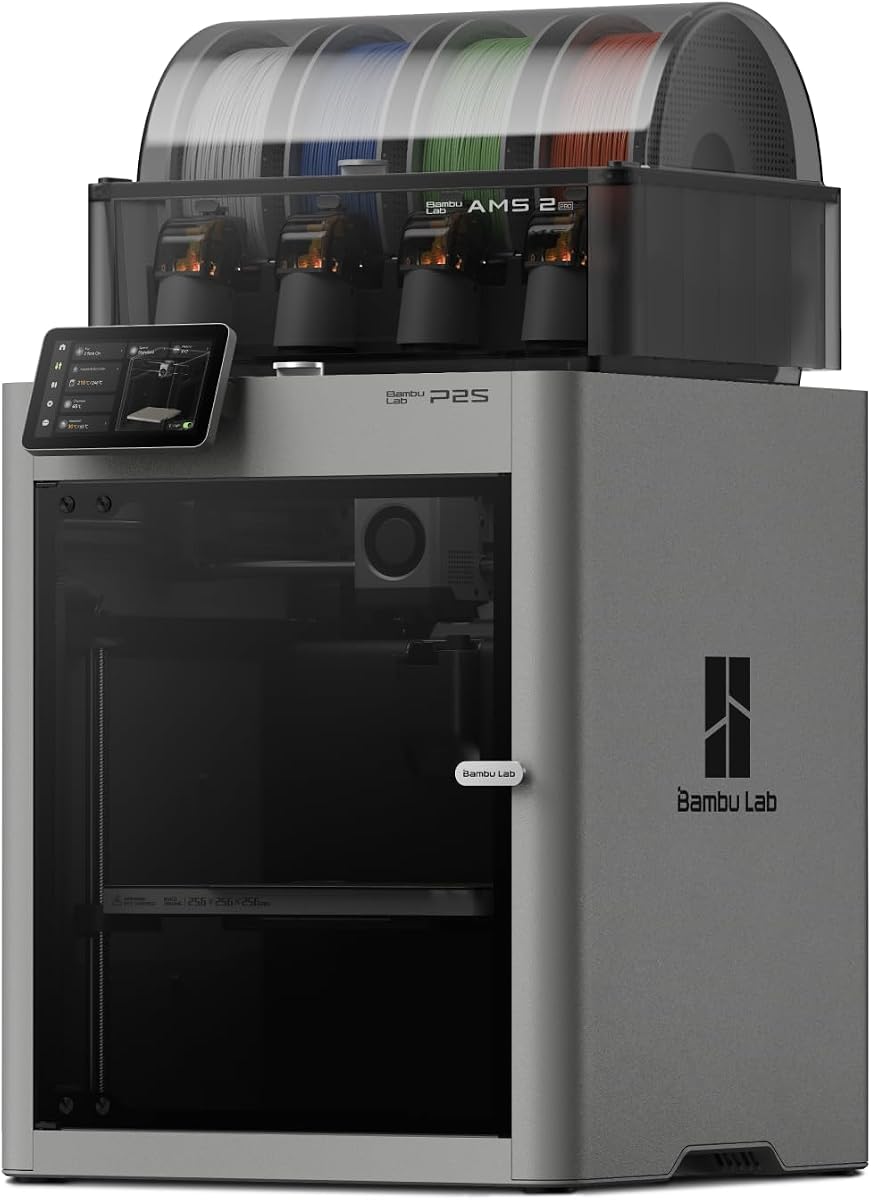
The Bambu Lab P2S Combo delivers professional-grade capabilities as a 3D printer for educational use. With the AMS 2 Pro included, students can create multi-color prints without manual swapping, unlocking advanced design possibilities for art and engineering classes.
We may earn a commission when you buy through this link, at no additional cost to you.
The adaptive airflow system automatically adjusts cooling based on the filament, ensuring success with various materials. AI failure detection alerts users to potential issues, preventing wasted time and filament in unmonitored printing scenarios.
Filament drying keeps materials ready for printing, reducing failure rates. While expensive, the all-in-one nature makes it ideal for specialized maker labs or university programs where print quality and multi-material capability are essential for advanced projects.
Programs needing top-tier quality should choose this combo. The included AMS and drying features streamline workflows for high-volume printing. It is a premium solution that minimizes friction in complex educational projects.
AMS 2 Pro allows seamless multi-color prints. This enables students to create finished models with vibrant details in one go.
Adaptive airflow balances cooling automatically. This ensures consistent quality across different filament types without manual tuning.
We may earn a commission when you buy through this link, at no additional cost to you.
The Ugee Funbox is a dedicated 3D printer for educational use prioritizing safety and ease of use. UL GREENGUARD certification and enclosed design ensure a safe environment for children, while AI tools turn simple drawings into 3D printable models instantly.
We may earn a commission when you buy through this link, at no additional cost to you.
Setup is effortless with zero calibration required, meaning kids can start creating immediately. The built-in camera streams progress to phones, allowing teachers and parents to monitor prints remotely and share time-lapse videos of student projects.
The focused on single-color printing to simplify the experience, but AI tools add creativity. While it costs more than some alternatives, the safety certifications and AI features make it worth the investment for younger elementary classrooms and home learning.
Elementary schools should choose this for safe engagement. It removes technical barriers entirely for young learners. The focus on safety and creativity makes it perfect for early exposure to STEM concepts without frustration.
Anti-pinch door and cool-touch exterior ensure safety. UL GREENGUARD certification confirms low emissions for indoor classrooms.
Text and photo to 3D model conversion. This empowers students to create without needing advanced design software skills.
We may earn a commission when you buy through this link, at no additional cost to you.
The FLASHFORGE Adventurer 5M V2 improves reliability as a 3D printer for educational use. Its vibration compensation eliminates ghosting in prints, ensuring high-quality outputs for student presentations. Dual-sided PEI coating simplifies part removal without damaging models.
We may earn a commission when you buy through this link, at no additional cost to you.
Filament run-out sensors prevent mid-print failures, saving time during busy school days. The auto leveling system ensures consistent adhesion, reducing waste and frustration. Quick assembly means teachers can deploy units rapidly across classrooms.
Open design allows good ventilation but limits some engineering materials. For standard PLA and PETG, it performs well. The features prioritize ease of use and maintenance, fitting well into general education settings with moderate project needs.
General classrooms should opt for this version. Its reliability and maintenance features reduce teacher workload. It delivers high-quality prints with minimal fuss, making it a practical choice for consistent educational output.
Vibration compensation ensures smooth prints. This eliminates ghosting artifacts common in fast printing educational environments.
Dual-sided PEI plate aids part removal. This reduces scrap and ensures students keep their finished models intact.
We may earn a commission when you buy through this link, at no additional cost to you.
The Bambu Lab A1 Mini Combo is a compact 3D printer for educational use. It brings multi-color printing to small spaces with its AMS lite unit. Auto calibration and high speed make it ideal for individual student stations where space is limited.
We may earn a commission when you buy through this link, at no additional cost to you.
Its noise cancellation keeps the environment peaceful, and the auto leveling ensures success. Setup is quick, with pre-assembly reducing teacher prep time. It fits perfectly on desks in crowded classrooms without sacrificing performance or features.
The smaller build volume limits large objects, but this encourages modular design thinking. For individual homework or small-scale prototypes, it is excellent. The combination of features and size makes it a versatile tool for personalized learning.
Schools with limited desk space should choose this model. It maximizes utility per square foot. Students get a full-featured printer without needing a dedicated lab, promoting widespread adoption and engagement in 3D design.
Small footprint fits on student desks easily. This maximizes classroom real estate while providing full printing capabilities.
AMS lite included for vibrant prints. This allows complex projects without needing additional hardware purchases.
We may earn a commission when you buy through this link, at no additional cost to you.
Selecting the right device requires understanding specific educational needs. This guide breaks down key factors to help you find a printer that enhances learning without causing frustration.
Consider the physical space available in your classroom. Compact printers fit on desks but limit project size, while larger units offer more design freedom but require dedicated table space. Ensure the dimensions match your curriculum requirements.
Choose a volume that balances space constraints with project goals for your students.
Automated leveling and calibration save valuable class time. Printers that require manual adjustments can frustrate students and teachers alike. Look for models with one-click setup features to maximize hands-on learning time.
Prioritize fully auto-calibrating models to ensure smooth operations.
Safety is paramount in shared educational environments. Look for enclosed designs to protect hands from moving parts and reduce heat exposure. Certifications like UL GREENGUARD ensure low emissions, vital for indoor classroom air quality.
Opt for enclosed designs and verified safety certifications for student environments.
Check if the printer supports various materials. Basic PLA is fine for beginners, but advanced courses may need PETG or ABS. Ensure the extruder and chamber can handle your curriculum's required materials.
Verify extruder temperature and chamber capabilities for your material needs.
Faster printers reduce wait times during class. High acceleration and travel speeds mean more iterations per lesson. In a school setting, time efficiency often outweighs slight differences in final print resolution.
Choose high-speed models to maximize project iterations in class.
Quiet operation prevents distractions during lessons. Printers with noise-canceling motors work better in libraries or study areas. This ensures the device aids focus rather than disrupting the learning environment.
Select low-decibel units for distraction-free learning spaces.
Remote monitoring via apps helps teachers manage multiple units. WiFi and USB-C connectivity enable easy file transfers and status checks. This oversight is crucial for maintaining workflow across several student stations.
Ensure reliable app support for remote management and control.
Integrated design tools and model libraries add value. Apps that simplify slicing and design lower the barrier to entry. Support and community resources are also vital for troubleshooting classroom issues.
Look for integrated tools and strong community support for teachers.
Start by placing the printer on a level surface and connecting it to power and WiFi. Follow the on-screen prompts to perform initial auto-calibration. Once ready, load your filament through the guided loading process to ensure smooth extrusion.
Use slicing software to prepare your 3D files. Adjust temperature and speed settings according to the filament manufacturer's recommendations. Save your sliced file to the printer or cloud and monitor the first few layers for proper adhesion.
Regularly clean the print bed with isopropyl alcohol to remove oils and debris. After use, keep the printer covered to prevent dust accumulation on sensitive components. Check nozzles periodically for clogs and replace them if printing quality declines.
Yes, when used properly. Modern educational printers are designed with safety features like auto-shutoff and enclosed chambers. Always ensure good ventilation and supervise younger students during operation to prevent accidental contact.
PLA is the best choice for most schools due to its low melting point and ease of use. It is biodegradable and non-toxic, making it safe for children. For advanced projects, PETG offers more durability.
Desktop models need about a 12×12 inch footprint. Ensure there is extra room around the device for airflow and filament spool access. This prevents overheating and ensures safe operation in crowded classrooms.
Small educational projects usually take 1 to 2 hours. Larger models can take longer. Use high-speed printers to reduce wait times and allow multiple students to rotate through the device efficiently.
No, modern educational printers are designed for beginners. Auto-leveling and intuitive software remove most technical barriers. Teachers only need basic guidance on loading filament and starting prints.
Clean the bed regularly and keep the nozzle free of residue. Check belts for tension and update firmware occasionally. A well-maintained printer ensures consistent quality and longer lifespan.
Typically one printer serves one print at a time, but networks can queue multiple jobs. High-speed models allow rapid turnover. This setup lets multiple students design while waiting for their turn.
Choosing the right 3D printer for educational use depends on balancing speed, safety, and budget. The top picks like the Bambu Lab A1 offer high performance, while the Entina Tina2C provides an affordable entry for younger learners.
Prioritize ease of use and safety features to maximize educational impact. Automatic calibration and enclosed designs reduce friction for students and teachers. Ensure the device supports your curriculum's material and project requirements.
Always verify current pricing and availability before purchasing. Educational needs vary, so select the model that best fits your specific learning environment. With the right printer, you can inspire the next generation of innovators.