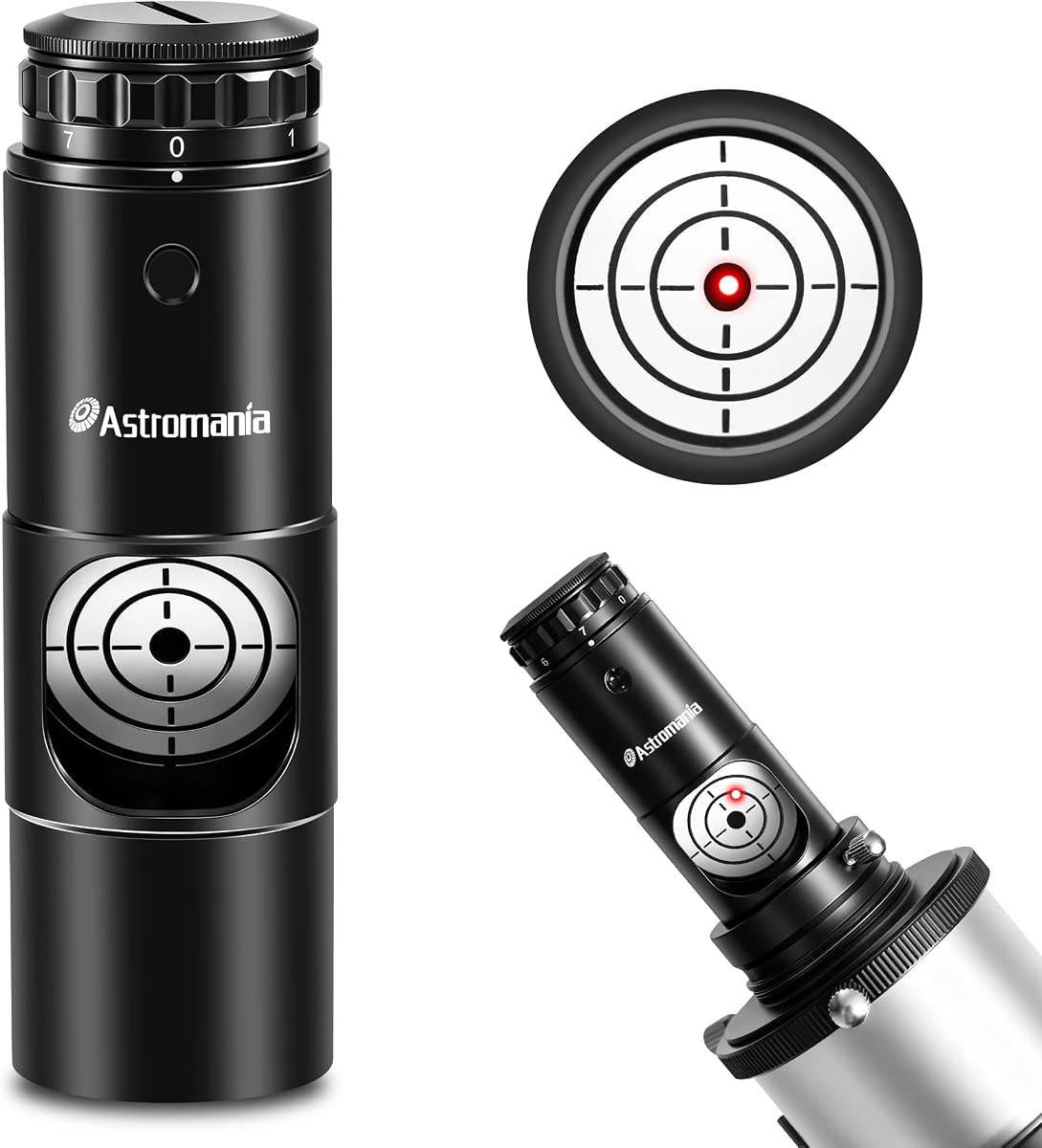
Astromania Laser Collimator 1.25
4.5Editor score
Fits 1.25 inch focusers
Durable metal construction
Adjustable brightness levels
This guide compares the top laser collimator for telescope alignment options to help you achieve precise optical alignment for sharper views in your Newtonian
Achieving perfect optical alignment is crucial for any serious astronomer using a reflector telescope. A high quality laser collimator for telescope alignment ensures your optics are properly adjusted for maximum clarity and contrast during stargazing sessions.
We have carefully reviewed ten top rated models available in the current market to bring you this comprehensive list. Each product was evaluated based on build quality, ease of use, accuracy, and compatibility with various telescope focusers.
Each pick in this guide highlights specific strengths to help you choose the right tool for your needs. Please note that prices and availability can change frequently so always check the current listing before making your purchase decision today.
4.5Editor score

4.5Editor score
4.7Editor score
The following table provides a side by side comparison of all ten laser collimator models reviewed in this guide to help you quickly identify key specifications and features for each option.


The Astromania Laser Collimator ranks as our top pick due to its exceptional versatility and build quality. With a strong 4.5 rating from users, it stands out for its ability to fit both 1.25 and 2 inch focusers seamlessly.
We may earn a commission when you buy through this link, at no additional cost to you.
Its metal body and anodized aluminum finish ensure long term durability while the 7 brightness levels allow you to adjust the laser intensity for any lighting condition. The 3R laser safety standards provide peace of mind during regular use.
While it requires one CR2032 battery which is included, some users may find the unit slightly heavier than ultra lightweight options. However this weight contributes to stability and precision during the collimation process.
This collimator is ideal for astronomers who want a reliable tool that grows with their equipment. The clear instructions and precise engineering make it easy to achieve sharp views quickly.
The included 2 inch adapter means you can upgrade your focuser without buying a new collimator.
Compliance with Class 3R safety standards ensures the laser is safe for eye exposure during alignment.
We may earn a commission when you buy through this link, at no additional cost to you.
The Astromania Laser Collimator 1.25 inch model offers excellent value for beginners and budget conscious astronomers. It maintains the same high quality construction as its more expensive sibling but focuses solely on 1.25 inch compatibility.
We may earn a commission when you buy through this link, at no additional cost to you.
With features like 7 brightness levels and a sturdy metal body this collimator ensures you can align your telescope accurately without breaking the bank. The 3.8mW output power is reliable for quick and precise adjustments.
Users should note that this model does not include a 2 inch adapter so it is best suited for telescopes with standard 1.25 focusers. However for those setups it performs flawlessly.
This is the perfect choice for entry level stargazers who need a trustworthy tool. Its lightweight design and intuitive layout make collimation a simple and rewarding process.
You get the same core collimation technology as premium models at a fraction of the cost.
Its compact size fits easily in your observing kit for transport to dark sky sites.
We may earn a commission when you buy through this link, at no additional cost to you.
The SVBONY Laser Collimator is a strong contender for those seeking a reliable tool with dual compatibility. It allows easy collimation for both 1.25 and 2 inch reflector telescopes with a removable adapter included in the package.
We may earn a commission when you buy through this link, at no additional cost to you.
Users appreciate its triple cemented lens which improves the stability of the red dot and ensures consistent alignment. The solid metal body provides longevity while the 7 brightness levels offer flexibility.
Some users might find the instructions slightly basic compared to other brands but the core functionality remains robust. It is a great gift for Halloween or birthdays as noted by many reviewers.
This collimator is an excellent choice for astronomers planning to upgrade their setup. The included adapter means you do not need to buy another calibrator when moving to a 2 inch system.
The removable adapter ensures you can use this unit even as you upgrade to larger focusers.
The triple cemented lens provides a stable and clear red beam for accurate alignment.
We may earn a commission when you buy through this link, at no additional cost to you.
This bundle from SVBONY combines a user adjustable laser collimator with a wide angle eyepiece for a complete observing kit. It is designed for anyone who wants to simplify their setup while maintaining precision.
We may earn a commission when you buy through this link, at no additional cost to you.
The collimator features 7 brightness levels and works well for both day and night alignment. The included eyepiece offers a super wide angle view enhancing your visual experience of celestial objects.
While the price is higher than a standalone collimator the value of adding a quality eyepiece is significant. It is perfect for lunar observation and deep sky targets.
This bundle is ideal for beginners who want a ready to use package. The compatibility with 1.25 inch focusers makes it versatile for many standard telescopes on the market.
Get both alignment tools and a viewing eyepiece in one purchase for convenience.
The 62 degree apparent field of view provides an immersive viewing experience.
We may earn a commission when you buy through this link, at no additional cost to you.
The Alstar Laser Collimator is designed for reflector telescopes with standard 1.25 inch focusers. It provides a straightforward and effective way to achieve accurate collimation for sharper telescope views.
We may earn a commission when you buy through this link, at no additional cost to you.
Its 7 brightness levels and wavelength of 635 to 655 nm ensure the laser is visible and precise. The metal construction ensures it can withstand regular use in various conditions.
Instructions are provided in German and English making it accessible for many users. The front opening and side window allow for easy monitoring of the laser beam.
This unit is a great choice for those with simpler telescope setups. It allows for swift and precise alignment without needing extra accessories or adapters.
Detailed step by step guidance helps even newcomers master the collimation process.
The adjustable brightness ensures you can see the beam clearly in any environment.
We may earn a commission when you buy through this link, at no additional cost to you.
This Alstar model offers professional grade alignment features at a budget friendly price point. It features a standard 1.25 inch fit with an included 2 inch adapter for universal compatibility across different telescope types.
We may earn a commission when you buy through this link, at no additional cost to you.
The triple cemented lens provides stable beam projection which is crucial for accurate collimation. Users can adjust the brightness to suit different lighting conditions for optimal results.
While the rating is slightly lower than other models it still performs well for standard use. The durable construction ensures it can handle the rigors of field work.
This collimator is perfect for astronomers who need flexibility without spending too much. The included adapter and clear instructions make it a practical choice for many setups.
The triple cemented lens ensures the laser beam remains steady for precise alignment.
Built with durable materials this unit is ready for transport and regular use.
We may earn a commission when you buy through this link, at no additional cost to you.
This bundle combines a laser collimator with a cell phone adapter making it ideal for those who want to capture images of their alignment process. It is tested for compatibility with many iPhone and Android models.
We may earn a commission when you buy through this link, at no additional cost to you.
The collimator itself is adjustable and allows for easy collimation of both 1.25 and 2 inch reflector telescopes. The phone adapter uses adjustable locking mechanisms to protect your device.
While the added accessories increase the cost they provide significant value for astrophotography enthusiasts. You can document your setup or share alignment tips with others.
This is a great choice for tech savvy astronomers who want to integrate their smartphone into the hobby. The metal body ensures the collimator remains reliable during use.
The included adapter lets you attach your phone easily for imaging or sharing alignment.
It supports a wide range of phone sizes from 25 to 48mm eyepiece diameters.
We may earn a commission when you buy through this link, at no additional cost to you.
This bundle pairs a laser collimator with a precision machined Cheshire eyepiece for comprehensive alignment capabilities. The 5.0 rating reflects high user satisfaction with this complete alignment package.
We may earn a commission when you buy through this link, at no additional cost to you.
The Cheshire eyepiece is useful for aligning optics accurately without batteries and can be used during the day. The laser collimator complements it for quick and precise adjustments.
While carrying two tools may seem cumbersome the precision gained is worth the effort. This combination covers both visual and laser alignment needs effectively.
This bundle is recommended for serious astronomers who want the highest accuracy. The included adapter ensures compatibility with both 1.25 and 2 inch focusers.
Use the laser for speed and the Cheshire for ultimate precision in your alignment.
The Cheshire eyepiece allows for accurate alignment even when the sun is out.
We may earn a commission when you buy through this link, at no additional cost to you.
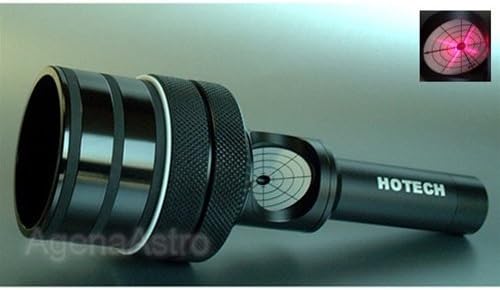
The HoTech SCA Laser Collimator stands out for its innovative self-centering adapter technology that eliminates the slop common in other models. It is designed to provide precise and repeatable installation in all brands of 1.25 and 2 inch focusers.
We may earn a commission when you buy through this link, at no additional cost to you.
This is the ultimate choice for those who demand the highest level of accuracy. The patented mechanism ensures the laser remains centered on the optical axis for reliable results.
While the price is higher than average the investment pays off in performance. It solves a fundamental problem found in many standard collimators on the market.
This collimator is best suited for serious astronomers and imaging enthusiasts. The included battery and user manuals make it ready for immediate precise use.
The patented adapter ensures the laser stays perfectly centered during use.
Designed for precision this tool minimizes errors caused by mechanical slop.
We may earn a commission when you buy through this link, at no additional cost to you.
The Ocal Pro V4.0 represents the future of optical alignment with its electronic calibration system and smartphone compatibility. It is engineered for both Newtonian and Schmidt Cassegrain telescopes with versatile mounting options.
We may earn a commission when you buy through this link, at no additional cost to you.
Built-in software-guided calibration circles enable quick and precise optical axis adjustments with factory-centered pixel-level accuracy. This makes it ideal for complex imaging sessions requiring extreme precision.
Its portability allows for complete collimation functionality on the-go which is perfect for field adjustments. However it does require power which may be a limitation in remote locations.
This tool is perfect for advanced users who want the most modern and precise solution. The all-in-one design ensures you start with optimal baseline accuracy every time.
Connects with your smartphone to guide you through precise calibration steps.
Factory centered calibration ensures you begin with optimal precision for alignment.
We may earn a commission when you buy through this link, at no additional cost to you.
Choosing the right collimator depends on your telescope type, budget, and desired precision. Here are the key factors to consider before you buy.
Ensure the collimator fits your telescope's focuser size. Most standard models fit 1.25 inch focusers but many include removable adapters for 2 inch systems.
Choose a dual-fit option if you plan to upgrade your equipment to avoid buying a new tool later.
Look for units with solid metal bodies and anodized finishes to ensure durability and longevity in various outdoor conditions.
A sturdy build prevents internal misalignment from bumps or drops during transport.
Adjustable brightness levels are crucial for visibility in different lighting conditions ranging from bright rooms to dark skies.
Always choose models that comply with Class 3R safety standards to protect your eyes during use.
Premium models often feature patented technologies like self-centering adapters that eliminate slop for higher accuracy.
Check if the unit holds its calibration over time and includes instructions for re-adjustment if needed.
Single-person operation is a valuable feature that allows you to align your telescope without assistance.
Look for intuitive layouts and clear side windows that let you monitor the laser beam easily.
Bundles may include accessories like phone adapters or Cheshire eyepieces that add value depending on your needs.
Consider whether these extras justify the higher price compared to standalone units.
Most units use common batteries like CR2032 or CR123 which are easy to replace during field work.
Check if a battery is included so you can start using the tool immediately.
Prices range from affordable basic models to high-end electronic tools. Determine your budget and prioritize features that matter most to your astronomy activities.
Remember that a reliable tool is an investment that improves your entire stargazing experience.
Begin by ensuring your telescope is securely mounted and powered off to prevent accidental movement during alignment. Insert the collimator into the focuser and tighten the thumbscrew gently to avoid damaging the laser unit.
Turn on the laser and adjust the brightness to a comfortable level for your viewing conditions. Use the side window to observe the reflection on the primary mirror and make small adjustments to the tilt screws until the beam centers perfectly.
After use, remove the collimator and store it in a protective case to prevent scratches or internal misalignment. Regularly check the battery levels and clean the lens with a soft cloth to maintain optimal performance.
Laser collimators are primarily designed for Newtonian reflector telescopes. Some bundles also support refractor optics or Schmidt Cassegrain telescopes but you should check compatibility before purchasing.
You should collimate your telescope after every significant bump or transport. For regular observers, checking alignment before each session ensures optimal image quality.
Yes many laser collimators have adjustable brightness levels suitable for daylight use. However visibility may be reduced so using a darkened room or night time is often preferred.
A laser uses a beam to show alignment while a Cheshire uses optical sight holes. Many astronomers use both for maximum precision and verification.
Premium models often offer better precision and stability. If you need high accuracy for imaging investing in a higher quality tool is usually worth it.
You can test it by rotating it in the focuser to see if the beam spot stays centered. If it wobbles the unit may need adjustment or recalibration.
Yes laser collimators require batteries to operate. Most use CR2032 or CR123 batteries which are easy to find and replace when the laser dims.
Yes laser collimators are designed to be user-friendly with clear instructions. They make the collimation process much easier than traditional methods.
We reviewed ten outstanding laser collimators for telescope alignment ranging from budget friendly options to premium precision tools. The Astromania and SVBONY models offer great value while the HoTech and Ocal Pro deliver top-tier accuracy.
Your choice depends on your telescope setup and budget. Beginners might prefer versatile and affordable options while advanced users may benefit from electronic or self-centering technologies.
Always check current prices and availability before purchasing as these details can change frequently. With the right tool you can achieve sharper views and a more rewarding stargazing experience.