
waveshare 2.4inch LCD Display Module with 65K RGB Colors
4.2Editor score
2.4 inch LCD display module
240×320 resolution SPI interface
Supports Raspberry Pi and STM32
This guide compares the top LCD Graphic Displays for 2026, evaluating resolution, connectivity, touch features, and compatibility to help you choose the
LCD Graphic Displays have become essential components for modern electronics projects, enabling users to visualize data and interact with devices intuitively. Whether you are building a home automation system, an industrial control panel, or a hobbyist prototype, selecting the right display module is crucial for functionality and user experience.
We compared ten distinct LCD Graphic Displays based on resolution quality, interface compatibility, touch capabilities, and overall build robust. Each product was evaluated for its suitability with popular microcontrollers like Arduino and ESP32. This ensures that our recommendations meet the diverse needs of developers and makers across various applications.
Each pick in this list highlights specific strengths such as high resolution, cost-effectiveness, or specialized features like capacitive touch. Please note that prices and availability can fluctuate over time. Always verify the latest details before making your final purchase decision to ensure you get the best value for your investment.
4.2Editor score
4.0Editor score

4.2Editor score
This side-by-side comparison outlines the key specifications of each LCD Graphic Display to help you quickly identify which module fits your specific project requirements.


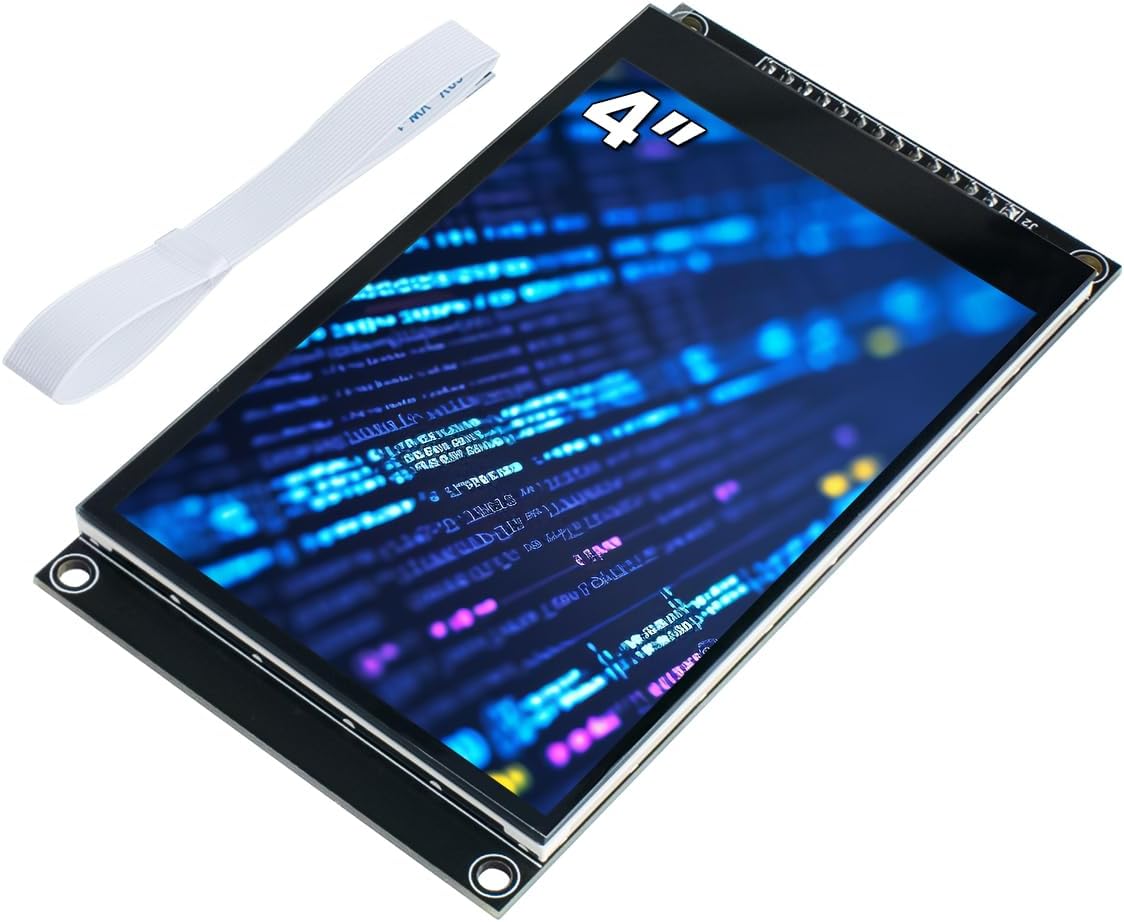
This Hosyond module stands out as a top choice for projects requiring a balance between screen real estate and usability. Its 4.0 inch size offers ample space for interfaces while maintaining a compact footprint. The capacitive touch feature significantly enhances user interaction compared to resistive alternatives.
We may earn a commission when you buy through this link, at no additional cost to you.
The 320×480 resolution ensures that text and graphics appear sharp and vibrant. This level of detail is crucial for applications like dashboards or control panels. The ST7796S driver simplifies implementation across various microcontrollers.
While the touch capability is excellent, users should ensure they have the correct libraries installed for smooth operation. The board includes a level conversion circuit which helps compatibility with different voltage levels.
For makers needing a reliable interface that looks professional and functions well, this module is highly recommended. It bridges the gap between basic displays and full touchscreens effectively.
The capacitive touch panel allows for smoother scrolling and selection actions which improve the overall user experience significantly.
Supporting both SPI serial bus and FPC extensions makes it easy to connect to different types of controller boards.
We may earn a commission when you buy through this link, at no additional cost to you.
This OLED display module is ideal for projects where high contrast and readability are paramount. The 256×64 resolution is perfect for showing text, graphs, and simple icons without overwhelming the system resources. The green backlight provides excellent visibility.
We may earn a commission when you buy through this link, at no additional cost to you.
The SSD1322 controller supports both parallel and SPI communication which gives developers flexibility in pin usage. Having two units in one package is cost-effective for prototyping or small batch production runs. The bright font color ensures data is clear.
One limitation is the lack of color which restricts its use for rich media applications. Additionally, users must solder the pins themselves which adds a step to the setup process. However the quality of the display is high.
If you need a reliable monochrome screen for status indicators or menus this product delivers exceptional value. It is a great choice for battery powered devices due to OLED efficiency.
The high resolution of 256×64 ensures that even small text remains legible in various lighting conditions.
Support for both parallel and SPI protocols allows you to choose the best connection method for your specific board.
We may earn a commission when you buy through this link, at no additional cost to you.
This LCD display is designed specifically for PC enthusiasts who want to monitor system parameters. The 1280×480 resolution offers a wide panoramic view perfect for system stats or custom art. The IPS panel provides accurate colors and good viewing angles.
We may earn a commission when you buy through this link, at no additional cost to you.
The magnetic panel allows you to attach the screen to different parts of the chassis easily. You can switch between static and dynamic images using the TRCC software. This feature adds a lot of customization to your build.
Setup involves installing specific software on your PC which may take some time. Also the screen relies on the motherboard interface so compatibility should be checked. The design is sleek but requires careful cable management.
For those looking to customize their PC aesthetic and functionality this screen is a unique choice. It transforms a standard case into a visually impressive workstation component.
Support for dynamic images means you can show real-time graphs or animations that update as your system runs.
The magnetic attraction performance allows the screen to move freely in various positions of the chassis without tools.
We may earn a commission when you buy through this link, at no additional cost to you.
This module is a fantastic option for budget conscious developers who still need a color display. The 240×320 resolution provides a decent amount of space for basic graphics and text. It works well with Raspberry Pi and STM32 boards.
We may earn a commission when you buy through this link, at no additional cost to you.
The ILI9341 driver is well documented making it easy to find code examples online. The SPI bus minimizes the number of IO pins required which is helpful for complex projects. It offers a vibrant 65K RGB color range.
The lack of touch input limits interactive applications but for read-only displays it is perfect. The size is small so it fits into tight spaces in enclosures. It is a reliable choice for simple interfaces.
If you are looking for a dependable color screen without spending much this is an excellent pick. It provides the essential features needed for most prototyping tasks effectively.
Using the SPI bus allows for a compact wiring setup that leaves more pins free for other components.
The display delivers clear and colorful effects ensuring that your project output is always visible.
We may earn a commission when you buy through this link, at no additional cost to you.
This display is optimized for users working with the Arduino Mega2560 board. The direct plug connection eliminates the need for jumper wires which simplifies the build. The 480×320 resolution is sharp and vibrant for its size.
We may earn a commission when you buy through this link, at no additional cost to you.
The ILI9488 driver provides good performance for rendering graphics. The level conversion chip ensures that it works with different MCU voltages. This makes it versatile for various voltage requirements.
It does not support touch input so interaction must be handled externally. The screen is dedicated to display purposes which can be a benefit if touch is not needed. It is a stable choice for static data visualization.
For students or hobbyists using Mega boards this screen integrates seamlessly into projects. It offers a straightforward way to add visual output to your circuit.
The module supports Arduino Mega2560 directly inserted which saves time on wiring and connections.
Compatible with 3.3 and 5V operation voltage levels allowing for use with various microcontroller boards.
We may earn a commission when you buy through this link, at no additional cost to you.
This ESP32 display module is a powerhouse for advanced IoT projects. The 7 inch screen provides a desktop-like experience for human machine interfaces. It supports responsive touch operations which makes navigation intuitive for users.
We may earn a commission when you buy through this link, at no additional cost to you.
With an integrated dual-core processor and wireless connectivity you can manage complex tasks without external modules. The TF card slot and multiple interfaces allow for expandability. It is ready for industrial and home automation use.
The price is higher than standard modules but the integrated features justify the cost. Setup involves installing specific libraries and configuring the wireless connection. Technical support is available for any issues.
If you need a professional grade touch interface for a final product this is a strong candidate. It combines display and control capabilities in one efficient unit.
Integrates WiFi and Bluetooth wireless functionality for robust performance and versatile applications in IoT.
Offers expert technical support and tutorials to assist with troubleshooting and solutions within 24 hours.
We may earn a commission when you buy through this link, at no additional cost to you.
This FSTN module is designed for environments where reliability is key. The transflective technology allows for visibility in both low light and bright conditions. It is often used in industrial control panels and medical devices.
We may earn a commission when you buy through this link, at no additional cost to you.
The 240×128 resolution is sufficient for detailed diagrams and text. The 20-pin interface is standard and easy to connect to legacy systems. It has a wide operating temperature range suitable for harsh environments.
It is not a touch screen and lacks color which simplifies the electronics. The need for a separate backlight may increase complexity in some setups. However the contrast is excellent for reading data.
For applications requiring durability and stability this display is a solid choice. It is trusted in professional settings for years of continuous operation.
The FSTN transflective display ensures excellent readability even under varying ambient light conditions.
The 20-pin interface makes it compatible with a wide range of older and new controller boards.
We may earn a commission when you buy through this link, at no additional cost to you.
This module offers a balance between screen size and portability. The 5 inch display is large enough for detailed menus yet small enough to carry. It includes a protective acrylic case which is rare for bare modules.
We may earn a commission when you buy through this link, at no additional cost to you.
The ESP32-S3 core provides enough power for complex tasks. It supports Micro Python and Arduino IDE making it accessible. The high resolution ensures that UI elements are crisp and clear.
The case protects the screen but adds to the overall dimensions. Some users might find the case difficult to remove for adjustments. Overall it is a complete package for testing.
If you need a quick solution for a handheld device this set is ideal. The included case saves you the trouble of designing a custom enclosure.
Comes with a protective acrylic case that provides a durable and professional look to your project.
Works with Arduino IDE, Espressif IDF, PlatformIO, and MicroPython for flexible development options.
We may earn a commission when you buy through this link, at no additional cost to you.
This module provides a robust color display with touch input for standard Arduino boards. The 480×320 resolution is sharp enough for icons and text. It connects easily via SPI which saves pins on your board.
We may earn a commission when you buy through this link, at no additional cost to you.
The package includes a touch pen which helps with precise selection. The SD card slot allows you to store images directly on the card. This reduces memory load on your microcontroller.
Calibrating the touch may require some trial and error initially. The sample programs are useful but might need modification for your specific needs. It is a strong tool for interactive apps.
For hobbyists wanting to add touch to their Arduino projects this module is a great option. It simplifies the process of creating interactive interfaces.
Easy to expand the experiment with SD card slot which allows storing graphics locally.
Provide a rich sample program and underlying driver technical support to help you get started.
We may earn a commission when you buy through this link, at no additional cost to you.
This module is perfect for projects where space is extremely limited. The 2 inch screen packs a high resolution into a tiny package. It uses minimal GPIO pins which leaves plenty of room for other sensors.
We may earn a commission when you buy through this link, at no additional cost to you.
The IPS technology provides good viewing angles and color accuracy. The 3.3V/5V operation ensures compatibility with most modern boards. It is ideal for wearables or small handheld devices.
Text might be hard to read for some users due to the small size. It is better suited for simple icons or status indicators. The clarity is impressive for such a small display.
If you are building a wearable or a very small gadget this screen is an excellent fit. It maximizes visual quality in a minimal form factor.
Requires minimum GPIO for controlling which is crucial for compact and constrained designs.
The IPS screen delivers excellent color and viewing angles even in such a small size.
We may earn a commission when you buy through this link, at no additional cost to you.
Selecting the right display module requires evaluating several factors to ensure it meets your project needs.
Resolution determines how much detail you can display. Higher resolutions like 480×320 offer more space for data but require more processing power.
Choose a resolution that balances visual clarity with your system capabilities.
Interfaces like SPI, I2C, or Parallel dictate how the display connects to your controller. SPI is common and saves pins while parallel offers faster data transfer.
Ensure the display interface matches the available pins on your microcontroller.
Touch screens allow direct user interaction but add complexity. Capacitive touch is smoother while resistive is more durable. Decide if interaction is required for your app.
Consider whether a touch feature adds value to your specific project use case.
Some displays run on 3.3V while others use 5V. Mismatched voltages can damage your components. Check the operating voltage range carefully.
Use level shifters if your controller and display voltage levels do not match.
Backlighting and color depth affect how much power the display draws. This is critical for battery powered devices. OLEDs often consume less power than LCDs.
Opt for low power options if your project relies on a battery source.
Popular drivers like ILI9341 or ST7796S have many community libraries. This makes coding easier and faster. Uncommon drivers may require custom development.
Choose a module with well supported drivers to save development time.
The physical dimensions of the screen and module must fit your enclosure. A larger screen may look better but requires more internal space.
Measure your available space carefully before selecting a display size.
IPS displays offer wider viewing angles than TN panels. If the screen needs to be viewed from the side quality a screen type is better.
Prioritize IPS technology if your device will be viewed from different angles.
Start by connecting the display to your microcontroller using the specified interface cables. Ensure that the voltage levels match to avoid damaging the screen. Use level shifters if necessary for 5V to 3.3V transitions.
Install the required drivers and libraries on your development platform. Follow the example code to verify that the display is outputting images. Calibrate touch inputs if your model supports them.
When finished protect the screen from dust and direct sunlight to maintain longevity. Avoid bending the wires excessively during use. Regularly check connections to prevent intermittent display issues.
Capacitive screens detect touch through electrical properties and support multi-touch gestures. Resistive screens use pressure and are more durable against styluses. Capacitive is generally preferred for modern interactive interfaces.
Not all LCD displays work directly with every Arduino. Check the pin layout and voltage requirements. Some modules like those designed for Mega are specific to certain boards. Always verify compatibility before buying.
Yes but you need to manage power consumption carefully. Lower brightness settings help extend battery life. Consider modules with low power modes or OLED technology which are more efficient for portable use.
Strange patterns often indicate a wiring or driver issue. Check your connections for loose wires. Ensure that the library you are using matches the display controller. Reset the board and try again.
Custom images can be stored on an SD card or programmed directly. Use tools provided by the manufacturer to convert images to the correct format. Upload them to the card or compile them into your code.
Typical LCD modules last thousands of hours of operation. Proper voltage regulation extends this lifespan. Overheating or physical stress can reduce longevity significantly. Handle with care during installation.
We reviewed ten top LCD Graphic Displays ranging from compact mini modules to large touchscreens. Each offers unique benefits depending on your specific project requirements and budget constraints.
Prioritize resolution and interface compatibility when making your decision. Ensure the module supports the microcontroller you plan to use. This reduces integration headaches and saves time.
Check the latest pricing and availability before buying. Prices can fluctuate and stock levels vary. Always refer to the official product pages for the most current information.