
YCA1030 Dusk to Dawn Sensor
4.4Editor score
UL Listed for safety
IP65 weatherproof rating
Standard fit for outlets
This guide compares the top 10 light sensors for home security including motion detectors and photocells to help you automate lighting and enhance safety
Securing your home often starts with smart lighting automation that responds to presence and ambient light conditions. A quality light sensor for home security detects motion and darkness to trigger alerts or illuminate pathways without wasting energy.
We evaluated ten leading models ranging from wireless Zigbee devices to hardwired photocells and advanced mmWave radars. Each product was assessed on detection range, integration options, battery life, and overall reliability for residential use.
Every pick below includes detailed specs, pros, cons, and usage scenarios to match your specific setup. Note that product prices and availability can change frequently so verify current listings before purchasing your preferred model.
4.4Editor score

4.5Editor score

4.4Editor score
The following table presents a side by side comparison of all ten selected light sensors. It highlights key specifications and features to help you quickly identify the best fit for your home security needs.


This Zigbee 3.0 motion sensor combines motion detection with real-time ambient light sensing to create smart automations without relying on cloud services. It supports Home Assistant via Zigbee2MQTT and Samsung SmartThings making it ideal for privacy focused users.
We may earn a commission when you buy through this link, at no additional cost to you.
The built-in lux sensor allows you to trigger lights only when motion is detected and the room is dark which saves energy efficiently. You can adjust sensitivity to low medium or high to reduce false triggers from pets or heat sources effectively.
While it requires a compatible hub and does not connect directly to Wi-Fi this limitation ensures better battery life and local control. The compact 1.9 inch design blends discreetly into most home decor schemes without drawing unnecessary attention.
Buyers seeking reliable local automation with energy efficient lighting control will find this sensor a perfect fit. It is best suited for entryways hallways or closets where precise motion and light tracking is essential for daily routines.
Create custom routines in Home Assistant or SmartThings that activate lights based on both motion and light levels without sending data to the cloud.
Fine-tune detection levels to match your specific environment reducing false positives from curtains pets or minor heat fluctuations.
We may earn a commission when you buy through this link, at no additional cost to you.
The YCA1030 is a hardwired photocell sensor designed to automatically turn outdoor lights on at dusk and off at dawn. It meets UL safety standards and offers a standard fit for most residential outlet boxes making installation straightforward for basic setups.
We may earn a commission when you buy through this link, at no additional cost to you.
Its IP65 protection rating ensures the device withstands rain dust and weather elements reliably. The built-in time delay prevents lights from switching off temporarily due to passing car headlights or lightning flashes which adds practical value.
This sensor lacks smart connectivity so it cannot send notifications or integrate with home automation systems. However for users who simply want reliable hands-free outdoor lighting control without monthly fees or complex setups it is an excellent choice.
It is perfect for porch lights driveway floodlights or wall scones where manual switches are inconvenient. Installers should ensure a minimum 5/8 inch through-hole is available for proper mounting with the included locking nut and gasket.
The sensor meets strict electrical safety standards ensuring safe operation with commercial and residential light fixtures without risk of overheating.
Prevents unnecessary light cycling by ignoring brief light changes from vehicles or weather events maintaining consistent illumination when needed.
We may earn a commission when you buy through this link, at no additional cost to you.
The Akamatis Litos v3 uses mmWave radar technology to detect both motion and stationary human presence up to 20 feet away. This eliminates the common issue of lights turning off when a person is still such as while reading or watching TV.
We may earn a commission when you buy through this link, at no additional cost to you.
An integrated VEML7700 light sensor provides accurate ambient light readings that match human eye sensitivity allowing precise automation rules. The light-permeable front panel ensures natural light passes through for reliable measurements without compromising the sleek 3D printed look.
Setup is simplified because the device comes pre-flashed with ESPHome firmware requiring no manual configuration. It works exclusively with Home Assistant so users should have an existing installation and basic familiarity with open-source platforms before purchasing.
This sensor is ideal for living rooms or offices where detecting static presence is crucial for comfort and energy savings. Those already invested in the Home Assistant ecosystem will appreciate its superior detection capabilities and local control features.
Unlike traditional PIR sensors this radar detects subtle movements like breathing so lights stay on even when you are sitting still.
The integrated light sensor ensures automation triggers only when truly needed balancing brightness and energy use accurately.
We may earn a commission when you buy through this link, at no additional cost to you.
This contact sensor is designed for indoor doors and windows providing real-time alerts when opened or closed. It requires the Philips Hue Bridge which unlocks full security features like light alarms and presence mimic automation for enhanced home protection.
We may earn a commission when you buy through this link, at no additional cost to you.
When armed the sensor sends immediate notifications to your mobile device and can trigger lights to turn on creating a deterrent effect. You can also view activity logs and detect tampering attempts which adds an extra layer of security.
As a contact sensor it does not detect motion or ambient light so it focuses solely on entry points. This specialization makes it less versatile than motion sensors but highly effective for monitoring specific zones like front doors or cabinets.
Users with a Philips Hue setup will find it integrates perfectly into existing routines. For those needing broader coverage a combination of contact and motion sensors will provide the most comprehensive home security system possible.
Use the sensor to trigger bright lights when doors open deterring potential intruders without needing external security hardware.
Receive alerts if someone tries to remove or tamper with the sensor ensuring your entry points remain monitored at all times.
We may earn a commission when you buy through this link, at no additional cost to you.
This outdoor motion sensor features a large 160 degree detection area ideal for driveways porches and patios. It requires a Hue Bridge to function but enables secure stable connections that do not drain your home Wi-Fi network.
We may earn a commission when you buy through this link, at no additional cost to you.
The sensor automatically controls Hue lights based on motion detection and ambient light conditions meaning it only turns lights on at dusk when someone passes by. This feature saves energy while ensuring your outdoor areas are illuminated when needed for safety.
Built for outdoor environments it has an IP44 rating to withstand rain and dust ensuring reliable performance in various weather conditions. You can mount it on flat walls or corners easily to cover high-traffic entry points effectively.
Owners of Philips Hue outdoor lights will appreciate the seamless integration and ability to control everything from the Hue app. It is best suited for those already invested in the Hue ecosystem seeking automated outdoor security lighting solutions.
Tested for outdoor use with IP44 rating ensuring reliable performance in rain and varying weather conditions year round.
The 160 degree field of view covers large outdoor areas like driveways and patios reducing blind spots effectively.
We may earn a commission when you buy through this link, at no additional cost to you.
This 2-pack offers two photoelectric switches that automatically turn lights on at dusk and off at dawn. Designed for multiple installations it handles various voltages and includes a swivel mount allowing you to aim the sensor precisely at sky conditions.
We may earn a commission when you buy through this link, at no additional cost to you.
Both units are UL listed and carry an IP65 water-resistant rating protecting them from rain and dust. The delay feature prevents accidental triggering from passing headlights or lightning ensuring lights stay on consistently during the night hours.
Installation involves disconnecting power and screwing the switch into the knockout hole which requires basic electrical knowledge. This package is cost-effective for homeowners needing sensors for multiple entry points or large exterior lighting zones.
Those who want a straightforward hardwired solution without smart features will find this set reliable and easy to use. It works with most bulb types including LED making it versatile for different outdoor lighting setups.
Adjust the sensor angle easily to block out light pollution from street lamps improving detection accuracy significantly.
Compatible with 120V to 277V inputs making it suitable for residential and some commercial lighting applications.
We may earn a commission when you buy through this link, at no additional cost to you.
The Ring Motion Detector provides instant intruder alerts without requiring a dedicated base station as it connects via Amazon Sidewalk. This makes it easy to set up in minutes and flexible to place throughout your home and beyond.
We may earn a commission when you buy through this link, at no additional cost to you.
It features a pet-friendly mode that filters out alerts from pets under 50 lbs reducing false notifications significantly. The 90 degree field of view covers a standard room well making it suitable for living areas or hallways.
While it relies on Amazon Sidewalk which may vary in coverage this network connection simplifies battery usage and setup. Users who subscribe to Ring Pro Monitoring can also get emergency response for break-ins or fires.
This sensor is ideal for Ring users who want quick security alerts without extra hubs or complex wiring. Its simplicity and strong brand integration make it a popular choice for renters or homeowners seeking basic intrusion detection.
Adjust settings to ignore small pets reducing false alerts and ensuring you only receive notifications when truly needed.
Connects over a shared community network so you do not need a separate base station simplifying installation and setup.
We may earn a commission when you buy through this link, at no additional cost to you.
This sensor uses LoRa wireless technology providing an extreme range of over 2000 feet allowing coverage across multiple floors or buildings. It connects only to a YoLink Hub reducing reliance on your home Wi-Fi network which lowers security risks.
We may earn a commission when you buy through this link, at no additional cost to you.
The built-in magnet makes installation effortless on metal surfaces and it supports device-to-device pairing for local automation even if the internet is down. You can receive notifications via text or email ensuring alerts reach you regardless of phone settings.
Because it does not connect to Wi-Fi it is secure and efficient but requires a YoLink hub to function fully. This setup is best for large properties where traditional Wi-Fi signals might be weak or inconsistent.
For those needing reliable detection over large distances or with frequent alerts this sensor delivers robust performance. It is a great choice for barns garages or multi-story homes where standard smart sensors might fail.
Provides superior range and penetration compared to Wi-Fi enabling reliable detection across large properties and multiple floors.
Pair with sirens or lights directly so automations work even without internet or power ensuring security remains active.
We may earn a commission when you buy through this link, at no additional cost to you.
The TP-Link Tapo T100 offers a battery life of up to two years thanks to its Sub-1G wireless protocol which consumes less power than Wi-Fi. It requires a Tapo hub H100 which provides extended coverage and supports up to 64 sensors.
We may earn a commission when you buy through this link, at no additional cost to you.
You can adjust the detection range to 3 5 or 7 meters to reduce false alerts and tailor the sensor to your environment. Real-time notifications send alerts via the Tapo app whenever motion is detected during designated time frames.
The sensor uses magnetic or 3M adhesive mounting making placement flexible and easy. It supports smart actions to control other Tapo devices directly even if the internet disconnects ensuring reliable automation performance.
Ideal for users within the Tapo ecosystem this sensor delivers long-term reliability and cost-effective operation. Its strong battery performance and simple setup make it a practical choice for basic home automation.
Operates for up to two years on a single battery reducing maintenance and replacement costs over time.
Trigger other devices automatically when motion is detected enhancing convenience and energy savings without cloud reliance.
We may earn a commission when you buy through this link, at no additional cost to you.
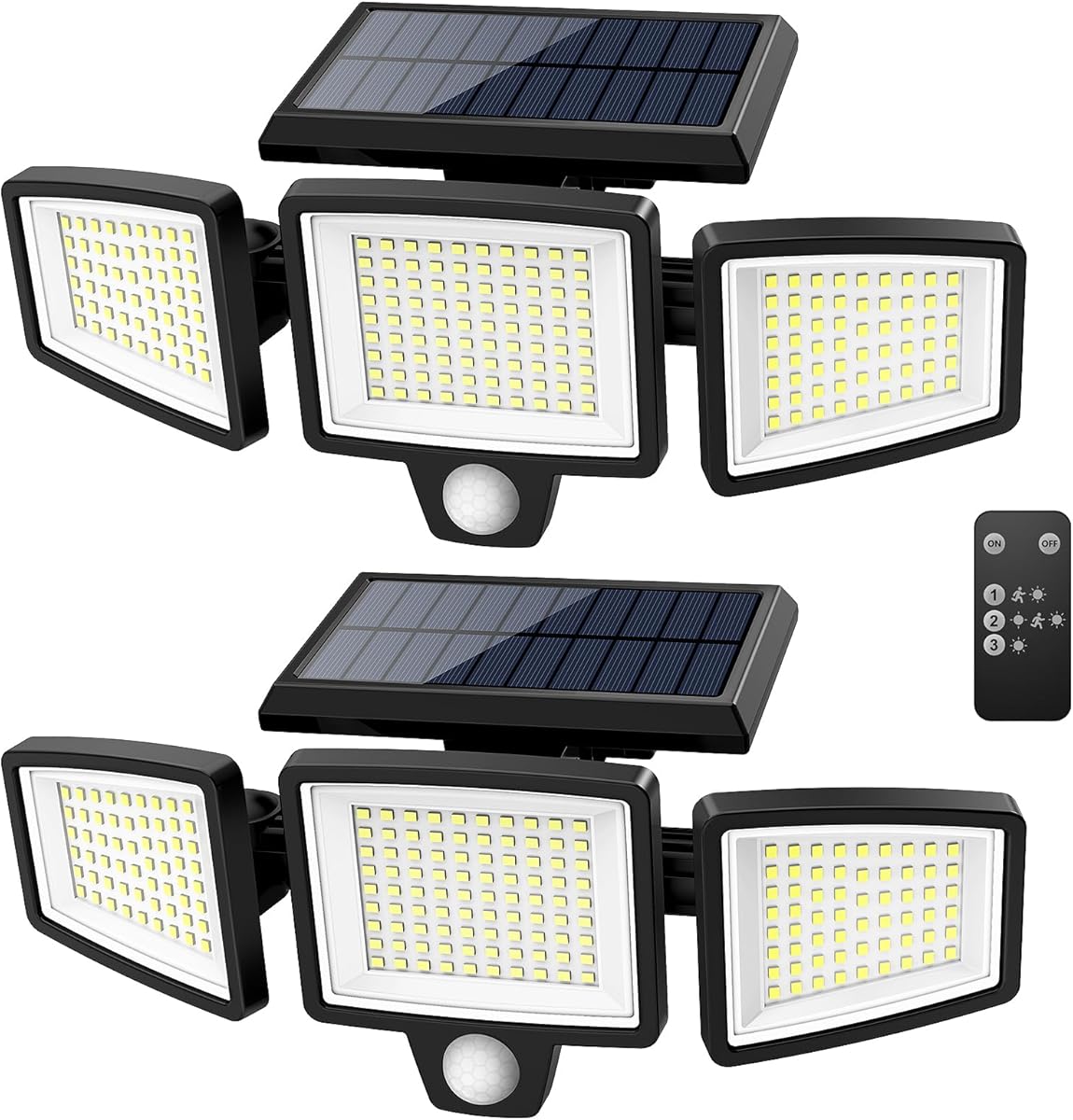
These solar lights combine motion sensors with high-brightness LEDs delivering 2500 lumens for powerful illumination. Each unit has three adjustable heads that cover a 270 degree angle making it easy to flood large outdoor areas with light.
We may earn a commission when you buy through this link, at no additional cost to you.
The built-in 1800mAh rechargeable battery charges via a solar panel ensuring wireless operation without wiring. You can choose between strong light dim light or long light modes using the included remote for different daily needs.
An IP65 waterproof rating ensures reliability in heavy rain or snowstorms so these units withstand harsh weather conditions. Installation is simple using included screws to fix the lights on exterior walls without needing adapters or wires.
Buyers seeking a standalone security lighting solution that is easy to install and requires no ongoing electricity costs will find this pack excellent. It works best where direct sunlight is available for consistent charging.
Delivers 2500 lumens to illuminate large outdoor spaces like driveways and yards with clear bright light.
Easily switch between three lighting modes to balance visibility and battery life based on current needs.
We may earn a commission when you buy through this link, at no additional cost to you.
Selecting the right light sensor depends on your home setup, automation needs, and budget. This guide breaks down key factors to help you choose a model that enhances both security and energy efficiency.
Sensors connect via Wi-Fi, Zigbee, Z-Wave, or proprietary systems like LoRa. Wi-Fi models offer easy setup but may strain your network. Zigbee and Z-Wave use hubs for reliable local control and better battery life. Proprietary systems like Ring or Tapo work well within their ecosystems but require their specific hubs.
Choose a protocol that matches your existing smart home infrastructure to avoid compatibility issues and ensure reliable automation.
Range varies from 15 to over 2000 feet depending on technology. Traditional PIR sensors typically cover 20 to 30 feet. mmWave radar sensors detect stationary presence but have shorter ranges. Long-range LoRa models cover large properties but need a hub.
Select a range that fully covers your target area without overlapping too much with other sensors to prevent false triggers.
Integrated light sensors allow automations that only activate when it is dark. This saves energy by preventing lights from turning on during the day. Look for models with adjustable sensitivity or lux thresholds for precise control.
Prioritize sensors with light detection if your main goal is automating outdoor or indoor lights efficiently.
Battery-powered models like CR2450 or AA types offer flexible placement but need periodic replacement. Solar-powered units work great outdoors but depend on sunlight exposure. Hardwired sensors eliminate battery concerns but require electrical knowledge to install.
Choose based on installation convenience and maintenance preference ensuring the power source matches your usage patterns.
Outdoor sensors must have high IP ratings like IP44 or IP65 to withstand rain, dust, and temperature changes. Indoor sensors do not need this protection but should avoid humid areas like bathrooms unless rated accordingly.
Verify the IP rating matches your installation location to ensure long-term reliability and device safety.
Ensure the sensor works with your voice assistants like Alexa or Google Assistant and your automation apps. Some models require specific hubs or bridges which adds cost but enables richer features like alerts and automation.
Check compatibility lists before purchasing to avoid needing extra hardware later or losing key functionality.
Adjustable sensitivity helps reduce false alarms from pets, curtains, or heat sources. Pet-friendly modes and wide field-of-view designs improve accuracy. Look for models with customization options to fine-tune detection.
Invest time in setting correct sensitivity levels to ensure reliable alerts without constant false positives.
Hardwired models need an electrician or basic electrical skills. Wireless models use adhesive, screws, or magnets for mounting. Consider mounting locations carefully to avoid signal dead zones or sunlight interference for light sensors.
Choose an installation type that matches your DIY skills and home wiring constraints for a smooth setup process.
Install sensors away from direct sunlight, heating vents, and air conditioners to prevent false triggers from heat or light fluctuations.
Regularly check batteries or charge solar units seasonally to maintain reliable operation, especially during winter months with less sunlight.
Adjust sensitivity settings after installation based on real-world performance to balance detection accuracy and reduce unnecessary alerts.
Many models like Zigbee or LoRa sensors can work locally via a hub without Wi-Fi for basic automation. However, sending alerts to your phone requires some form of internet connection. Check if the product supports local-only mode.
PIR sensors detect heat changes from moving objects and may miss stationary people. mmWave radar detects motion and static presence, making it better for rooms where people sit or stand still for long periods.
Yes, wireless motion sensors can control smart bulbs or plugs connected to lights. Hardwired photocells replace existing switches for manual bulbs. Ensure voltage and wattage compatibility before connecting.
Use sensors with pet-friendly modes and adjust sensitivity to lower levels. Mount sensors higher than pet height and aim away from their pathways to reduce unintended triggers.
Most wireless models use adhesive or screws and take minutes to mount. Hardwired versions need electrical skills or professional help. Follow manufacturer instructions carefully for safe installation.
Wireless motion sensors typically last 1 to 2 years on CR2450 batteries depending on activity. Solar sensors recharge continuously if placed correctly. Hardwired sensors do not use batteries.
Yes, most smart sensors allow free local automations. Cloud-based features like advanced alerts or remote monitoring may require subscriptions depending on the brand and model selected.
Wipe the sensor lens gently with a soft dry cloth to remove dust or debris. Avoid harsh chemicals that might damage the surface. Check for obstructions like cobwebs regularly for optimal performance.
We reviewed ten top light sensors covering wireless, hardwired, and solar options to suit every home security need. From budget photocells to advanced mmWave sensors this guide helps you automate lighting and improve safety efficiently.
Prioritize connection type, detection accuracy, and weather resistance when choosing your model. For local automation focus on Zigbee or LoRa options, while smart ecosystems like Hue or Tapo offer easier setup for tech beginners.
Always verify current pricing and compatibility before purchasing since offers and stock change frequently. Investing in the right light sensor will save energy and keep your home secure year round.