
UGREEN 2K@30Hz 1080P 60FPS Video Capture Card 4K Input HDMI to USB 3.0
4.5Editor score
USB 3.0 high speed transfer
Supports 4K input resolution
Compatible with Switch and PS5
Discover the top low latency capture cards for streaming and gaming in October 2026. We compare ten models for performance, compatibility, and video quality.
Finding a low latency capture card is essential for gamers and streamers who need real-time feedback. Lag can ruin competitive play or break viewer immersion during live broadcasts. The right device ensures smooth video transmission from console or PC to your streaming software without noticeable delays.
We evaluated ten highly rated capture cards based on their resolution support, frame rates, and connection types. Our analysis focused on how well each unit handles 1080p and 4K signals while maintaining minimal input lag. We also considered build quality, compatibility with major streaming platforms, and ease of setup for beginners.
Each pick in this list highlights specific strengths for different budgets and use cases. You will find portable USB options for travelers and powerful internal cards for dedicated stations. Note that prices and availability fluctuate frequently, so verify current details before making your final purchase decision.
4.5Editor score

4.0Editor score
4.5Editor score
This side by side comparison breaks down the key specifications of all ten capture cards to help you choose the right model for your streaming setup.






This capture card offers a solid entry point for streamers needing low latency performance without breaking the bank. With a rating of 4.3 stars it delivers reliable 1080p 60FPS capture for most gaming consoles and PCs.
We may earn a commission when you buy through this link, at no additional cost to you.
Its standout quality is the HDMI loop-out which allows you to play on your monitor while streaming to Twitch or YouTube. The USB 3.0 connection ensures fast data transfer to keep latency minimal during live broadcasts.
The device does not support 4K at 120Hz which limits high-end console usage but works well for standard gaming setups. It accepts 3.5mm microphone input making it versatile for commentary without extra gear.
Buyers seeking an affordable way to start streaming from PS5 or Xbox will find this a practical choice. It balances cost and function effectively for casual creators who do not need advanced 4K features.
The low latency technology ensures your audience sees gameplay in real time without delay.
Works with Windows and Mac systems supporting various HDMI devices from cameras to consoles.
We may earn a commission when you buy through this link, at no additional cost to you.
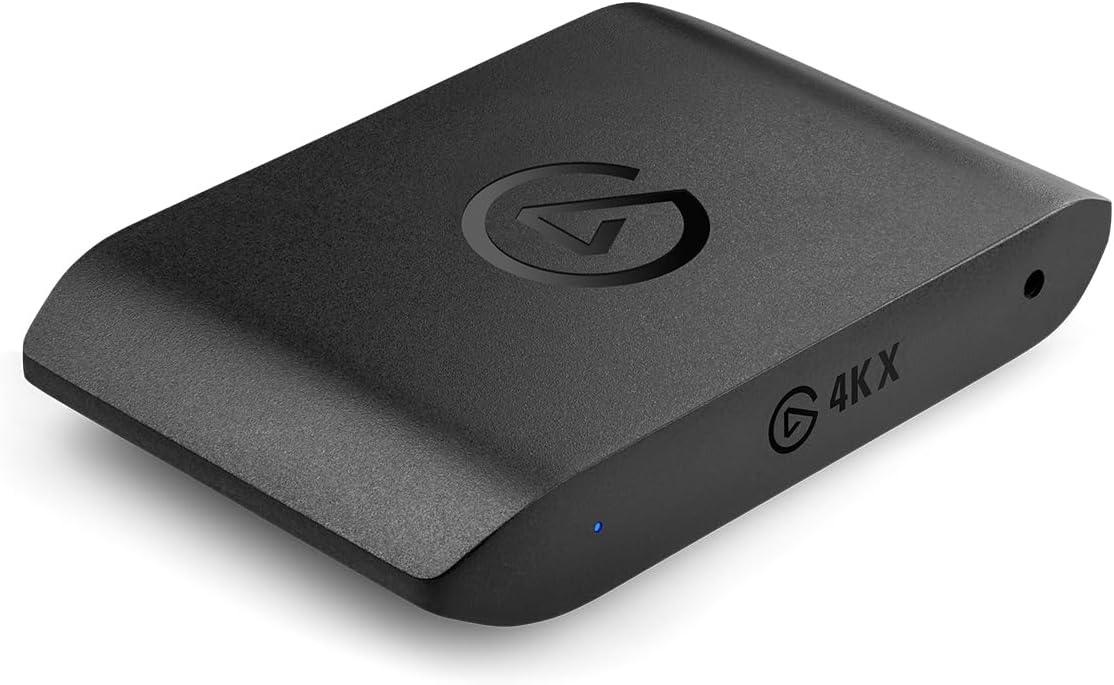
The Elgato 4K X sets a high standard for professional streamers who need top tier performance. Rated at 4.5 stars it handles 4K content at 144 frames per second which is rare at this price range.
We may earn a commission when you buy through this link, at no additional cost to you.
Its HDMI 2.1 support allows for next-gen console gaming without compromising visual fidelity. The variable refresh rate passthrough eliminates screen tearing ensuring your broadcast looks polished and immersive.
While it demands a USB 3.2 Gen 2 connection the ultra-low latency keeps gameplay synchronized with your stream. This makes it ideal for competitive gaming where every millisecond matters to your audience.
Investors in high-end streaming setups should consider this model for its future proof connectivity. It offers the best balance of speed and quality available today for serious content creators.
Capture up to 144 frames per second for ultra smooth video transmission.
Designed for HDMI 2.1 devices to handle high resolution inputs effortlessly.
We may earn a commission when you buy through this link, at no additional cost to you.
This internal capture card delivers unmatched stability for stationary streaming rigs. With a 4.5 star rating it supports 8K60 passthrough allowing you to monitor high-res sources while recording in 4K60.
We may earn a commission when you buy through this link, at no additional cost to you.
Being installed internally it bypasses USB latency issues common with external devices. The HDMI 2.1 support ensures you can capture high frame rate gaming without tearing or lag.
The main trade-off is that it only works with desktop PCs requiring a spare PCIe slot. This limits portability but guarantees consistent performance during long streaming sessions.
Professionals needing reliable hardware should choose this for its robust build and high throughput. It is perfect for dedicated broadcast setups where external cables are not preferred.
Direct PCIe connection eliminates external interference for stable video transmission.
Supports 8K60 passthrough ensuring maximum compatibility with modern consoles.
We may earn a commission when you buy through this link, at no additional cost to you.
The UGREEN capture card stands out for its flexible connectivity options. Rated at 4.5 stars it features both USB-A and USB-C ports which simplifies connections to modern laptops and tablets.
We may earn a commission when you buy through this link, at no additional cost to you.
It accepts 4K input signals to preserve quality for post-production editing while outputting 2K at 30Hz. The aluminum casing helps dissipate heat ensuring stable performance during long captures.
Users should note that it is unidirectional meaning HDMI input only. However this is standard for most capture cards and does not affect typical streaming workflows.
Creators needing a versatile device that works with PCs and mobile devices will appreciate this model. Its balanced specs make it a strong contender for general streaming use.
Connect to desktops laptops and tablets using dual USB interfaces.
Preserves original video quality up to 4K for detailed editing.
We may earn a commission when you buy through this link, at no additional cost to you.
This streaming capture card prioritizes ease of use for on-the-go creators. With a 4.4 star rating it offers a compact design that fits easily in a bag for travel or events.
We may earn a commission when you buy through this link, at no additional cost to you.
It works seamlessly with OBS and XSplit allowing quick setup for live broadcasts. The USB 3.0 connection ensures low latency performance for real-time feedback during gameplay.
While it lacks premium specs like 4K output it handles 1080P at 60FPS well enough for most platforms. The compact form factor makes it ideal for content creators who move locations often.
Streamers needing a reliable backup or travel unit should find this a practical solution. It balances simplicity with performance for those just starting out in content creation.
Small and light enough to carry anywhere without extra bulk.
Requires no drivers so you can start streaming immediately.
We may earn a commission when you buy through this link, at no additional cost to you.
This HDMI capture card offers solid performance for users prioritizing latency and heat management. Rated at 4.4 stars it features an aluminum alloy case that dissipates heat effectively during long sessions.
We may earn a commission when you buy through this link, at no additional cost to you.
It supports 1080P at 60FPS output ensuring smooth video for most streaming needs. The USB-C interface provides modern connectivity while maintaining compatibility with USB 3.0 standards.
Users may need to check their USB port orientation if recognition issues occur. However once connected it provides reliable performance with minimal lag for live gaming.
Buyers looking for a portable and efficient solution should consider this model. It handles basic streaming tasks well while offering a compact form factor for travel.
Aluminum casing prevents overheating during extended capture sessions.
Uses USB-C for reliable and fast data transmission.
We may earn a commission when you buy through this link, at no additional cost to you.
This capture card is built specifically for gamers needing console optimization. With a 4.2 star rating it supports 4K60 HDR and VRR passthrough for an immersive visual experience.
We may earn a commission when you buy through this link, at no additional cost to you.
The USB 3.2 Gen 1 connection ensures stable data transfer while allowing 5.1 audio capture. This enhances the broadcast quality by preserving surround sound details for viewers.
Streamers focused on PS5 or Xbox titles will find the VRR passthrough eliminates tearing effectively. The dedicated software helps manage settings without needing third party tools.
Console gamers wanting high fidelity capture should consider this unit. It balances modern video standards with practical audio handling for better streams.
Tailored for PS5 Xbox and Switch gameplay with advanced features.
Supports HDR and VRR to reduce tearing and enhance colors.
We may earn a commission when you buy through this link, at no additional cost to you.
This capture card simplifies commentary with a built-in microphone input. Rated at 4.5 stars it allows direct headset connection for voice without extra adapters or interfaces.
We may earn a commission when you buy through this link, at no additional cost to you.
Using YUY2 technology it delivers richer colors than standard compression methods. The HDMI loop-out ensures you can monitor gameplay while streaming with zero lag.
Its compact design makes it easy to pack for travel or LAN parties. The plug and play nature ensures quick setup for spontaneous streams.
Streamers needing simple voice integration should find this unit convenient. It offers balanced performance for general use without complicated configurations.
Use the mic-in port to add commentary directly to the stream.
YUY2 technology provides more vibrant visuals for viewers.
We may earn a commission when you buy through this link, at no additional cost to you.
This capture card offers exceptional performance for high resolution streaming needs. With a 4.8 star rating it handles 4K60 passthrough to maintain visual fidelity during gameplay.
We may earn a commission when you buy through this link, at no additional cost to you.
It features HDR and VRR support which eliminates tearing and ensures immersive viewing. The USB-C 3.0 port provides stable transmission for real-time streaming without buffer issues.
The included ezcap Link software offers professional support for various streaming scenarios. This integrated approach simplifies workflow compared to using generic capture tools.
High fidelity streamers should appreciate this model for its robust video handling. It is a strong option for those needing advanced visual features at a reasonable cost.
Handles 4K60 input to ensure crisp and detailed video.
Built-in ezcap Link for seamless streaming management.
We may earn a commission when you buy through this link, at no additional cost to you.
This portable capture card is designed for mobility and simplicity. Rated at 4.0 stars it matches the size of a smartphone making it easy to carry anywhere.
We may earn a commission when you buy through this link, at no additional cost to you.
It supports 4K60 HDR passthrough so your console performance remains untouched while you stream. The universal compatibility ensures it works with PlayStation Xbox and Switch easily.
The capture resolution is limited to 1080p60 which may not suit high-end needs but is sufficient for standard streaming. This trade-off keeps the device lightweight and affordable.
Travelers and casual streamers will find this unit convenient for spontaneous content. It balances convenience with quality for those who prioritize portability.
Compact design allows you to stream from any location.
Just connect and start streaming with minimal configuration.
We may earn a commission when you buy through this link, at no additional cost to you.
Choosing the right capture card requires understanding your specific streaming needs and technical requirements.
Ensure the device supports the resolution and frame rate of your gaming console. Many budget models offer 1080p at 60FPS which is sufficient for most viewers but premium cards support 4K at higher frame rates.
Check the output specs against your target streaming platform requirements to avoid bottlenecks.
USB 3.0 or higher is recommended for stable data transfer. External cards using USB-C provide better portability while internal cards use PCIe slots for reduced latency.
Higher bandwidth connections prevent lag and ensure smooth video transmission during live streams.
Verify that the capture card works with OBS Studio Streamlabs or other tools you use. Some devices include dedicated software that simplifies the setup process significantly.
Universal compatibility ensures you can switch platforms without needing new hardware.
Look for models with microphone input if you plan to add commentary directly. Audio sync issues can ruin a stream so check if the device supports uncompressed audio formats.
Good audio capture ensures your voice aligns perfectly with video gameplay.
Streaming sessions can last hours so the device must handle heat efficiently. Metal casings often dissipate heat better than plastic and prolong the device lifespan.
Durable materials ensure stable performance even during extended high-resolution captures.
HDMI loop-out allows you to watch gameplay on a monitor while capturing the feed. This is vital for competitive gamers who need immediate visual feedback.
A quality passthrough ensures no input lag is introduced to your primary display.
If you stream from different locations choose a compact model that fits in a bag. Travel friendly designs often lack advanced features but offer unmatched convenience.
Consider how often you move your setup before deciding on size and weight.
Prices vary from basic units to high-end professional devices. Set a clear budget and check warranty terms to protect your investment.
Balancing cost with necessary features helps you avoid overspending on unused capabilities.
Start by connecting the HDMI cable from your console to the capture card input. Ensure the capture card output connects to your monitor so you can see gameplay without lag.
Install the necessary drivers or open your streaming software to detect the device. Check settings to confirm the correct resolution and frame rate are selected for optimal performance.
Keep the device clean and free of dust to maintain heat dissipation. Store it properly when not in use to prevent physical damage to the ports.
Most streaming platforms require less than 100 milliseconds of latency for real-time interaction. A good capture card should introduce less than one frame of delay.
If you are capturing 4K at high frame rates HDMI 2.1 is essential. For lower resolutions standard HDMI 2.0 cables are sufficient for most setups.
Some models support iPadOS 17 or later via USB-C. Ensure the device is specifically compatible with Apple tablets before purchasing.
Check that HDMI cables are securely connected and HDCP is disabled on consoles. Updating drivers or restarting your streaming software often resolves detection issues.
If you plan to archive high-resolution footage or use multiple monitors 4K is beneficial. Most viewers consume 1080p streams so this depends on your goals.
Use the built-in audio input if available or adjust delay settings in your software. Ensuring audio and video paths are synchronized prevents lip sync problems.
We have reviewed ten top options for low latency capture cards suitable for various streaming needs. From budget friendly USB devices to premium internal cards there is something for every creator.
Prioritize resolution support and connection type based on your console and PC capabilities. A card that matches your hardware ensures you get the best performance without unnecessary costs.
Prices change frequently so check the latest details on the links provided before buying. Investing in the right hardware now will improve your streaming quality for years to come.