
2Pcs ADS1115 Module
5.0Editor score
Pack of two units
Programmable gain amplifier
Wide voltage range
This guide compares the top Arduino ADC boards for precise analog sensing, covering 16-bit and 24-bit options for makers and professionals.
Selecting the right analog-to-digital converter is crucial for any electronics project involving sensors. An Arduino ADC board bridges the gap between analog signals and digital microcontrollers, enabling precise data acquisition for various applications.
We evaluated ten top-rated ADC modules based on resolution, channel count, interface type, and user feedback. Our analysis focuses on performance reliability, ease of integration, and value for money across different project requirements.
Each pick highlights specific strengths like high precision, multiple channels, or budget-friendly pricing. Note that prices and availability fluctuate regularly, so verify current details before purchasing your next development board.
5.0Editor score

4.7Editor score

4.6Editor score
The following table provides a side-by-side comparison of key specifications for each selected ADC module to help you make an informed decision.


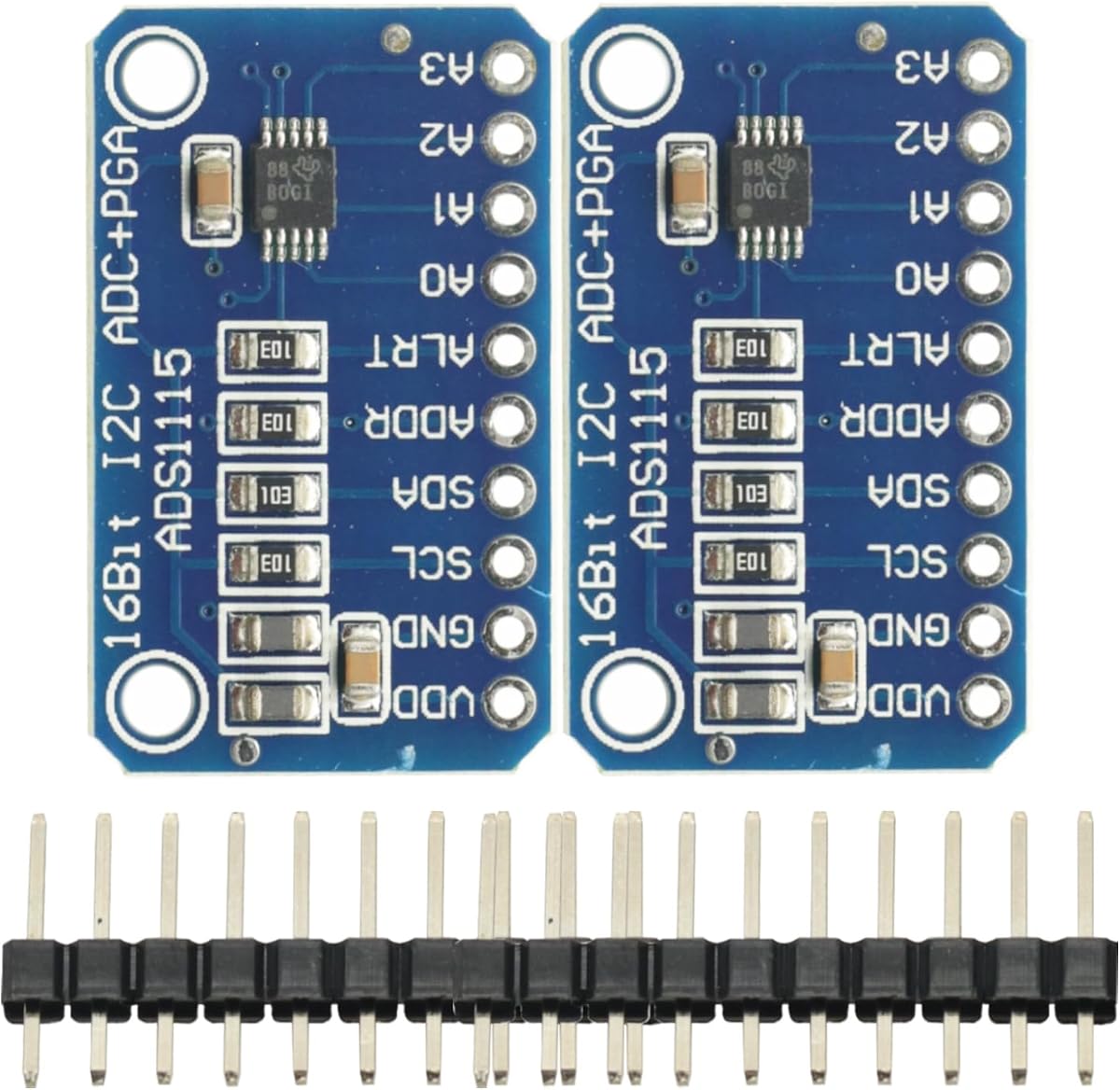


This module stands out as a top choice for precision analog reading with its 16-bit resolution and internal PGA. Users praise its reliability in diverse environments from robotics to home automation projects requiring accurate sensor data.
We may earn a commission when you buy through this link, at no additional cost to you.
The onboard programmable gain amplifier allows you to adjust input ranges for different sensors without external components. Its ability to operate on both 3.3V and 5V logic makes it compatible with almost any microcontroller platform easily.
While the sample rate is lower than high-speed ADCs, it is sufficient for most environmental monitoring tasks. The pack of three ensures you have spares for multiple projects or team collaborations without extra cost.
It is the ideal pick for makers who need consistent high accuracy in a compact form factor. We recommend this board for anyone starting with analog sensing on Arduino or Raspberry Pi platforms today.
The 16-bit resolution provides fine granularity for detecting small voltage changes in sensitive sensors like thermocouples or strain gauges.
Operating between 2.0V and 5.5V ensures stable performance across various power supplies and logic levels without voltage regulators.
We may earn a commission when you buy through this link, at no additional cost to you.
This board offers exceptional resolution with its 24-bit converter, making it perfect for applications requiring extreme precision like weighing scales. The eight input channels allow monitoring multiple analog sources simultaneously without additional multiplexers.
We may earn a commission when you buy through this link, at no additional cost to you.
The onboard ADR03 2.5V datum voltage source ensures consistent reference levels for accurate readings. Users report excellent stability over time which is critical for long-term data logging and industrial sensor integration projects.
Setting up the SPI interface can be slightly more complex than I2C modules but provides faster data transfer rates. The high precision is offset by the cost but justified for professional or demanding hobbyist requirements.
We recommend this for projects where accuracy is paramount and you need multiple channels in one compact board. It excels in load cell and high-precision sensor applications where standard 16-bit ADCs fall short.
With 24-bit resolution, this module can detect minute voltage fluctuations ideal for precision instrumentation and scientific data collection tasks.
Eight input channels provide ample room for connecting multiple sensors reducing the need for complex switching circuits in large systems.
We may earn a commission when you buy through this link, at no additional cost to you.
Offering two modules in one package at a very competitive price point this is the ultimate budget choice for students and makers. The perfect 5.0 rating reflects high satisfaction with build quality and performance reliability.
We may earn a commission when you buy through this link, at no additional cost to you.
Each module features the proven ADS1115 chip with programmable gain and multiple input voltage ranges. Users appreciate the straightforward I2C connection which simplifies wiring on crowded breadboards compared to SPI alternatives.
While packaging is minimal and documentation is sparse, community resources make up for any lack of official guides. The low cost allows experimenting with multiple sensor setups without worrying about damaging expensive components.
We highly recommend this for classrooms or workshops where many units are needed without breaking the bank. It is the best entry-level ADC board for learning analog data acquisition on Arduino platforms.
Buying a two-pack reduces per-unit cost significantly making high precision ADCs accessible for large group projects and classroom labs.
The standard I2C interface minimizes wiring complexity allowing quick prototyping and easy expansion of sensor networks on microcontrollers.
We may earn a commission when you buy through this link, at no additional cost to you.
This three-pack option is ideal for expanding projects that require more analog inputs than a single module provides. The HiLetgo brand is well known in the maker community for reliable electronic components at low prices.
We may earn a commission when you buy through this link, at no additional cost to you.
Users highlight the comparator mode as a useful feature for threshold detection without constant polling of the main processor. The wide supply voltage range ensures compatibility with both 3.3V and 5V systems out of the box.
While the rating is slightly lower than others it remains a solid choice for general purpose sensing tasks. The three units allow you to daisy chain or distribute sensing nodes across a larger physical area easily.
We suggest this for projects needing redundancy or distributed monitoring like home environmental tracking systems. It balances cost and quantity effectively for those who need multiple ADCs for a single large build.
Three units allow for distributed sensor placement across large projects enabling monitoring of multiple zones without complex wiring.
The comparator mode allows hardware level threshold detection reducing CPU load for simple alarm or alert systems.
We may earn a commission when you buy through this link, at no additional cost to you.
For those needing maximum quantity at the lowest price this four-pack provides excellent value for classroom or prototype needs. The consistent 16-bit resolution across all units ensures uniform performance across different measurement points.
We may earn a commission when you buy through this link, at no additional cost to you.
Internal programmable gain amplifiers allow tuning sensitivity for specific sensor types without external resistors. The simple I2C protocol means minimal pin usage on your microcontroller leaving more GPIOs for other tasks or displays.
While quality control might vary slightly in bulk packages users report success with basic soldering and integration. The low cost makes it acceptable for disposable prototyping boards where experimentation is expected.
We recommend this for educational institutions or large scale prototyping where you need many identical modules. It is a practical solution for expanding sensor networks without significant investment in hardware.
Having four modules allows you to scale your sensor network across multiple locations or channels without complex switching.
I2C interface uses only two pins leaving most microcontroller pins free for other essential project functions.
We may earn a commission when you buy through this link, at no additional cost to you.
This two-pack offers a highly rated compact solution perfect for space constrained projects where every millimeter counts. Users consistently praise the build quality and consistency across both modules in the pack.
We may earn a commission when you buy through this link, at no additional cost to you.
The input voltage range from 2.0V to 5.5V ensures flexible power options for various battery powered devices. The standard input ranges support a wide variety of sensors from low voltage thermistors to higher voltage dividers.
While the small footprint saves space it requires careful soldering which might be challenging for beginners. The high satisfaction rate indicates reliable performance over time in both hobbyist and educational contexts.
We suggest this for wearable electronics or portable monitoring devices where size is a critical constraint. It is an excellent choice for projects needing reliable ADC without bulky add-on boards.
The compact design allows fitting into tight enclosures where standard breakout boards would not fit easily.
Wide supply voltage range allows operation from various battery configurations making it ideal for portable projects.
We may earn a commission when you buy through this link, at no additional cost to you.
This Australian-designed pack focuses on quality with ENIG plating for better solderability and oxidation resistance over time. It is particularly optimized for ESP32 and modern microcontrollers with robust C++ library support.
We may earn a commission when you buy through this link, at no additional cost to you.
Users appreciate the ability to chain up to four modules on the same I2C bus for up to 16 channels total. The open source friendly nature ensures community maintained libraries and documentation are available online.
While slightly more expensive than generic alternatives the build quality and specific optimizations justify the price for critical applications. The gold finish ensures long term reliability in humid or corrosive environments.
We recommend this for IoT projects using ESP32 where long term reliability and community support matter. It is a premium choice for designers who value quality materials over lowest possible cost.
Gold plating resists oxidation ensuring stable electrical connections even in challenging environmental conditions over many years.
Ability to chain multiple modules expands channel count without needing different buses keeping wiring clean and organized.
We may earn a commission when you buy through this link, at no additional cost to you.
This module is designed for high speed data acquisition with a 200KHz sampling rate and simultaneous channel sampling. It is suitable for audio or vibration analysis where timing synchronization is critical for accurate signal reconstruction.
We may earn a commission when you buy through this link, at no additional cost to you.
The eight input channels with parallel output allow high throughput data transfer directly to microcontrollers or FPGA systems. Users note its capability for handling wide input voltage ranges from 5V to 10V depending on configuration.
However the complexity and power requirements make it less accessible for standard hobbyist projects. The lower rating reflects the difficulty in integration compared to simpler I2C modules for basic sensing needs.
We suggest this for advanced users needing high speed synchronized data like motor control or signal processing. It is a specialized tool rather than a general purpose ADC for everyday Arduino usage.
All channels sample at once ensuring accurate phase relationships in multi-channel signal analysis tasks.
Parallel output enables faster data transfer suitable for applications requiring rapid sampling and processing.
We may earn a commission when you buy through this link, at no additional cost to you.
This pack provides four high precision 16-bit modules ideal for large scale sensor networks requiring uniform measurement standards. The consistent rating reflects reliable performance across all units for general data acquisition tasks.
We may earn a commission when you buy through this link, at no additional cost to you.
Each module supports programmable gain allowing you to optimize input ranges for different sensors like thermocouples or strain gauges. Compatible with ESP32 and Raspberry Pi it fits well into broader IoT ecosystems.
While standard I2C speed limits data rates this is rarely an issue for environmental monitoring. The high volume allows for redundancy and distributed sensing points across multiple locations easily.
We recommend this for engineering projects needing extensive analog input capabilities without excessive cost. It is a solid foundation for building multi-node data logging systems with uniform precision.
Four identical modules ensure consistent calibration and data accuracy across all sensor nodes in a network.
Compatibility with ESP32 and Pi makes it easy to integrate data into wireless monitoring systems.
We may earn a commission when you buy through this link, at no additional cost to you.
This is a straightforward reliable module from a well-known brand suitable for standard analog reading needs. Users value the simplicity and consistent performance for routine sensor interfacing without advanced features.
We may earn a commission when you buy through this link, at no additional cost to you.
The auto shut down feature in single shot mode helps reduce power consumption for battery powered projects. Wide supply voltage ensures compatibility with various logic levels making it a versatile addition to any toolbox.
While it lacks some premium features it covers 95% of typical use cases effectively. The simple design ensures fewer points of failure and easier troubleshooting during development.
We suggest this for beginners or quick prototypes where standard ADC functionality is all that is required. It is a dependable workhorse for general purpose embedded sensing applications.
Auto shut down in single shot mode saves power extending battery life in portable or remote devices.
A simple proven design ensures consistent results and easy troubleshooting for routine development tasks.
We may earn a commission when you buy through this link, at no additional cost to you.
Choosing the right ADC board requires balancing resolution, speed, and interface compatibility with your specific project needs.
Resolution determines the smallest voltage change the ADC can detect. For most sensor projects 16-bit is sufficient but precision measurements like load cells benefit from 24-bit resolution.
Always match resolution to your sensor sensitivity to avoid wasted precision or insufficient accuracy in your data.
Most modules offer four channels but higher channel counts exist for complex systems. Consider whether you need simultaneous sampling or can accept sequential scanning.
Select enough channels to avoid external multiplexers which add complexity and potential signal degradation.
I2C is simple and uses fewer pins while SPI offers faster data rates. Choose based on your microcontroller's available GPIOs and speed requirements.
For most Arduino projects I2C is adequate but high speed applications need SPI to handle large data volumes.
Ensure the board operates at your system voltage whether 3.3V or 5V. Some boards have level shifters built-in while others require external components.
Check the input voltage range to prevent damage to your microcontroller or sensor during power fluctuations.
An internal PGA allows adjusting input ranges to match sensor outputs. This improves accuracy for low voltage signals without extra hardware.
Prioritize modules with PGA if you work with diverse sensor types or require high sensitivity on specific inputs.
Sample rate indicates how many readings per second the ADC can take. Most sensors only need slow rates but audio or vibration needs fast sampling.
Balance sample rate with your system processing power to avoid bottlenecks in your data pipeline.
Quality plating and robust connectors ensure long term reliability especially for environmental monitoring. Pack quantity can reduce cost for larger deployments.
Inspect physical descriptions to avoid poorly soldered units that fail under stress or heat.
Look for boards with active libraries and tutorials. Popular models like ADS1115 have extensive community support on GitHub and forums.
Good documentation reduces development time and simplifies debugging for complex sensor setups.
Connect the ADC module to your microcontroller using I2C or SPI pins as specified. Ensure power lines match your logic levels to prevent hardware damage or incorrect readings.
Install the appropriate library for your ADC chip and run example code to verify connectivity. Calibrate your sensors using known voltages before starting real world data collection.
Protect the board from moisture and dust when using outdoors or in industrial environments. Check connections periodically to ensure stable performance over time.
A 16-bit ADC can distinguish 65,536 levels while a 24-bit ADC can distinguish over 16 million levels. This means 24-bit ADCs offer much higher precision for small voltage changes but are usually slower and more expensive. For standard temperature or light sensors 16-bit is often enough.
Yes most modern ADC boards support 3.3V logic levels. Check the voltage range specs on the product page to ensure compatibility with boards like ESP32 or Raspberry Pi Pico.
Since many use I2C with different addresses you can connect up to 4 of the same module on one bus. This allows for up to 16 input channels total if each has 4 channels.
Arduino built-in ADCs are 10-bit and lack programmable gain. External ADCs provide higher resolution more channels and better precision for professional or sensitive sensor projects.
Some come with headers pre-soldered for breadboard use while others require soldering. Check the product description to see if headers are included or if you need to add them yourself.
A PGA allows you to adjust the input range electronically without changing hardware. This improves signal quality for small voltages by amplifying them before conversion.
We reviewed the top Arduino ADC boards ranging from budget packs to precision 24-bit modules. The Teyleten Robot ADS1115 offers the best balance of performance and reliability for most projects.
Prioritize resolution and channel count based on your sensor needs rather than just price. High precision boards like the ADS1256 are worth the cost for professional grade measurements.
Always verify current prices and availability before purchasing since stock and deals change regularly. The best board is the one that fits your specific project constraints and budget perfectly.