
M-AUDIO M-Track Duo USB Audio Interface
4.4Editor score
Transparent Crystal Preamps
Combo XLR Instrument Inputs
Includes MPC Beats Software
This guide compares the top external sound cards for guitar to help musicians find the best audio interface for recording, streaming, and live performance
Finding the right external sound card for guitar is essential for capturing professional quality tones. Whether you record at home or stream live, a good interface ensures clear signal path and low latency for your instrument.
We evaluated ten top rated models based on sound quality, connectivity, software bundle, and ease of use. Each product offers unique features designed to meet the specific demands of guitarists and vocalists alike.
Every pick highlights key strengths and ideal use cases to simplify your decision process. Please note that availability and pricing may vary over time so verify details before making your final purchase choice.
4.4Editor score
4.6Editor score

Below you will find a side by side comparison of all ten selected audio interfaces to help you quickly identify the model that best fits your specific recording and performance requirements.


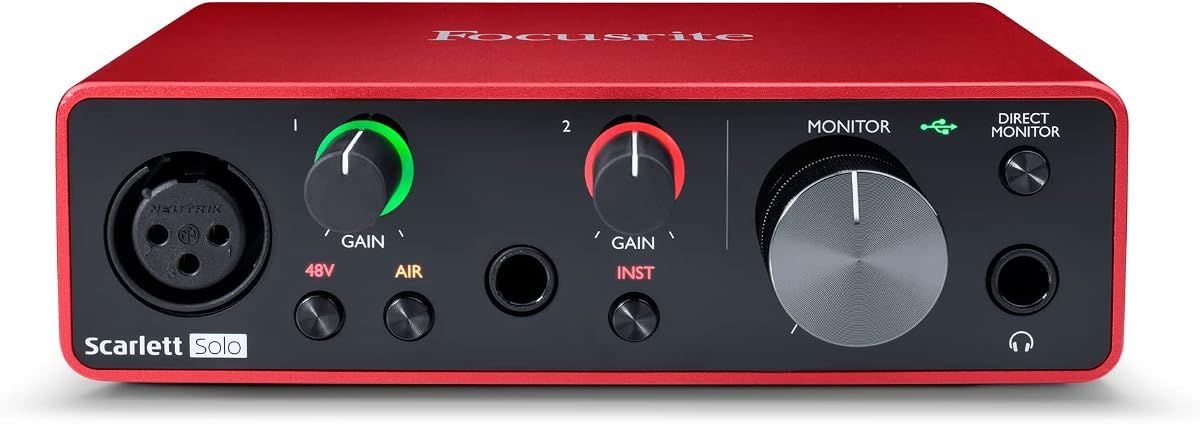
The Focusrite Scarlett Solo 3rd Gen stands out as a top choice for guitarists seeking professional recording quality at home. Its high performing mic pre-amps deliver clarity while Air mode adds extra brightness to acoustic tracks.
We may earn a commission when you buy through this link, at no additional cost to you.
Two high-headroom instrument inputs ensure your guitar signal remains clean even with strong picks. The Gain Halos help you set perfect levels without clipping which is crucial for accurate capture of dynamic playing.
While it excels in sound quality the unit offers two inputs which may limit multi-instrument setups. However the included software suite and three-year warranty provide significant value for solo artists starting out.
This interface is ideal for home recorders needing reliable performance and low latency monitoring. Its balanced outputs and high-fidelity headphone jack make it versatile for both tracking and critical listening sessions.
The 24-bit/192kHz converters retain all sonic qualities ensuring your recordings sound natural and detailed across all frequencies.
Ableton Live Lite and Hitmaker Expansion give you powerful tools to refine your sound immediately after setup.
We may earn a commission when you buy through this link, at no additional cost to you.
The Fender Quantum HD 2 offers ultra-high-fidelity recording suitable for serious production environments. Its MAX-HD mic preamps and front instrument inputs ensure your guitar tones are captured with maximum transparency and detail.
We may earn a commission when you buy through this link, at no additional cost to you.
Advanced features like ADAT expansion and S/PDIF I/O allow for hybrid studio growth without replacing your core interface. The Auto Gain button simplifies setup making fast sessions frustration free even for complex setups.
While expensive this unit justifies its cost with professional converters and deep integration with Fender Studio app models. The perpetual Studio Pro license adds immense value for those serious about mixing and mastering workflows.
Professional musicians will appreciate the dual re-amp outputs and DSP monitor mixer for complex routing. It delivers unmatched flexibility and sound quality for high end recording projects requiring pristine audio fidelity.
Unlock authentic Fender amp models directly via the app to craft inspiring tones without external pedalboards.
Loopback and monitor mixer features streamline streaming and podcasting with easy latency-free monitoring.
We may earn a commission when you buy through this link, at no additional cost to you.
The M-AUDIO M-Track Duo delivers 48kHz audio resolution at a highly accessible price point. Its transparent Crystal Preamps guarantee optimal sound from microphones and instruments making it a versatile tool for beginners.
We may earn a commission when you buy through this link, at no additional cost to you.
Two combo XLR and instrument inputs with phantom power handle vocals and guitars equally well. The USB andirect switch provides zero latency monitoring which is critical for recording without frustrating delay effects.
While it lacks some advanced features found in premium models the included MPC Beats software offers robust production capabilities. This balance of features and cost makes it an excellent starting point for home studios.
Musicians needing a fuss-free interface for streaming or recording will find this unit reliable. The dedicated headphone output ensures clear monitoring so you can focus on performance without technical distractions.
MPC Beats provides essential production tools to start creating tracks immediately after connecting your interface.
Stereo outputs and headphone jack offer total flexibility for connecting monitors or private listening.
We may earn a commission when you buy through this link, at no additional cost to you.
This ultra-compact 2×2 interface fits easily in your bag while maintaining pristine 24-bit/96 kHz converters. It features dedicated instrument inputs optimized for guitar ensuring your signal stays clean during mobile sessions.
We may earn a commission when you buy through this link, at no additional cost to you.
The XLR mic/line combo input with phantom power handles both vocals and instruments with equal clarity. Zero-latency headphone monitoring allows real-time tracking essential for performance focused recording on the go.
While it requires hardware registration for the full software suite the included trial provides powerful tools to start recording. The balanced main outputs let you connect studio monitors effectively even in small spaces.
Perfect for content creators traveling or practicing away from home this unit simplifies your setup. The bus-powered design means no extra cables are needed for power enabling effortless plug-and-play anywhere.
Register at my.fender.com to access a full collection of authentic amp models for crafting inspiring tones.
Compatible with macOS and Windows ensuring you can record on any major operating system.
We may earn a commission when you buy through this link, at no additional cost to you.
The MAONO PS22 Lite is designed specifically for streamers and recording enthusiasts needing high fidelity capture. Its 24-bit/192kHz resolution and 106dB dynamic range ensure your sound is as clear and realistic as possible.
We may earn a commission when you buy through this link, at no additional cost to you.
ProStudio Routing Software provides virtual channels and loopbacks which are essential for professional quality broadcasts. The intuitive modes for recording and live make switching between setups quick and effortless during sessions.
While plug-and-play it requires selecting the correct driver in your software for low latency performance. The dynamic light ring helps visualize input status which prevents confusion during live broadcasting or performance.
Musicians and podcasters alike will appreciate the ergonomic design and compatibility with major DAWs. It offers the flexibility needed for creative workflows while keeping hardware footprint minimal and easy to manage.
Virtual channels and loopbacks open up possibilities for mixing guest audio or backing tracks easily.
Works well with Mac Windows and iPads ensuring you can record on your preferred device.
We may earn a commission when you buy through this link, at no additional cost to you.
The Sound Blaster Play! 3 offers a simple way to upgrade audio playback on any computer. It delivers 24-bit 96kHz sound quality without requiring any drivers installation making setup immediate and straightforward.
We may earn a commission when you buy through this link, at no additional cost to you.
While not designed for recording inputs it excels at routing audio to headphones and speakers. Compatible with all analog headsets including split connectors you can enjoy enhanced sound for listening to backing tracks.
Downloadable software gives powerful audio enhancements and control allowing optimization for specific earphone brands. This makes it a useful tool for musicians who primarily need high fidelity monitoring during practice or playback.
For casual users wanting better sound without complex setups this adapter is ideal. Its corded electric power source ensures stability while the easy headphone connectivity removes the need for Y-splitters or adapters.
Software allows optimized profiles and audio enhancements tailored to your specific listening preferences.
Works with any standard analog headset making it compatible with a wide range of existing gear.
We may earn a commission when you buy through this link, at no additional cost to you.
This external sound card adds up to 7.1 channels of audio through a single USB port. It supports 7.1 5.1 and 2 channel output using standard jacks which is rare for USB devices in this price range.
We may earn a commission when you buy through this link, at no additional cost to you.
With support for analog and digital output it upgrades the existing integrated audio on desktops. The included 1m USB cable and volume controls make physical setup incredibly easy without needing extra tools.
Recording capabilities are limited compared to professional interfaces but playback quality is solid for multimedia. The SPDIF optical input passthrough supports up to two-channel audio at 48KHz ensuring compatibility with various systems.
If you need surround sound for monitoring or games this adapter provides that functionality. It features easy-to-use volume controls and mute buttons giving you direct physical access to audio settings quickly.
Supports 7.1 5.1 and 2 channel output for a wide range of audio applications and setups.
SPDIF digital output allows connection to external speakers or receivers for enhanced audio fidelity.
We may earn a commission when you buy through this link, at no additional cost to you.
Synido A10 delivers pristine 24-bit/48kHz resolution capturing every nuance of your performance with professional clarity. Its advanced dual-core chip ensures zero-latency monitoring which is crucial for live recording or practice sessions.
We may earn a commission when you buy through this link, at no additional cost to you.
The exclusive wireless accompaniment playback allows streaming backing tracks directly from one phone to another. This unique feature eliminates cable clutter during performance giving you total freedom to focus on your playing.
Built with a sturdy aluminum alloy body it resists wear and tear during travel. The secure buckle-design USB-C connector ensures a stable connection preventing accidental disconnection during critical recording moments.
Musicians who practice frequently will appreciate the power support via USB-C allowing you to record while charging. It combines portability with modern connectivity options that streamline your workflow effectively.
Stream backing tracks directly between phones without cables to focus entirely on your performance.
Aluminum body and secure connector ensure reliability on the go and during travel.
We may earn a commission when you buy through this link, at no additional cost to you.
Cubilux CB5 converts the USB port of your laptop into multiple jacks for flexible connectivity. It includes stereo mic inputs line-in line-out and headphone jack letting you connect various devices as needed.
We may earn a commission when you buy through this link, at no additional cost to you.
Built-in advanced chip enables capture of crisp and precise sound with decent clarity up to 96 KHz. This Hi-Res DAC drives studio monitors and delivers clean and pristine sound for professional audio content creation.
Note that the line-out jack and audio output jack cannot be used simultaneously to avoid signal conflicts. Despite this limitation its multi-track recording capabilities make it a strong contender for simple podcast or streaming setups.
Portable design means no need for external power source allowing recording wherever inspiration strikes. It supports Windows and Mac OS ensuring compatibility across major systems for seamless integration into your studio.
Converts one USB port into five audio connections simplifying your cable management on desktop or laptop.
Hi-Res DAC ensures clean sound up to 192 KHz for professional content delivery.
We may earn a commission when you buy through this link, at no additional cost to you.
Immerse yourself in a rich audio experience with 7.1 and 5.1 USB surround sound ideal for music. It supports sampling rates and resolution from 44.1Khz/16-bit to 384Khz/24-bit for Hi-Res music playback.
We may earn a commission when you buy through this link, at no additional cost to you.
Full Aluminum alloy housing enables full isolation of electronic interference ensuring no-loss transmission of audio. This prevents static or ground noise so your listening experience remains clean and uninterrupted during sessions.
Note that this product does not support Windows XP 7 or 8 limiting its compatibility with older systems. It works seamlessly with newer PCs and MacBooks that lack a built-in surround sound card for expanded audio.
Compact design with multiple 3.5mm interfaces keeps your desk organized while providing robust output options. It offers a great upgrade for headphones without needing external power making it a convenient add-on.
Supports up to 384KHz sample rates ensuring you enjoy your favorite Hi-Res music with maximum detail.
Full isolation housing ensures no-loss transmission without static or ground noise interference.
We may earn a commission when you buy through this link, at no additional cost to you.
Selecting the right external sound card depends on your specific needs such as recording quality portability or software bundles. Here are key factors to evaluate before making your decision.
Higher sample rates like 192kHz capture more sonic detail than standard 48kHz. Look for interfaces with 24-bit resolution to ensure your guitar tones retain dynamic range and clarity without digital artifacts.
For professional recording prioritize models offering 96kHz or higher rates. Beginners can often start with 48kHz if their primary use is live performance or casual streaming.
Ensure the interface has a dedicated instrument input with high impedance for guitar. Two inputs allow simultaneous tracking of vocals and guitar which is valuable for songwriters recording demos at home.
Combo XLR and instrument inputs provide maximum flexibility for future expansion. Check if the unit supports phantom power if you plan to use condenser microphones for vocals.
Zero-latency monitoring via physical mix controls or direct switch is essential for recording without delay. This ensures you hear your guitar signal instantly while recording to your computer for accurate timing.
Check for low latency drivers like ASIO compatibility which reduces audio lag. Hardware monitoring options are preferable to software monitoring for real-time performance tracking.
USB-C is becoming the standard for modern connections offering faster data transfer and reversible plugging. Ensure your computer supports USB-C or that adapters are available for older USB-A ports.
Some models support ADAT expansion or S/PDIF for adding more channels later. This future-proofs your investment if you plan to add more instruments or microphones later.
Many interfaces come with free DAW software like Ableton Live Lite or Pro Tools Intro. Check if these licenses are full or limited editions and whether they offer a perpetual use right.
Virtual amp models and effects plugins bundled with the interface add value. These tools allow you to craft professional tones without buying separate physical pedals or plugins.
If you travel frequently choose a compact model with durable materials like aluminum alloy. A small footprint ensures it fits in your gig bag without adding excessive weight to your gear.
Bus-powered designs eliminate the need for external power adapters which simplifies setup. This is especially useful for mobile recording or live stream setups where outlet access is limited.
Quality preamps ensure your guitar signal is clean and distortion free before conversion. Features like high-headroom inputs prevent clipping when you play with strong attack or high gain.
Look for gain controls with LED indicators or Halos to visually verify input levels. This feedback helps maintain optimal recording volume without guessing during performance.
Reliable manufacturers offer warranties of three years or more covering hardware faults. This protection gives peace of mind knowing your investment is secure against manufacturing defects or failures.
Check customer support resources and community forums for troubleshooting. Good documentation and online support can resolve issues faster without needing to ship hardware back.
Connect your interface to a powered USB port and install any required drivers or software. Ensure the instrument input is set to line-level or high impedance to avoid signal distortion when plugging in your guitar cable.
Use high-quality cables to minimize noise and interference during recording. Keep cables away from power sources and avoid coiling them tightly to prevent damage to internal wiring over time.
Regularly clean the ports with compressed air and store the unit in a dry place when not in use. This maintenance routine ensures longevity and prevents corrosion or loose connections from affecting audio quality.
Yes an external sound card provides dedicated high-impedance inputs for guitar that built-in PC audio lacks. It ensures cleaner signal capture and lower latency compared to standard onboard audio.
You can use USB-C adapters to connect modern interfaces to USB-A ports. However ensure your computer supports USB 2.0 or higher to avoid bandwidth limitations during recording.
Phantom power allows you to use condenser microphones for vocals alongside your guitar. While not needed for guitars themselves it adds versatility if you plan to record vocals too.
Enable the Direct Monitor or USB-Direct switch on your interface. This routes your instrument signal directly to headphones without passing through the computer reducing delay significantly.
Many modern interfaces are plug-and-play but some require ASIO drivers for low latency on Windows. Always check the manufacturer site for specific driver requirements before purchasing.
Yes many models support loopback functionality allowing you to mix computer audio into your broadcast. This is essential for professional streaming setups needing clean mixed audio.
We highlighted the Focusrite Scarlett Solo M-AUDIO M-Track Duo and Fender Quantum HD 2 as top performers for different needs. Each offers unique strengths in sound quality software or portability to suit various budgets.
Prioritize features like high sample rates and low latency monitoring if you value professional results. For mobile users compact designs and bus-powered options are equally important for flexible recording on the go.
Always check current availability and verified reviews before buying to ensure the model meets your specific goals. With the right interface your guitar recordings will sound polished and professional right out of the box.