
Low Noise RF Amplifier 0.1-2000MHz 32dB Gain
4.2Editor score
Wideband 0.1-2000MHz coverage
32dB gain for weak signals
9-12V DC battery friendly operation
Discover the top ham radio amplifier for boosting signal options reviewed for 2026. Compare features, gain, and compatibility to choose the right booster for
Finding the right ham radio amplifier for boosting signal is essential for clear communications. A quality unit enhances weak receptions and extends your range significantly.
We compared ten top models based on gain, frequency range, and build quality. Our analysis covers options for both receiving and transmitting needs across various bands.
Each pick highlights key strengths and ideal use cases for operators. Prices and availability change frequently so check current listings before purchasing your next amplifier.
4.2Editor score

4.2Editor score

5.0Editor score
This side-by-side comparison highlights the key specifications of each amplifier to help you select the best model for your specific radio communication needs.



This Low Noise RF Amplifier offers exceptional value for operators focused on improving reception. With a wide 0.1 to 2000MHz range it covers CB shortwave FM and ham bands effectively.
We may earn a commission when you buy through this link, at no additional cost to you.
Its 32dB gain significantly lifts weak signals without adding much noise. The low current draw makes it perfect for portable field setups or fixed stations powered by adapters.
While it is strictly for receiving you will notice improved clarity on SDR and radio scanners. It does not handle transmit signals so ensure it is placed before the receiver input.
For anyone needing a reliable preamp to boost signal strength this unit is a top recommendation. It balances performance cost and ease of use for most hobbyist needs.
The broad frequency range ensures compatibility with multiple modulation types including FM AM and digital signals found across the spectrum.
Consuming only 27mA this amplifier allows for extended battery life during portable operations without needing a heavy power supply.
We may earn a commission when you buy through this link, at no additional cost to you.
The Xiegu GPA100 is a powerhouse for those looking to expand their QRP station into a full 100W setup. It delivers clean stable power across HF bands with minimal distortion.
We may earn a commission when you buy through this link, at no additional cost to you.
Its intelligent cooling and protection systems ensure reliability during long contacts. The Bluetooth integration allows seamless band tracking when paired with supported radios like the IC-705.
Users appreciate the clear indicator lights and manual controls for added flexibility. While the investment is significant the performance gain for DXing and weak signal work is notable.
If you need serious transmit power boost this amplifier is a top tier choice. It transforms low output radios into effective communicators without sacrificing signal quality.
Wireless connectivity eliminates cable clutter and allows automatic band changes to match your transceiver settings instantly.
The solid-state design preserves modulation integrity essential for SSB digital and AM modes ensuring clear voice transmission.
We may earn a commission when you buy through this link, at no additional cost to you.
This RF Wideband LNA Amplifier stands out for its impressive frequency range covering 10MHz to 6GHz. It is ideal for modern SDR setups needing broad spectrum analysis and weak signal boost.
We may earn a commission when you buy through this link, at no additional cost to you.
The 30dB gain is strong enough to overcome cable losses and improve clarity on high frequencies. Its aluminum case provides good shielding against interference in crowded RF environments.
Powered by a simple Type C connection it fits neatly into portable kits or desk stations. The SMA connectors make it compatible with most standard radio cables and equipment.
For listeners and technicians requiring a versatile preamp this module offers high performance at a low price. It is a practical addition to any lab or field toolkit.
Supporting up to 6GHz this unit captures signals beyond typical ham bands including some remote control and data links.
Using Type C power means you can run it from portable power banks or USB hubs found in most modern setups.
We may earn a commission when you buy through this link, at no additional cost to you.
The AURSINC ZK09-BM is engineered for field operations where power access is limited. Its integrated battery allows independent use for hours without wall outlets.
We may earn a commission when you buy through this link, at no additional cost to you.
It offers excellent broadband sensitivity making faint signals visible on TinySA Ultra or SDR units. The metal housing protects internal components during outdoor testing and travel.
However care is needed to avoid receiver overload in strong signal environments. Users should follow usage guides to prevent AGC compression or distortion when conditions vary.
This module is perfect for engineers and radio amateurs who need a portable solution. It brings laboratory grade performance to the field with convenient power autonomy.
The built-in battery removes the need for external power banks making it ideal for remote antenna tuning.
A wide range from 100kHz to 10GHz ensures detection of diverse signal types from longwave to microwave.
We may earn a commission when you buy through this link, at no additional cost to you.
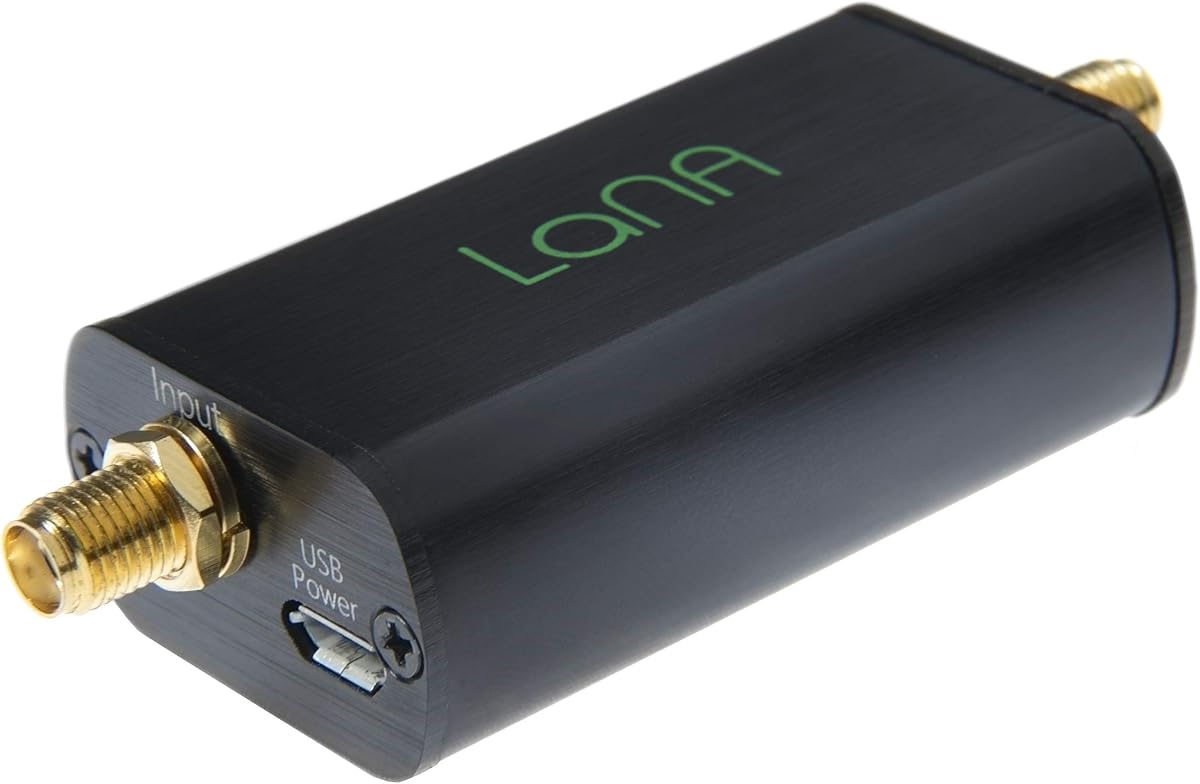
Nooelec Lana is widely recognized for its ultra-low noise figure which significantly improves signal to noise ratios. It works seamlessly with popular SDR dongles to boost weak signals effectively.
We may earn a commission when you buy through this link, at no additional cost to you.
Flexible power options like bias tee or USB make integration easy into different radio setups. The aluminum enclosure adds durability and shielding for consistent performance over time.
Users should check their specific SDR model to see if a DC block is required to prevent power issues. Despite minor setup notes the gain in reception quality is clear.
For SDR users seeking maximum sensitivity this module is a reliable upgrade. It transforms modest receivers into powerful tools for spectrum monitoring and listening.
Multiple input methods allow you to choose the most convenient power source for your specific station layout.
Its design minimizes internal noise so that only the desired signals are amplified for cleaner audio.
We may earn a commission when you buy through this link, at no additional cost to you.
The Generic Taurus MK2 serves as a dedicated pre-amplifier for scanner receivers covering a broad 25 to 2000MHz range. It helps clear up audio from distant or weak sources.
We may earn a commission when you buy through this link, at no additional cost to you.
Its PP3 battery power makes it simple to deploy in temporary listening spots without extra wiring. The included BNC patch lead ensures a quick connection to most standard scanners.
While the gain is lower than premium models it provides sufficient boost for local and regional scanning. It is a straightforward tool for hobbyists focused on monitoring public airwaves.
This unit is a practical choice for users wanting a simple signal boost. It delivers reliable performance for scanning without complexity or high costs.
Its design prioritizes the frequency bands most common in public safety and utility monitoring systems.
Running on a standard battery it is easy to move to any location for on-the-go scanning activities.
We may earn a commission when you buy through this link, at no additional cost to you.
The BJ-300 Plus offers significant power boost for CB and ham operators seeking extended range. It supports AM FM SSB and CW modes delivering up to 150W on SSB.
We may earn a commission when you buy through this link, at no additional cost to you.
Protection features like reverse polarity safeguards and dual fuses add reliability to the unit. The active cooling fan helps maintain stability during extended transmission sessions.
It requires a 13.8V supply and fits standard PL-259 connectors for easy setup. Users should note that input power limits are specific so matching with your transceiver is vital.
For those needing a mid-power linear amp this unit is a functional choice. It provides a solid output increase for reliable long-distance communication.
Compatibility with major modulation types ensures flexibility across various radio communication protocols.
A dedicated fan prevents overheating which protects the unit during continuous high power operation.
We may earn a commission when you buy through this link, at no additional cost to you.
The AURSINC ZK09-UM is a standout module for high-frequency testing and listening. It offers excellent noise reduction with a high PSRR LDO to suppress power supply interference.
We may earn a commission when you buy through this link, at no additional cost to you.
Ideal for TinySA ULTRA users it improves performance above 3.5GHz where onboard preamps may struggle. The USB power design keeps cabling minimal and portable.
Users must avoid applying excessive input power to prevent saturation. For weak signal work this module provides a noticeable boost in clarity and spectrum cleanliness.
This preamp is a strong choice for engineers and radio enthusiasts needing precision. It delivers clean high-frequency amplification in a small affordable package.
Superior power rejection keeps the background noise low for better detection of faint signals.
Extending to 10GHz allows for testing and reception of a wide variety of advanced signal types.
We may earn a commission when you buy through this link, at no additional cost to you.
This BJ-300 Plus model is designed for reliable power boost in ham and CB applications. It supports multiple modes with outputs up to 150W on SSB for better range.
We may earn a commission when you buy through this link, at no additional cost to you.
Its cooling system ensures stable operation even during long transmissions. The polarity reversal protection helps prevent accidental damage from incorrect wiring.
Installation is straightforward with standard ports and clear switches for high or low power settings. While it lacks advanced features it gets the job done for basic boost needs.
Operators looking for an economical linear amp will find this unit useful. It provides the power increase needed to contact distant stations effectively.
Simple switches and standard connectors allow quick setup even for new users.
Protective measures ensure safe operation and extend the lifespan of the amplifier during use.
We may earn a commission when you buy through this link, at no additional cost to you.
The BJ-300 Broadband Linear is a solid option for those seeking high output at an accessible price. It delivers up to 150W on SSB to significantly increase communication range.
We may earn a commission when you buy through this link, at no additional cost to you.
Overvoltage and polarity protections add peace of mind for daily use. The compact aluminum heat sink handles heat dissipation efficiently during normal operation.
Controls include clear HI/LO switches to manage power levels based on signal conditions. This helps reduce wear while maintaining strong transmission performance.
For users wanting a no-fuss linear amplifier this unit is a reliable pick. It provides the boost needed to enhance station performance without complex features.
Adjustable output allows operators to match power levels to their specific contact needs.
A robust heat sink protects the amp from overheating during extended periods of use.
We may earn a commission when you buy through this link, at no additional cost to you.
Selecting the right amplifier depends on whether you need to boost receive or transmit signals. Consider these key factors before making your decision.
Decide if you need an LNA for weak signal reception or a linear amplifier for increasing transmit power. LNAs are for front-end improvements while linear amps boost outgoing signals.
Ensure the unit you choose matches your goal to avoid incompatible equipment or performance issues.
Check the frequency coverage of the amplifier against your operating bands. A wide range covers CB HF VHF and UHF while specific models focus on narrower segments.
Select a unit that fully encompasses the frequencies you intend to amplify for best results.
Gain measured in dB determines how much the signal is boosted. Higher gain helps weak distant signals but can introduce distortion in noisy environments.
Choose a gain level that balances improvement without overloading your receiver or transmitter.
Noise figure indicates how much internal noise the amp adds to the signal. Lower figures preserve clarity and are vital for weak signal reception.
Prioritize low noise specs when working with SDRs or scanners to maintain signal quality.
Consider how the amplifier gets power whether through USB wall adapters or batteries. Portable field kits benefit from low current draw or built-in battery options.
Ensure your power supply matches the amps voltage and current requirements for stable operation.
Look for units with metal housings and shielding to prevent interference from external sources. A solid build protects internal components during transport.
Robust construction ensures reliable performance in both lab and field conditions over time.
Verify that connectors like SMA or PL-259 match your existing radio gear and cables. Adapters can add loss if not used carefully.
Matching connectors simplify installation and reduce signal degradation at the connection point.
Amps with polarity protection and overheat safeguards reduce the risk of damage from user error. Protection systems also ensure consistent operation during long sessions.
Prioritize units with built-in safety to protect your investment and connected equipment.
Always connect the amplifier between your antenna and radio with attention to correct input and output ports. Use quality shielded cables to minimize signal loss before and after the amp.
Ensure the power supply matches the units voltage and current ratings exactly. For portable setups check battery levels regularly to prevent sudden power loss during operations.
Regularly inspect connectors for corrosion or wear and clean them with contact cleaner as needed. Keep the unit in a dry environment to avoid rust on metal housing.
No receiving amplifiers are designed for low signal levels and will likely be damaged by the high power of a transmitter. Use a dedicated linear amplifier for transmit applications.
A gain of 20 to 30dB is typically sufficient to boost weak signals without introducing distortion. Higher gains may be useful for very long cable runs or distant stations.
Amplifiers have specific frequency ranges. Check the product specs to ensure it covers the bands you use such as HF VHF or UHF.
A lower noise figure means the amplifier adds less internal noise to your signal. This is critical for clear reception of weak signals on SDRs and sensitive radios.
Cooling fans are essential for linear power amplifiers to prevent overheating during transmission. LNAs and preamps usually do not require active cooling.
Some compact LNAs can run off USB power which is convenient for field work. However high power transmit amps need a dedicated 12V supply for stable operation.
SMA connectors are common for small modules while PL-259 are standard for ham and CB radios. Ensure your cables match the unit or use adapters if needed.
If the amplifier has protection features and is used within its power ratings it should not damage your receiver. Always follow the manufacturers wiring guidelines.
We reviewed ten top models from receiving LNAs to transmit amplifiers to find the best options. Each unit offers unique strengths for different operator needs and budgets.
Prioritize frequency range gain and power supply based on your specific setup. Matching these factors to your gear ensures the best performance gains.
Always check current prices and availability before purchasing since stock and costs can change. Select the model that fits your goals for boosting signal effectively.