
Mcbazel 3 in 1 Handheld Digital Anemometer
4.5Editor score
Beaufort scale indicator
Multiple wind speed units
Compact portable design
This guide compares the top marine anemometers for sailors and boaters, evaluating accuracy, durability, and features to help you choose the right wind meter
Marine anemometers are essential tools for sailors and boaters who need accurate wind data to navigate safely and efficiently. These devices measure wind speed and direction, helping you adjust sails, plan routes, and avoid dangerous weather conditions on the water.
We compared ten top-rated marine anemometers based on their accuracy, durability, ease of use, and additional features like temperature and humidity sensing. Our analysis covers handheld units for casual use and integrated systems for serious racing and cruising applications.
Each pick highlights key specifications, pros, cons, and ideal use cases to help you find the best fit for your needs. Please note that prices and availability can change, so check the latest listings before making your purchase decision today.
4.5Editor score

4.5Editor score
4.4Editor score
This side-by-side comparison lists all ten marine anemometers with their key specifications to help you quickly identify the right model for your sailing or boating needs.



The BTMETER BT-100 is a top-rated handheld anemometer designed for measuring wind speed and temperature across multiple units. With a 4.5 rating, it offers precise data for sailors, HVAC technicians, and drone pilots who need reliable readings.
We may earn a commission when you buy through this link, at no additional cost to you.
This device features two temperature sensors and eight vanes for high sensitivity to low air flow. It measures wind speed in five units and includes a wind chill function. The bright backlit LCD ensures visibility in low light conditions.
While highly accurate, the battery included may not last long under heavy use, and the screen is relatively small for some users. These trade-offs are acceptable given the competitive price and performance.
Buy this if you need a portable, accurate tool for sailing or outdoor activities. It is best for users who value precision and versatility without investing in a full marine network system.
The eight vanes and dual sensors provide stable readings even in light breezes, helping you gauge wind conditions accurately for sail trim.
The threaded hole on the bottom allows secure mounting on a tripod, freeing your hands for other tasks while capturing continuous data.
We may earn a commission when you buy through this link, at no additional cost to you.
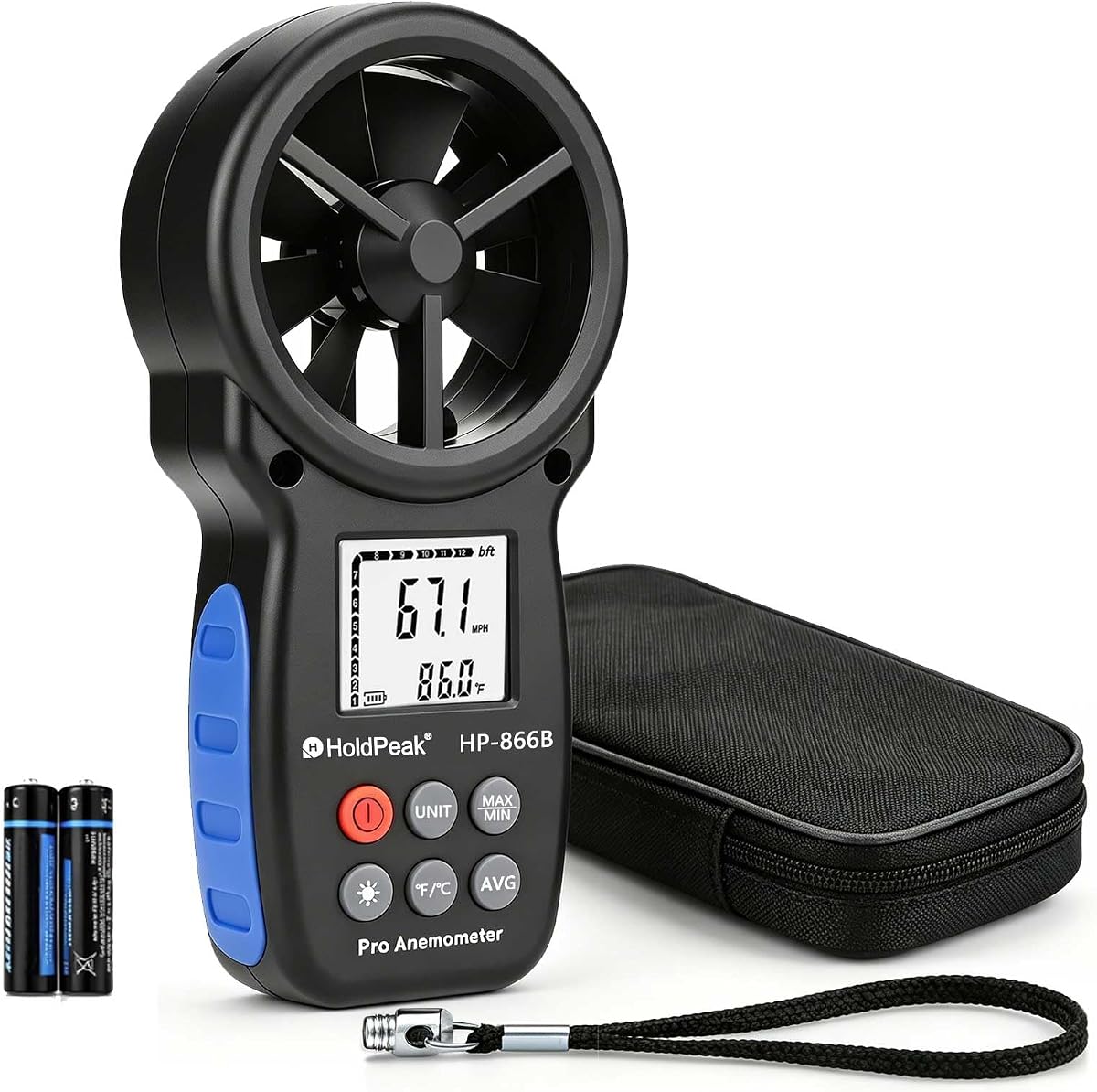
The HoldPeak 866B is a professional handheld anemometer rated 4.5 stars, known for accurate wind speed and temperature detection. It features dual sensors and eight vanes for reliable performance in outdoor conditions.
We may earn a commission when you buy through this link, at no additional cost to you.
It offers unit switching, Max/Min/Average wind speed tracking, and a tripod hole for mounting. The hand strap prevents drops during activities like sailing or drone flying. A waterproof carrying pouch protects it from elements.
The auto-off feature may activate too quickly for long-term monitoring, and there is no humidity sensor. These limitations are minor compared to its overall accuracy and ease of use.
This is ideal for boaters and HVAC technicians needing precise, portable measurements. Choose it for its balance of features, durability, and user-friendly design.
Max Min Average functions let you capture peak gusts and average conditions for better planning and safety on the water.
A hand strap and waterproof pouch keep the device safe during transport, making it perfect for active outdoor use.
We may earn a commission when you buy through this link, at no additional cost to you.
The Magnetic Mount Anemometer By Inspeed is a compact device rated 4.7 stars, calibrated for accurate wind speed measurement. It is designed for vehicle use but can serve marine needs where portable wind data is required.
We may earn a commission when you buy through this link, at no additional cost to you.
Its magnetic mount allows quick attachment to flat surfaces, and the compact size makes it easy to store. Calibration ensures reliable readings for assessing wind impact on speed and handling.
This device lacks temperature functions and integrated marine network data, which limits its use for sailing. It is best suited for simple wind speed checks where durability is key.
Buy this if you need a rugged, simple tool for wind speed without complex features. It is ideal for casual use or as a backup on small boats.
The strong magnetic mount lets you position the anemometer on a boat rail or vehicle roof in seconds for instant readings.
We may earn a commission when you buy through this link, at no additional cost to you.
The Raymarine Instrument Wind I60 Display Only is a standalone unit rated 3.9 stars, designed to work with marine networks. It shows wind data from a separate transducer on a black and grey high contrast screen.
We may earn a commission when you buy through this link, at no additional cost to you.
It integrates with NMEA networks and offers easy navigation. The display is bright and readable in daylight. However, it requires a separate masthead transducer to function, which adds cost.
Users note a lower rating due to dependency on external components. The display itself is reliable but lacks standalone capability. This trade-off is acceptable for those with existing Raymarine setups.
Purchase this if you need a networked display for a modern sailing vessel. It is best for upgrading older systems with digital readability and network integration.
Connects to existing NMEA networks, pulling real-time wind data from the vessel's transducer for a comprehensive instrument panel.
We may earn a commission when you buy through this link, at no additional cost to you.
The TopTes TS-301 is a versatile handheld anemometer rated 4.6 stars, featuring a large 2.26-inch LCD screen. It measures wind speed in six units plus humidity and temperature for comprehensive environmental monitoring.
We may earn a commission when you buy through this link, at no additional cost to you.
The large screen ensures easy readings on the water. Humidity data helps assess air conditions, while the lightweight design aids portability. However, sensors may take time to adjust to new environments.
Sensors needing 30 minutes to stabilize can delay immediate readings. Batteries are not included. These are minor inconveniences for a feature-rich device at a competitive price.
Buy this if you need a multi-sensor tool for sailing, surfing, or drone flying. It offers excellent value for users who want humidity and temperature data.
Humidity and temperature readings provide a fuller picture of air conditions, aiding in predicting weather changes or comfort levels.
We may earn a commission when you buy through this link, at no additional cost to you.
The Raymarine E28081 is a replacement anemometer bowl and vane set rated 4.1 stars. It fits ST50, ST60, and ST80 systems, providing a simple solution to restore old marine wind instruments.
We may earn a commission when you buy through this link, at no additional cost to you.
The kit includes a vane, counterweight, speed plates, fixing screws, and an allen key. It is designed to match original specifications for reliable performance after damage or wear.
This is not a complete unit but a parts kit, and compatibility is limited to older ST systems. These constraints are acceptable for owners needing affordable repairs without system overhaul.
Purchase this if you have an older Raymarine system and need a repair kit. It is best for extending the life of existing hardware rather than upgrading.
The exact-fit components ensure your old instrument functions as new without requiring complex wiring or software updates.
We may earn a commission when you buy through this link, at no additional cost to you.
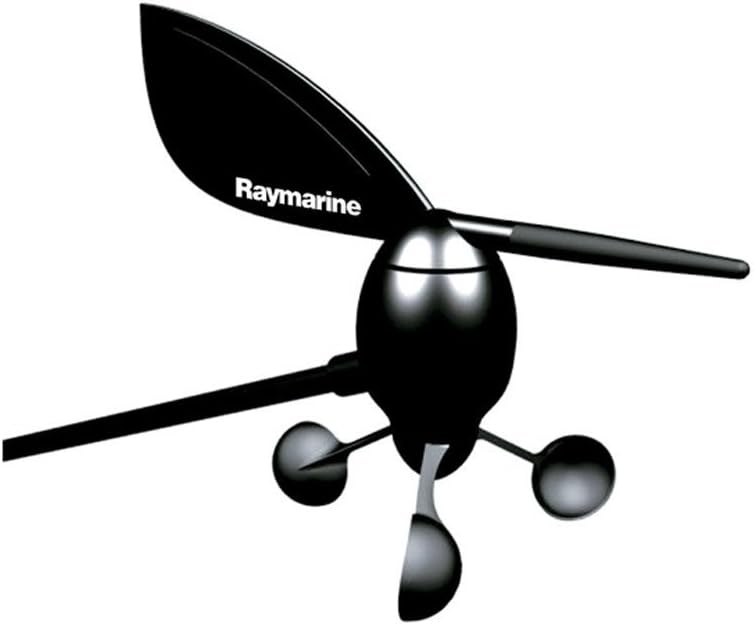
The RAYMARINE MASTHEAD WIND ARM is a premium transducer rated 4.4 stars, featuring the latest version with a vane and cups. It is designed to mount atop the mast for accurate wind speed and direction data.
We may earn a commission when you buy through this link, at no additional cost to you.
Its construction ensures durability in harsh marine conditions. It provides the physical data source for compatible display systems. However, it is an expensive component without standalone display capability.
The high cost and need for a display unit limit it to serious boaters. These trade-offs are acceptable for those investing in a complete, reliable instrumentation upgrade.
Buy this if you need a top-quality masthead transducer for a marine network. It is ideal for racers or cruisers requiring precise, durable wind data.
Built to withstand saltwater exposure and storms, the cups and vane maintain precision over years of operation.
We may earn a commission when you buy through this link, at no additional cost to you.
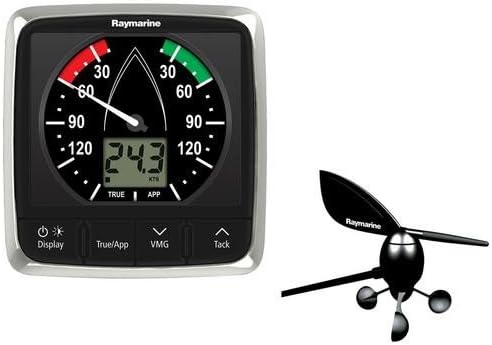
The Raymarine i60 Wind System with Masthead is a complete kit rated 4.4 stars. It includes a masthead transducer with 30 m cable, a base, and an instrument displaying wind speed, direction, VMG, and tack.
We may earn a commission when you buy through this link, at no additional cost to you.
Its analog dial and backlighting offer easy readability. It matches the footprint of older ST60 instruments for easy upgrades. However, it may be costlier than handheld options.
The price and footprint constraints are minor for those needing full marine integration. This system provides professional-grade data without complex wiring.
Purchase this if you want a full wind system for your boat. It is best for sailors needing VMG and tack data for navigation.
VMG and tack displays help optimize your route and sail trim for better performance on the water.
We may earn a commission when you buy through this link, at no additional cost to you.
The Raymarine i60 Wind Display System is a comprehensive kit rated 4.4 stars. It features a masthead transducer capturing wind speed and direction, delivering true wind angle and apparent wind angle to a customizable display.
We may earn a commission when you buy through this link, at no additional cost to you.
The display offers adjustable backlighting for day and night use. It integrates with marine networks for real-time updates. However, setup may require separate transducer installation and network configuration.
Complex setup and dependency on external components limit ease of use. These are acceptable for serious sailors needing precise, customizable data.
Buy this if you need detailed wind analysis for racing. It is best for those who value true wind angle and customizable instrument panels.
True wind angle data helps sailors adjust sails and course for maximum efficiency, especially in tactical racing.
We may earn a commission when you buy through this link, at no additional cost to you.
The Mcbazel 3 in 1 Handheld Digital Anemometer is a budget-friendly tool rated 4.5 stars. It measures wind speed, temperature, and wind level on the Beaufort scale, making it ideal for sailing, HVAC, and fishing.
We may earn a commission when you buy through this link, at no additional cost to you.
It offers multiple units and a backlight for visibility. The double-line LCD shows speed and temperature simultaneously. However, it lacks humidity sensing and detailed marine data.
The lack of advanced features limits it to casual users. These trade-offs are acceptable for the low price point and portability.
This is ideal for boaters needing a simple wind tool. Choose it for affordable wind speed and temperature data without complex features.
The Beaufort scale gives a visual wind level (1-12), helping you assess conditions quickly without converting units.
We may earn a commission when you buy through this link, at no additional cost to you.
Selecting the right marine anemometer involves considering several factors to ensure it meets your sailing, boating, or outdoor needs.
Accuracy is critical for safe navigation. Look for models with low error margins like +/- 2% and dual sensors for reliable wind speed and temperature readings in varying conditions.
Marine environments expose equipment to saltwater, humidity, and UV. Choose models with robust housings, weather-resistant materials, and protective cases to withstand harsh conditions.
Decide between handheld, tripod, masthead, or magnetic mounts. Tripod holes allow stable long-term measurement, while masthead transducers integrate into full marine systems for continuous data.
Some anemometers include humidity, temperature, or Beaufort scale sensors. These add value for weather monitoring but may increase cost or reduce battery life.
A clear, backlit display ensures visibility in bright sunlight or darkness. Larger screens help read data quickly during active sailing or drone flying.
Consider battery requirements and auto-off features. Long battery life reduces maintenance, and low-battery indicators ensure you never lose power during critical activities.
Intuitive controls, unit switching, and clear menus simplify operation. Look for models with hand straps or carrying pouches to prevent drops and ease transport.
For advanced sailors, compatibility with NMEA networks and displays like Raymarine i60 ensures real-time data sharing. Handheld units may lack this but offer standalone use.
To start, fully charge or insert batteries and allow sensors to adjust to the environment for 30 minutes. This ensures accurate wind speed and temperature readings.
Hold the anemometer steadily or mount it securely using the tripod hole or magnetic mount. For best results, position it away from obstructions like sails or sails to capture unobstructed wind flow.
After use, wipe the device with a soft cloth to remove salt and moisture. Store it in the provided carrying pouch to protect it from impact and humidity until next use.
A marine anemometer is a device used to measure wind speed and direction on boats. It helps sailors adjust sails, navigate safely, and plan routes based on accurate wind data.
Accurate wind data helps you optimize sail trim, avoid dangerous conditions, and improve fuel efficiency. It is essential for racing, cruising, and general boating safety.
Handheld units are portable and easy to use for quick checks. Masthead transducers are permanently mounted and integrate with marine systems for continuous, real-time data.
Yes, handheld anemometers work on large vessels for spot checks. However, for continuous data, a masthead system is recommended for better integration and stability.
Clean the device regularly with a soft cloth to remove salt and moisture. Store it in a protective pouch and check batteries periodically to ensure reliable operation.
Many handheld models include temperature sensors. These provide extra data for weather assessment but may not be standard on all marine network systems.
The Beaufort scale is a wind force measure from 0 to 12. Some anemometers display this to simplify wind assessment for sailors without converting units.
Calibrate annually or after impact or exposure to extreme conditions. This ensures continued accuracy and reliable data for navigation and safety.
The BTMETER BT-100 offers excellent overall performance with precision and portability. For budget buyers, the Mcbazel 3 in 1 delivers value without sacrificing essential features.
Consider your sailing needs: casual users may prefer handhelds, while racers should invest in masthead systems for continuous data. Durability and display readability also play key roles.
Always verify current pricing and availability on retailer sites. Prices change frequently, and checking the latest listings ensures you get the best deal on your chosen model.